


News & Events

The European Food Safety Authority (EFSA) Panel on Genetically Modified Organisms (GMO Panel) has released its Scientific Opinion on the safety of genetically modified (GM) herbicide tolerant oilseed rape MON 88302, for food and feed uses, excluding cultivation within the European Union (EU). Following the submission of dossier GMFF-2023-21220 under Regulation (EC) No 1829/2003 from Bayer CropScience LP, the EFSA GMO Panel was asked to deliver a Scientific Opinion for the renewal of authorization of GM oilseed rape MON 88302.
The escalating salinization of agricultural soils poses a significant threat to global rice production, particularly in regions heavily reliant on rice as a staple crop. This study investigates the development of genetically modified (GM) rice with enhanced resistance to salinity stress through the incorporation of key genes involved in salt tolerance. Using a combination of molecular biology techniques, we generated transgenic rice lines overexpressing genes responsible for ion transport, osmotic regulation, and antioxidant defense. The transgenic rice lines exhibited superior performance compared to wild-type plants under varying NaCl concentrations.
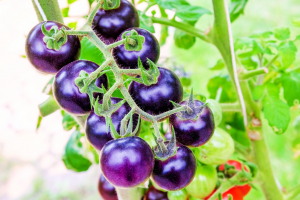
Australia's Office of the Gene Technology Regulator (OGTR) has received license application DIR 218 from All Aussie Avocados Pty Ltd (trading as All Aussie Farmers) for the commercial cultivation of tomatoes genetically modified (GM) for purple fruit color. The GM Purple Tomato is intended to be grown commercially in greenhouses in Australia, subject to the restrictions in some States and Territories for marketing or biosecurity reasons.

The International Service for the Acquisition of Agri-biotech Applications (ISAAA), Inc., announces a change in both the date and venue for the 8th Asian Short Course on Agribiotechnology, Biosafety Regulation, and Communication (ASCA8). Originally scheduled for October in Hanoi, Vietnam, ASCA8 will now be held from September 8 to 12, 2025, in Manila, Philippines.
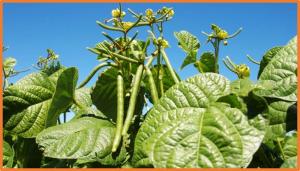
The remarkable evolutionary history of the common bean (Phaseolus vulgaris L.) has led to the emergence of three wild main gene pools corresponding to three different eco-geographical areas: Mesoamerica, the Andes and northern Peru/Ecuador. Recent works proposed novel scenarios, and the northern Peru/Ecuador population has been described as a new species called P. debouckii, rekindling the debate about the origin of P. vulgaris.
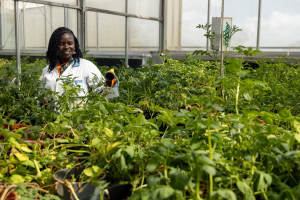
In agricultural science, success isn’t solely determined by technical prowess—it’s also reliant on effective organizational processes and strategies. Through ReOrganize, a Work Package of CGIAR Accelerated Breeding, process management working groups delved into how breeders do things. They didn’t focus on the technical intricacies but on the organization of breeding itself, monitoring of performance of breeding and the empowerment of CGIAR
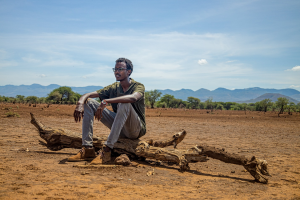
Drylands are the backbone of global agriculture, supporting 44% of the world’s farming. Yet, they are under siege. Climate change, land degradation, and water scarcity are transforming these essential regions into barren landscapes, threatening the livelihoods of nearly three billion people. These lands, which already face some of the harshest conditions on Earth, are warming faster than other parts of the planet. Their decline imperils food security, biodiversity, and stability across vast swaths of the globe.
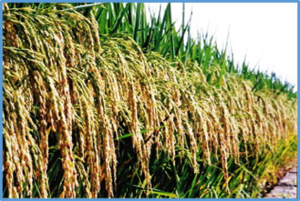
The two-line hybrid rice system, a cutting-edge hybrid rice breeding technology, has greatly boosted global food security. In thermo-sensitive genic male sterile (TGMS) lines, the critical sterility-inducing temperature (CSIT; the temperature at which TGMS lines change from male fertile to complete male sterile) acts as a key threshold. We recently uncovered that thermo-sensitive genic male sterility 5 (tms5), a sterile locus presenting in over 95% of TGMS lines, leads to the overaccumulation of 2′,3′-cyclic phosphate (cP)-ΔCCA-tRNAs and a deficiency of mature tRNAs, which underlies the molecular mechanism of tms5-mediated TGMS.

The Director-General of FAO Dr Qu Dongyu met with H.E. Abiy Ahmed, Prime Minister of Ethiopia in Addis Ababa on the margins of the 38th Summit of the African Union. The Prime Minister welcome the Director-General and expressed deep gratitude for the support that FAO has extended to the country throughout the years. He expressed appreciation for the technical assistance which has pivoted Ethiopia's food production particularly wheat production in a positive trajectory.
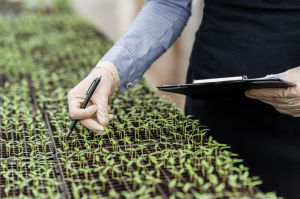
Experts from Fraunhofer Institute for Molecular Biology and Applied Ecology and partners in Germany conducted a review to classify mechanisms of RNA interference (RNAi) effects induced by short interfering RNA from different sources in plants and to identify technologies that can be used to detect these effects. The review paper is published in the Frontiers in Plant Science.
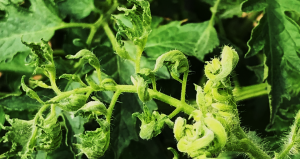
Tomato leaf curl New Delhi virus (ToLCNDV), a begomovirus, that causes severe leaf curling, stunting, and reduced yield in tomato plants is consistently threatening its production worldwide. CRISPR/Cas9-mediated genome editing has shown immense potential in developing disease-resistant crops. This study successfully focuses on designing a precise and efficient strategy for in planta defence against ToLCNDV.

Artificial intelligence (AI) is being applied to gene editing to create more precise and effective tools, similar to its impact on drug development. While CRISPR-Cas9 revolutionized the field, off-target effects and genomic rearrangements remain a concern, especially for in vivo therapies. Other gene editing technologies like ZFNs and TALENs also face challenges, highlighting the need for advancements that AI is now poised to address. An article in Genetic Engineering and Biotechnology News tackles some advances in gene editing involving AI.