


News & Events

Experts from Fraunhofer Institute for Molecular Biology and Applied Ecology and partners in Germany conducted a review to classify mechanisms of RNA interference (RNAi) effects induced by short interfering RNA from different sources in plants and to identify technologies that can be used to detect these effects. The review paper is published in the Frontiers in Plant Science.
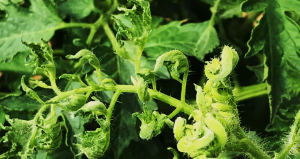
Tomato leaf curl New Delhi virus (ToLCNDV), a begomovirus, that causes severe leaf curling, stunting, and reduced yield in tomato plants is consistently threatening its production worldwide. CRISPR/Cas9-mediated genome editing has shown immense potential in developing disease-resistant crops. This study successfully focuses on designing a precise and efficient strategy for in planta defence against ToLCNDV.

Artificial intelligence (AI) is being applied to gene editing to create more precise and effective tools, similar to its impact on drug development. While CRISPR-Cas9 revolutionized the field, off-target effects and genomic rearrangements remain a concern, especially for in vivo therapies. Other gene editing technologies like ZFNs and TALENs also face challenges, highlighting the need for advancements that AI is now poised to address.
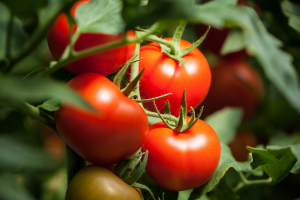
ToLCNDV is a highly destructive plant virus that poses a significant threat to tomato plant production worldwide, particularly in Asia and the Mediterranean region. Transmitted by whiteflies, this virus causes severe symptoms, such as leaf curling, stunted growth, vein thickening, and reduced fruit yield. As such, the researchers used gene editing techniques to develop resistance of tomatoes against ToLCNDV.
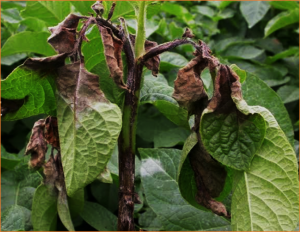
Late blight caused by Phytophthora infestans is the most serious disease of potatoes. Here we present the effectiveness of the host-induced gene silencing (HIGS) technology against an amino acid biosynthesis gene of the pathogen to increase the resistance against the plant-infecting oomycete in the field. A RNAi hairpin construct directed against the acetolactate synthase (ALS) gene of Phytophthora infestans was transferred into potato
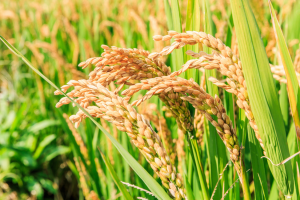
Salinity stress significantly reduces water absorption, disrupts membrane stability, impairs photosynthesis, and ultimately leads to drastic yield losses. As a staple food for more than half the global population, rice is among the most vulnerable crops to salinity. Traditional breeding methods are inadequate to meet the urgent need for salt-tolerant rice varieties, especially in the face of worsening salinity caused by climate change.
An expanded scope of protection for new plant varieties will be adopted, explicitly including harvested materials obtained from unauthorized use of propagation materials. A step-by-step implementation of a substantially derived variety system will commence, wherein varieties predominantly derived from a protected variety will also require permission from the original variety right holder.
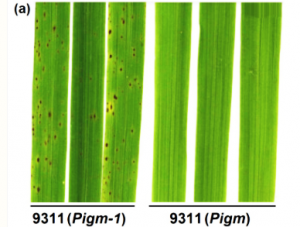
Rice blast is one of the most important diseases of rice, causing significant economic losses to agricultural production. A new gene, Pigm-1, which is allelic to Pigm, was cloned from Shuangkang 77009 using map based cloning. However, it is unclear whether there is a difference in the resistance spectrum between Pigm and Pigm-1. In this study, using 195 rice blast isolates collected from different areas of the Fujian Province, the Pigm-1 and Pigm single gene lines were inoculated to test their resistance.

Bt cotton has significantly improved crop productivity for many Kenyan farmers. It reduces the need for chemical pesticides, lowers production costs, and helps crops withstand climate-related stresses. However, the high cost and limited availability of Bt cotton seeds present serious obstacles. “They are so costly that most smallholders cannot afford them. We are now forced to resort to the traditional low-yielding ones,” said James Gichu, Lamu County's minister of agriculture.
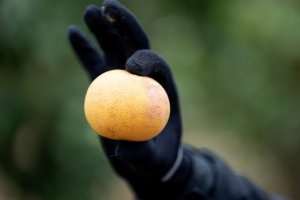
Scientists at Texas A&M AgriLife Research have developed a new approach to countering citrus greening and potato zebra chip diseases, two economically devastating agricultural diseases in the U.S. The scientists used spinach antimicrobial peptides, known as defensins, which naturally defend plants against a broad range of pathogens. The research team, led by Kranthi Mandadi, Ph.D., showed that some spinach defensins confer similar protection to citrus and potatoes, and possibly to other crops.
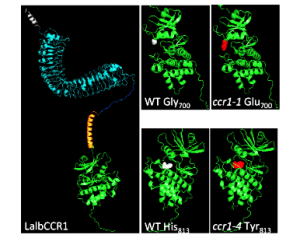
Root development is tightly regulated in plants to optimize nutrient acquisition and interactions with soil microorganisms. In legumes, the Autoregulation of Nodulation (AoN) pathway systemically controls the proliferation of root nodules, which are energy-intensive organs. Mutations affecting the AoN pathway result in a hypernodulation phenotype accompanied by altered root development. However, it remains unclear whether this modification of root development is also systemic and coordinated with nodulation.

Experts from the National University of Asuncion (Universidad Nacional de Asunción) and partners question the traditional notion that genetically modified organisms (GMOs) only result from laboratory-based genetic engineering. The Opinion Article highlights recommendations for updating regulatory frameworks for GMOs. The experts argue that horizontal gene transfer (HGT) is a natural and significant evolutionary force in plants and not just a microbial or laboratory phenomenon, making some plants naturally transgenic.