


News & Events
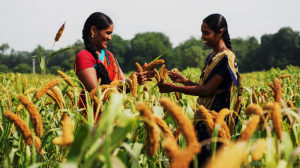
Agriculture remains the backbone of livelihoods, employment, and food security across the Global South. From West African millet fields to South Asian rice paddies, the sector not only sustains communities but contributes significantly to national GDPs and employs a large share of the population, particularly women and youth. Yet, despite this central role, agriculture’s full potential to drive inclusive, long-term growth remains underutilized.
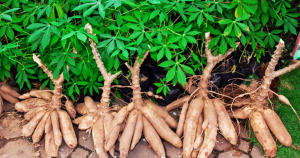
The Mediator complex (MED) functions as a co-activator in plants, transmitting transcriptional signals to regulate gene expression, including responses to environmental stresses. While the MED gene family has been identified in several species, it has not yet been reported in cassava. In this study, we identified 32 members of the MeMED gene family in cassava (Manihot esculenta Crantz) distributed across 13 chromosomes.
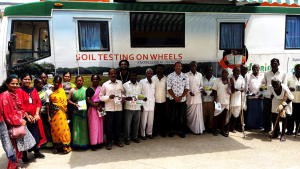
In the spirit of World Environment Day, a grassroots movement in Telangana is proving that environmental action starts from the ground up—literally. ICRISAT and Laurus Charitable Trust are bringing science, hope, and environmental awareness to the doorsteps of farmers and schoolchildren across Shamirpet and Muduchintalapalli mandals—nurturing a deeper connection with the Earth.
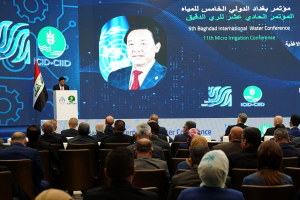
Qu was invited to deliver opening remarks at the conference in the Iraqi capital. Hosted by the Iraqi Ministry of Water Resources, the conference offered FAO the chance to convene experts, policymakers, and partners to share knowledge and foster collaboration for sustainable water and agricultural development. Among those attending was the country’s prime minister, Mohammed Shia Al Sudani.
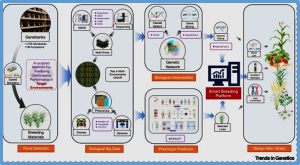
Integrating, learning from, and predicting using vast datasets from various scales, platforms, and species is crucial for advancing crop improvement through breeding. Artificial intelligence (AI) is a broad category of methods, many of which have been used in breeding for decades. Recent years have seen an explosion of new AI tools (or old ones at new scales), with exciting applications, both demonstrated and potential, to improve or maybe even revolutionize plant breeding!
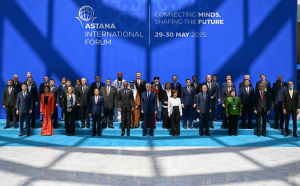
QU Dongyu, Director-General of the Food and Agriculture Organization of the United Nations (FAO) today urged immediate action on water conservation, transboundary cooperation, and sustainable agricultural practices to safeguard Central Asia’s future. Speaking at the opening session of the Astana International Forum – a regional and international dialogue platform hosted by the Government of Kazakhstan –, QU said: “Water security is a pillar of agrifood systems, yet it is under increasing threat due to scarcity, pollution, and weak infrastructure.”
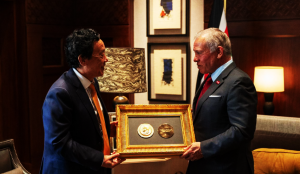
FAO Director-General QU Dongyu today presented King Abdullah II of Jordan with the FAO Agricola Medal, the Organization’s highest award, in a ceremony held at the Al Husseiniya Palace in Amman. “The medal is a recognition of the exceptional leadership and vision of His Majesty over the past 26 years in leading the country’s efforts to transform Jordan’s agrifood system to be more efficient, more inclusive, more resilient and more sustainable,” the FAO Director-General said.
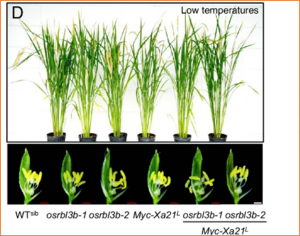
To maintain growth and to successfully reproduce, organisms must protect key functions in specific tissues, particularly when countering pathogen invasion using internal defensive proteins that may disrupt their own developmental processes. The rice immune receptor XA21 confers race-specific resistance against Xanthomonas oryzae pv. oryzae, which causes the deadly disease bacterial leaf blight.

The world is facing daunting health challenges with the rise of zoonotic diseases – infections that are transmissible from animals to humans. These diseases – which include Ebola, avian flu, COVID-19 and HIV – show how the health and wellbeing of humans, animals and ecosystems are closely connected. Zoonotic diseases have become more and more common due to factors such as urbanisation, deforestation, climate change and wildlife exploitation.
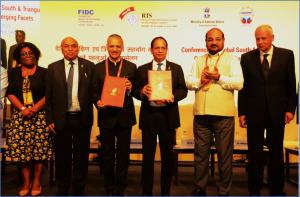
In a landmark move to accelerate agricultural innovation and collaboration across the Global South, the International Crops Research Institute for the Semi-Arid Tropics (ICRISAT), in partnership with the Research and Information System for Developing Countries (RIS), officially launched the ICRISAT Center of Excellence for South-South Cooperation in Agriculture (ISSCA) during the Conference on Global South and Triangular Cooperation: Emerging Facets, held in New Delhi.
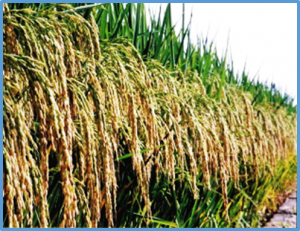
The two-line hybrid rice system, a cutting-edge hybrid rice breeding technology, has greatly boosted global food security. In thermo-sensitive genic male sterile (TGMS) lines, the critical sterility-inducing temperature (CSIT; the temperature at which TGMS lines change from male fertile to complete male sterile) acts as a key threshold. We recently uncovered that thermo-sensitive genic male sterility 5 (tms5), a sterile locus presenting in over 95% of TGMS lines
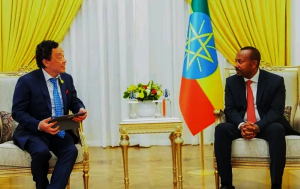
The Director-General of FAO Dr Qu Dongyu met with H.E. Abiy Ahmed, Prime Minister of Ethiopia in Addis Ababa on the margins of the 38th Summit of the African Union.The Prime Minister welcome the Director-General and expressed deep gratitude for the support that FAO has extended to the country throughout the years. He expressed appreciation for the technical assistance which has pivoted Ethiopia's food production particularly wheat production in a positive trajectory.