


News & Events

The researchers used long-read genomic sequencing to examine two major cotton pests, Helicoverpa armigera and Helicoverpa punctigera. “We knew some insects were showing resistance to the Vip3A protein in Bt cotton,” said Dr. Andy Bachler from CSIRO's Insects as Engineers team. “But we couldn't find the gene or figure out how this mode of resistance worked,” he added. The sequencing revealed two types of mutations affecting the same gene. One was a large insertion and the other was a deletion.

This research aimed to understand the critical role of adopting advanced breeding tools and optimizing breeding strategies to ensure the sustainability and success of public breeding programs in meeting future food security challenges. In this context, there are two main objectives: estimate the genetic gains achieved over 110 years in the rice breeding program of Louisiana State University (LSU);

The GM canola may be grown at one site with a maximum area of two hectares per year at the Light Regional Council in South Australia. The field trial may run from May 2025 until January 2030. The field trial aims to assess how the GM canola performs under field conditions. The GM canola grown in this field trial will not be used in human food or animal feed.

Compared to previous tools that were trained to use transcribed gRNAs and prone to transcription biases, the new approach focuses on chemically synthesized gRNAs, which are often used in research. The researchers developed a simple linear model, which they called the EVA score. It can robustly predict gRNA activity across cell types and datasets.

Many human phenotypic traits vary between the sexes, including adult height for which males are, on average, 13 cm taller than females. The biological mechanisms for this sexual dimorphism are not entirely understood. One hypothesis to explain the sexual dimorphism in height relates to differential expression in males and females of SHOX, a height-related gene in the pseudoautosomal region 1 (PAR1) on the X and Y sex chromosomes

Compared to previous tools that were trained to use transcribed gRNAs and prone to transcription biases, the new approach focuses on chemically synthesized gRNAs, which are often used in research. The researchers developed a simple linear model, which they called the EVA score. It can robustly predict gRNA activity across cell types and datasets.

The newly approved enzymes (e.g., peroxidase and xylanase) were developed using Aspergillus niger, with genetic material sourced from Marasmius scorodonius and Rasamsonia emersonii, respectively. These enzymes are commonly used in food processing and are not subject to specific labeling requirements. Additionally, the approval also included lacto-N-neotetraose produced from BL21 (DE3) with genes from Neisseria spp. and Helicobacter spp.

Cotton fiber strength (FS), length (FL), and fineness are economically important quality-related traits. Although many genes related to fiber quality were identified recently, the molecular mechanism controlling fiber quality remains largely unknown

Researchers at the Sher-e-Kashmir University of Agricultural Sciences and Technology of Kashmir (SKUAST-Kashmir), led by Dr. Riyaz A. Shah, have successfully developed India's first gene-edited sheep, marking a historic breakthrough in animal biotechnology. The gene-edited lamb has been modified for the myostatin gene, which regulates muscle growth. By disrupting the myostatin gene, the lamb's muscle mass is enhanced by nearly 30%,

The International Service for the Acquisition of Agri-biotech Applications (ISAAA), Inc., announces the final date and venue for the 8th Asian Short Course on Agribiotechnology, Biosafety Regulation, and Communication (ASCA8). This 5-day intensive training will be held from September 8 to 12, 2025, in Manila, Philippines.
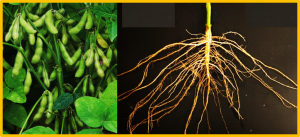
Auxin is the most important phytohormone, regulating root growth and development in plants. ARFs function as central regulators in auxin signaling in model plants, and the functions of ARF activators have been widely investigated, while the functions of ARF repressors remain elusive. In this study, we investigated the family of GmARFs in soybean through a genome-wide expression pattern and functional study of roots highly expressing ARFs

The Ministry of Agriculture, Forestry and Fisheries (MAFF) of Japan and the International Rice Research Institute (IRRI) officially launched a new initiative that aims to promote sustainable, low-carbon rice-farming in the ASEAN region. Called “Accelerating development and scaling of agricultural innovations for reducing greenhouse gas (GHG) emissions in ASEAN Countries” project (AGRI Project), the initiative will focus on capacity building for partners, and infrastructure development to improve IRRI’s soil laboratory and upgrade its equipment for better efficiency.