


News & Events
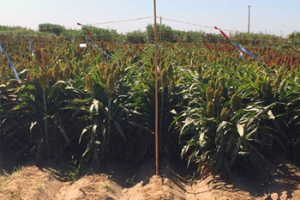
A new study led by scientists from the University of California Berkeley reveals how sorghum plants control its genome - switching some genes on and some genes off at the first sign of water scarcity, and again when water returns - to survive when its surroundings turn harsh and arid. A massive dataset from 400 samples of sorghum plants grown during 17 weeks in open fields in California's Central Valley

The European Commission has authorized eight genetically modified organisms (GMOs), all for food/feed uses. These are: maize MZHG0JG; maize MON 89034 x 1507 x NK603 x DAS-40278-9; maize MON 89034 x 1507 x MON 88017 x 59122 x DAS-40278-9; maize Bt11 x MIR162 x MIR604 x 1507 x 5307 x GA21; renewals of soybean MON 89788 and soybean A2704-12; renewal of cotton LLCotton25; and renewal of oilseed rape T45
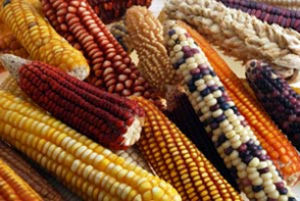
Maize landraces comprise large allelic diversity. We created doubled-haploid (DH) libraries from three European flint maize landraces and characterized them with respect to their molecular diversity, population structure, trait means, variances, and trait correlations. In total, 899 DH lines were evaluated using high-quality genotypic and multi-environment phenotypic data from up to 11 environments
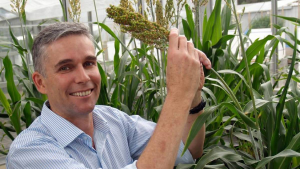
Researchers at the Queensland Alliance for Agriculture and Food Innovation (QAAFI) in Australia led by Professor Ian Godwin have achieved a breakthrough by increasing the protein content of sorghum from 9-10 percent to 15-16 percent. Professor Godwin revealed their research findings at the TropAg 2019 conference in Brisbane. Professor Godwin said the research team edited the genes of sorghum to unlock the digestibility level of the available protein

Scientists used the case of sweet potato in Uganda to create a model in seed systems and landscapes to develop a management strategy guide, which can be used to develop good seed systems for farmers to access high-quality, disease-free planting materials. Sweet potato is a staple crop in Uganda. The scientists focused on the structure of an informal sweet potato system in Gulu Region for its resilience to the potential introduction of a pathogen.
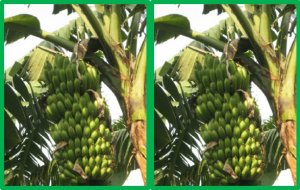
Bunch weight increase is one of the major objectives of banana improvement programs, but little is known about the loci controlling bunch weight and its component traits. Here we report for the first time some genomic loci associated with bunch weight and its component traits in banana as revealed through a genome-wide association study. A banana-breeding population of 307 genotypes varying in ploidy was phenotyped in three locations under different environmental conditions, and data were collected on bunch weight, number of hands and fruits
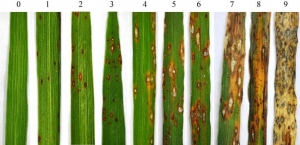
Previous studies have shown the frequent breakdown of major resistance genes, thus rice breeding programs explored on finding new partial resistance genes against rice blast disease. Scientists from the Chinese Academy of Agricultural Sciences used a core collection of the Rice Diversity Panel II (C‐RDP‐II), which has 584 rice accessions and are genotyped with 700,000 single‐nucleotide polymorphism (SNP) markers
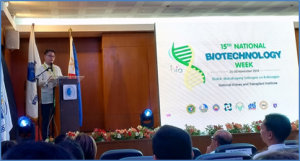
"Without biotechnology, Polio, Measles, and other deadly diseases will be rampant. This reflects the importance of biotechnology in our daily lives and in the future to find solutions and alternatives to the current needs affecting the health of the (Philippine) population," says Department of Health (DOH) Undersecretary Dr. Enrique Domingo during the opening ceremonies of the 15th National Biotechnology Week (NBW) on November 25, 2019 at the National Kidney and Transplant Institute, Quezon City
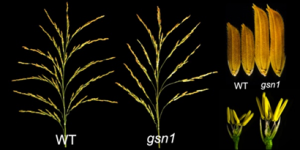
The function of Jasmonate (JA) is well documented in different plant physiological processes as well as in the interactions with their environment. Mutants impaired in JA production and/or signaling are useful materials to study the function of this phytohormone. Genes involved in the JA biosynthesis pathway in rice have been described, but few mutants deficient in JA production and signaling have been identified.
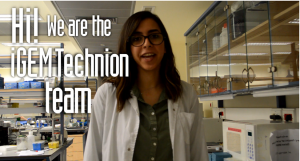
A team of 12 students from the Department of Biotechnology and Food Engineering at Israel's the Technion - Israel Institute of Technology has developed a bee-free honey produced by the bacterium Bacillus subtilis, which "learns" to make honey following reprogramming in a lab. For the project they named BeeFree, the team won a gold medal at the recent iGEM (International Genetically Engineered Machine) competition held in Boston, Massachusetts, USA, where some 300 teams from different universities around the world took part.

Why are there few women in science? UNESCO Institute for Statistics data states that in 2015, only 30% of the world's researchers were women. Based on headcount data, the highest percentage of women doing research was in Central Asia where 48.1% were women, followed by Latin America and the Caribbean (45.4%). The lowest percentage was reported in South and West Asia where only 18.5% of the researchers were women. There was no region reported with more than 50% saturation of women scientists. These statistics bring us back to the question, why are there few women involved in science?
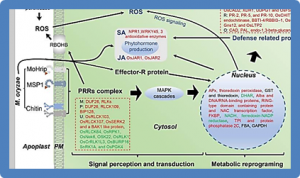
Rice blast disease, caused by Magnaporthe oryzae, is one of the major constraints to rice production, which feeds half of the world's population. Proteomic technologies have been used as effective tools in plant-pathogen interactions to study the biological pathways involved in pathogen infection, plant response, and disease progression. Advancements in mass spectrometry (MS) and apoplastic and plasma membrane protein isolation methods facilitated the identification and quantification of subcellular proteomes during plant-pathogen interaction.