


News & Events
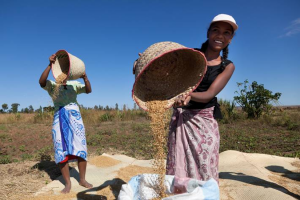
World food prices rose significantly in November, reaching their highest point in more than two years, driven by jumps in the international prices of meat products and vegetable oils. The FAO Food Price Index, which tracks monthly changes in the international prices of commonly-traded food commodities, averaged 177.2 points over the month, up 2.7 percent from October and 9.5 percent from the same period a year earlier.

FAO Director-General Qu Dongyu today participated at the UN Inter-Agency Standing Committee Principals Meeting together with UN counterparts whose agencies, like FAO, work on the humanitarian front. The meeting provided an opportunity for the FAO Director-General to exchange ideas with fellow principals on global humanitarian work issues.
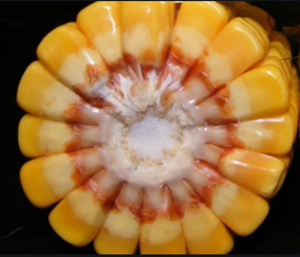
Maize grain yield is determined by agronomically important traits that are controlled by interactions among and between genes and environmental factors. Considerable efforts have been made to identify major quantitative trait loci (QTLs) for yield-related traits; however, few were previously isolated and characterized in maize. In this study, we divided a QTL for kernel row number (KRN), qKRN5, into two tightly linked loci, qKRN5a and qKRN5b, using advanced backcross populations derived from near-isogenic lines.
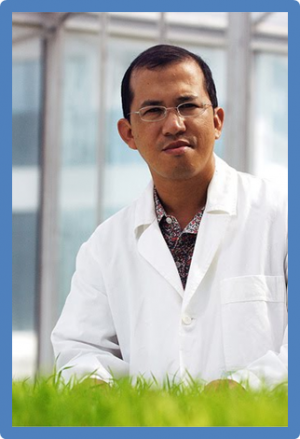
Recognizing the importance of integrating research, effective communication, and science-based regulatory frameworks in harnessing the full potential of agribiotechnology to fuel sustainable agricultural development, SEARCA partnered with the International Service for the Acquisition of Agribiotech Applications (ISAAA) Southeast Asia, Malaysian Biotechnology Information Center (MABIC), and Monash University Malaysia in organizing the Asian Short Course on Agribiotechnology
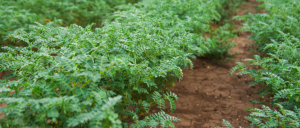
Indian farmers may soon take hold of two new chickpea varieties with improved drought tolerance and disease resistance traits. The varieties were developed by the Agricultural Research Institute of India and Raichur (Kartanaka) University of Agricultural Sciences using molecular methods and genomic innovations, which enabled a short time of research and development.
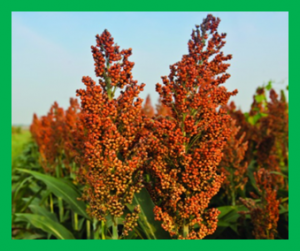
Sorghum is an important food crop for millions of people in Africa and Asia. Whole-genome re-sequencing of sorghum EMS mutants exhibiting an alkali spreading value (ASV) phenotype revealed candidate SNPs in Sobic.004G163700 and Sobic.010G093400. Comparative genomics identified Sobic.010G093400 as a starch synthase IIa and Sobic.004G163700 as a starch branching enzyme IIb. Segregation analyses showed that mutations in Sobic.010G093400 or Sobic.004G163700 co-segregated with the ASV phenotype.

Impossible Burger 2.0 by Impossible Foods, described as "a rare revolution of fake meat" is the grand winner of the Most Important Engineering Innovation in 2019 announced by Popular Science. The winning component of Impossible Burger is the heme, which is produced by genetically engineered yeast.
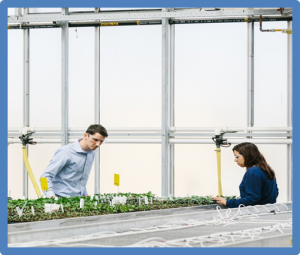
Scientists from Joyn Bio are attempting to engineer microbes that can make plants self-fertilizing, thus reducing the environmental impact of agriculture.Joyn Bio is a join ag-tech venture between synthetic biology company Ginkgo Bioworks and Bayer. Their researchers are searching for ways to design microbes that can remove the use of synthetic fertilizers, which have boosted crop yields over the past century but have harmed soil health and caused environmental concerns.
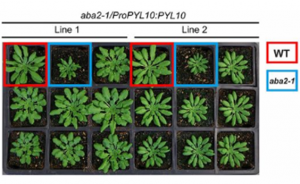
Land plants are considered monophyletic, descending from a single successful colonization of land by an aquatic algal ancestor. The ability to survive dehydration to the point of desiccation is a key adaptive trait enabling terrestrialization. In extant land plants, desiccation tolerance depends on the action of the hormone abscisic acid (ABA) that acts through a receptor-signal transduction pathway comprising
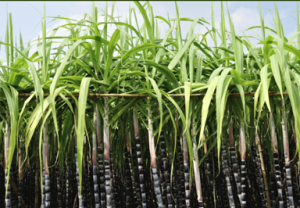
An international group of researchers led by scientists from Brazil's Fundação de Amparo à Pesquisa do Estado de São Paulo (FAPESP) has assembled the most complete genome sequence of commercial sugarcane, mapping 373,869 genes, equivalent to 99.1% of the total genome. The group sequenced the variety SP80-3280, one of the top 20 sugarcane varieties grown in São Paulo. It was chosen for sequencing because more data are available about this variety in scientific literature than any other variety.
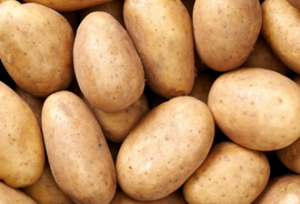
The latest stage of field trials conducted by The Sainsbury Laboratory for a genetically modified (GM) potato with improved tuber quality and resistance to the devastating disease late blight has progressed successfully. The field trials were conducted after successful lab experiments to modify Maris Piper potatoes with late blight resistance genes from Solanum americanum and S. venturii, wild relatives of potato.
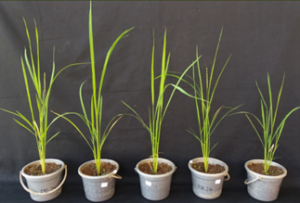
Rice (Oryza sativa L.) is important staple crop in Indonesia. Food demand that continues to rise while inadequate land could be managed by assembling superior cultivar using CRISPR-Cas9 system method. Editing the genome by mutating the GA20ox-2 gene could improve both crop yield and ability to thrive in marginal land (drought). This experiment aims to obtain non-transgenic mutant plants (non Cas9 and hpt genes),