


News & Events
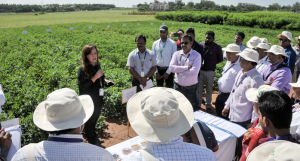
Cutting across disciplines of crop research, scientists gathered at ICRISAT to observe and evaluate germplasm material from its 40-year-old Genebank during a recently-organized field day. A wide array of germplasm of pigeonpea, sorghum, groundnut, pearl millet and other millets including finger millet, were planted for demonstration. The material planted for the inaugural field day was representative of over 120,000 accessions at the Genebank, which has the world’s largest number of accessions of pigeonpea, groundnut, chickpea, sorghum and millets.
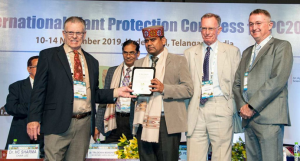
Climate change makes the challenge of crop protection highly formidable, said Dr Trilochan Mohapatra, Director General of the Indian Council of Agricultural Research (ICAR), even as he called for a “global plan” for “global pests” like Fall armyworm at the inaugural of the 19th International Plant Protection Congress (IPPC), which was held for the first time in India. “A segmented approach to tackling global pests will not work. We need a global plan. Integrated pest management approach has helped us increase yields thus far.
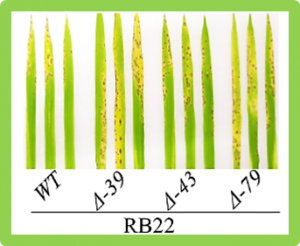
Because of the frequent breakdown of major resistance (R) genes, identification of new partial R genes against rice blast disease is an important goal of rice breeding. In this study, we used a core collection of the Rice Diversity Panel II (C-RDP-II), which contains 584 rice accessions and are genotyped with 700,000 single-nucleotide polymorphism (SNP) markers. The C-RDP-II accessions were inoculated with three blast strains collected from different rice-growing regions in China.
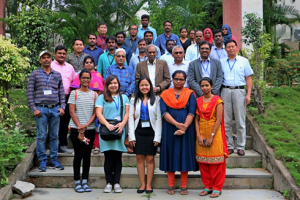
With the intention to build the capacity of partners in the public and private sectors on hybrid rice seed production, the Hybrid Rice Development Consortium (HRDC), in collaboration with the Professor Jayashankar Telangana State Agricultural University (PJTSAU) and the ICAR-Indian Institute of Rice Research (ICAR-IIRR), conducted the International Hybrid Rice Seed Production Training Course (HRSP) at the College of Agriculture, PJTSAU, Hyderabad, India last 22-24 October 2019.
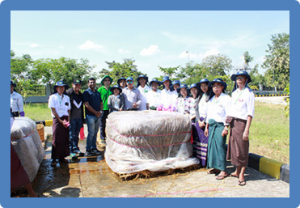
The International Rice Research Institute (IRRI) and Myanmar’s Agricultural Mechanization Department (AMD) conducted a hands-on training on Rice Straw Based Mushroom Cultivation at the Agricultural Machinery Training Center, in Yezin, Nay Pyi Taw, Myanmar. This training is part of a two-week workshop and training on Rice Straw Management, which ran from 4 – 14 November 2019.
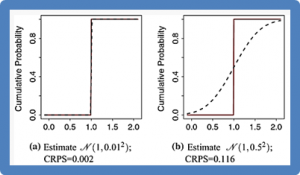
The objective of this paper was to fit different established spatial models for analysing agricultural field trials using the open-source R package INLA. Spatial variation is common in field trials, and accounting for it increases the accuracy of estimated genetic effects. However, this is still hindered by the lack of available software implementations. We compare some established spatial models and show possibilities for flexible modelling with respect to field trial design and joint modelling over multiple years and locations
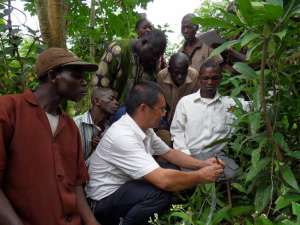
Through South-South Cooperation, countries across the global South are successfully exchanging technical expertise and building innovative partnerships, which if strengthened, can continue to play a crucial role in the achievement of the Sustainable Development Goals. This was the message at the opening today of a three-day event in Kampala, Uganda, marking the 10th Anniversary of the FAO-China South-South Cooperation Programme and Triangular Cooperation.

FAO Director-General Qu Dongyu met today with Sergio Mattarella, President of the Republic of Italy for talks at the head of state’s residence. The parties held a fruitful meeting during which President Mattarella accepted the Director-General’s invitation to mark the 75th anniversary of FAO and celebrate World Food Day next 16 October 2020 at the UN agency’s headquarters in Rome.
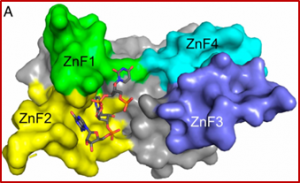
Infection of animal cells by numerous viruses is detected and countered by a variety of means, including recognition of nonself nucleic acids. The zinc finger antiviral protein (ZAP) depletes cytoplasmic RNA that is recognized as foreign in mammalian cells by virtue of its elevated CG dinucleotide content compared with endogenous mRNAs. Here, we determined a crystal structure of a protein-RNA complex containing the N-terminal

Grazing is a major land use activity in grasslands of arid and semiarid regions. As a result, addressing how large herbivore grazing affects biodiversity and ecosystem functions in these ecosystems has been diligently studied by ecologists for many decades (1). In PNAS, Wang et al. (2) suggest that diversifying livestock (i.e., grazing sheep and cattle rather than a single type of livestock) could promote biodiversity and ecosystem function in grasslands

The drug Zolgensma was recently in the news for all the wrong reasons. In August, the US Food and Drug Administration (FDA) gave drug manufacturer AveXis, Inc, a subsidiary of Novartis AG, a major slap on the wrist for violations related to the approval of Zolgensma, a new treatment for spinal muscular atrophy (SMA). The agency said the company had failed to promptly report to the proper regulatory authorities issues of data manipulation in some product testing. Ominous newspaper headlines followed.
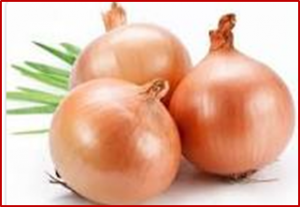
Conserving biodiversity is critical for safeguarding future crop production. Onion (Allium cepa L.) is a globally important crop with a very large (16 Gb per 1C) genome which has not been sequenced. While onions are self-fertile, they suffer from severe inbreeding depression and as such are highly heterozygous as a result of out-crossing. Bulb formation is driven by daylength, and accessions are adapted to the local photoperiod. Onion seed is often directly sown in the field, and hence seedling establishment is a critical trait for production.