


News & Events

In 2018, the landmark decision by the European Court of Justice changed the way gene editing technology should be treated under EU law. The ruling was followed by endless disputes and ongoing debates ending in the ruling that plants and animals created using this technology should be treated and regulated under the GMO Directive as though they were genetically modified.
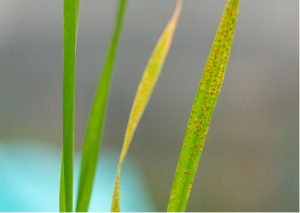
An international team led by researchers at the King Abdullah University of Science and Technology (KAUST) has identified genes that confer resistance to multiple leaf rust species in barley. Simon Krattinger from KAUST's Center for Desert Agriculture refers to their findings as non-host resistance, the resistance of an entire species against all strains of a pathogen. Cereal-rust relationship is ideal for studying nonhost resistance because all cereals belong to the grass family
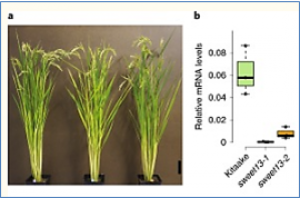
Blight-resistant rice lines are the most effective solution for bacterial blight, caused by Xanthomonas oryzae pv. oryzae (Xoo). Key resistance mechanisms involve SWEET genes as susceptibility factors. Bacterial transcription activator-like (TAL) effectors bind to effector-binding elements (EBEs) in SWEET gene promoters and induce SWEET genes. EBE variants that cannot be recognized by TAL effectors abrogate induction, causing resistance
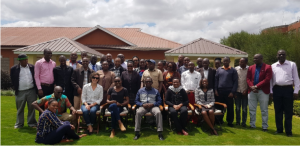
Over the years, Kenya has produced many development policies that have created an enabling environment to address poverty, food security, economic, social, and climate change issues. This puts our country among the top with robust policy and legal instruments that support national growth. In particular, recognizing the importance of climate change, Kenya has developed many policies, plans, and strategies, and ratified international conventions, all in an effort to provide a framework for promoting climate change adaptation and mitigation.
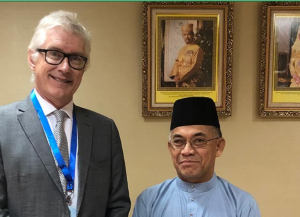
The International Rice Research Institute (IRRI) has successfully secured the endorsement of ASEAN Member States (AMS) and the support of Plus Three dialogue partners for the launch of ASEAN Rice Net, a new regional network for sharing and evaluating advanced IRRI-developed rice breeding lines. The collaborative partnership is underpinned by the Rice Genetic Solutions for Climate Resilience and Value Addition program.
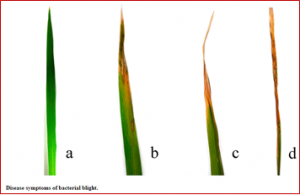
A novel recessive bacterial blight resistance locus designated as a xa-45(t) was identified from Oryza glaberrima accession IRGC 102600B, transferred to O. sativa and mapped to the long arm of chromosome 8 using ddRAD sequencing approach. The identified QTL spans 80 kb region on Nipponbare reference genome IRGSP-1.0 and contains 9 candidate genes.

The agriculture and science community in the Philippines celebrated the launch of Asi@Connect RICESTATS DATABASE: Leveraging the Cloud for Rice Statistics and Analytics.
RICESTATS DATABASE, which is led by the International Rice Research Institute (IRRI), intends to create a reference resource by using an ontology to combine data into a one-stop accessible database with a displayable dashboard for rice statistics.
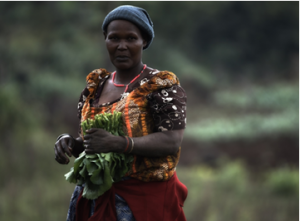
On the slopes of Mount Kilimanjaro, in the Chagga community’s Shimbwe Juu village, much of the area is divided into ‘Kihamba’, plots of land with a traditional home and garden. Here, the Kihamba help form a multilayered agroforestry system that boasts over 500 types of plants and is rich in biodiversity. Coffee, yams, bananas, ginger, taro and cassava thrive amongst fruit trees that are irrigated even in the dry season by a network of water channels flowing 17 kilometres down the mountainside
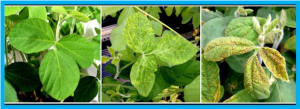
Soybean mosaic virus (SMV) causes significant reductions in soybean yield and seed quality. Because seedborne infections can serve as primary sources of inoculum for SMV infections, resistance to SMV seed transmission provides a means to limit the impacts of SMV

FAO recognizes that agriculture and food systems play a fundamental role in feeding a growing population and solving the climate crisis but that these systems must be transformed through inclusive, multisectoral approaches that reduce emissions, draw down carbon, and boost climate resilience and adaptation.
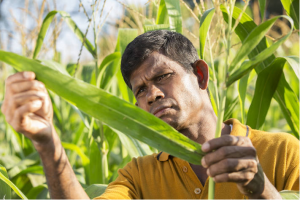
FAO launched today a three-year Global Action for Fall Armyworm Control to scale up efforts to curb the growing spread of the invasive pest which is causing serious damage to food production and affecting millions of farmers across the world. Fall Armyworm (FAW), a crop pest native to the Americas, has rapidly spread through Africa, and to the Near East and Asia in the past four years.
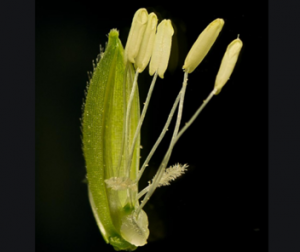
Transposons are controlled by epigenetic regulations. To obtain newly activated autonomous elements of Dart1, a DNA transposon, in rice, seeds of a stable pale yellow leaf (pyl-stb) mutant caused by the insertion of nDart1-0, a nonautonomous element in OsClpP5, were treated with 5-azaC, a demethylating agent. In the 5-azaC-treated M1 plants, 60–70% of the plants displayed variegated pale yellow leaf (pyl-v) phenotype, depending on the concentration of 5-azaC used, suggesting that inactivated Dart1