


News & Events
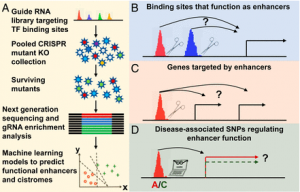
The complexity of multicellular organisms requires the genome to be transcribed in a cell-type–dependent manner that is responsive to signals, such as hormones, from the internal environment. This is mediated by the epigenome, which decorates and organizes the genome in a web of modified histone proteins functioning in nucleosomes and chemical modifications to genomic DNA arranged 3-dimensionally in the cell nucleus. Functional features of the epigenome such as acetylation of histone lysine residues are “read” by specialized proteins such as those containing bromodomains (1).

Three fluffy cheetah cubs lounge under a tree at the Smithsonian Conservation Biology Institute, in Front Royal, Virginia. Off exhibit from the public, the 1-year-old cats roam a large and grassy enclosure behind a high, chain-link fence. They are the newest of 56 cubs born at this facility since 2007 (1). Breeding cheetahs to produce cubs such as these was once famously difficult. The biggest problem was that zoos were “not paying attention to natural history,” says Craig Saffoe

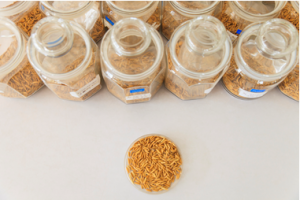
The rice blast caused by the fungus Magnaporthe oryzae is one of the most devastating diseases of rice and can lead to complete failure of the crop under severe cases. The first step in breeding for blast resistance in rice is therefore to identify the novel sources of resistance and cataloguing different blast resistant genes in these genotypes

FAO Director-General QU Dongyu today met Spain’s Prime Minister Pedro Sánchez in talks that focused on strengthening future collaboration. During their discussion, which took place on the side-lines of the COP25 climate summit, the FAO Director-General thanked the Prime Minister for Spain’s commitment to FAO and support for the Hand-in-Hand Initiative, which prioritizes targeted work that benefits people in the world’s most vulnerable regions.
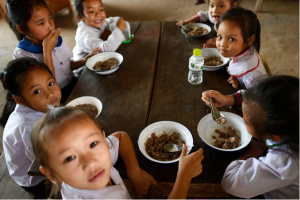
Three million undernourished people in Asia and the Pacific must be lifted out of hunger each month from now on, if the region is to meet the SDG 2 Zero Hunger goal by the end of 2030, says a new report released today by four United Nations agencies. With nearly half-a-billion of the world's undernourished people living in Asia-Pacific - and with the 2030 deadline for Zero Hunger
Plants employ sophisticated molecular machineries to fine-tune their responses to growth, developmental, and stress cues. Plants cellular response influences gene expression through regulating processes like transcription and splicing. To increase the genome coding potential and further regulate the expression, pre-mRNA is alternatively spliced. Serine/Arginine-rich (SR) proteins, a family of pre-mRNA splicing factors, recognize splicing cis-elements and regulate both constitutive and alternative splicing.
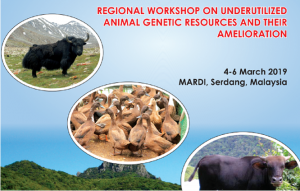
Asia Pacific Association of Agricultural Research Institutions (APAARI) under its program on Asia Pacific Consortium on Agricultural Biotechnology and Bioresources (APCoAB) released the Proceedings of the Regional Workshop on Underutilized Animal Genetic Resources (AnGR) and their Amelioration which was held on March 4-6, 2019 at MARDI Malaysia. Over 60 participants from 14 countries of the region attended the workshop, which provided a platform for sharing experiences and knowledge relating to underutilized AnGR of Asia-Pacific that have food and nutritional value.
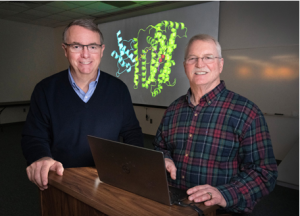
Scientists at the U.S. Department of Energy's Brookhaven National Laboratory have discovered a new function in a plant enzyme that could help in designing new chemical catalysts. The enzyme catalyzes, or initiates, one of the cornerstone chemical reactions needed to synthesize organic molecules, including those found in lubricants, cosmetics, and those used as raw materials for making plastics.
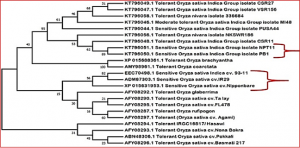
Plants need to maintain a low Na+/K+ ratio for their survival and growth when there is high sodium concentration in soil. Under these circumstances, the high affinity K+ transporter (HKT) and its homologs are known to perform a critical role with HKT1;5 as a major player in maintaining Na+ concentration. Preferential expression of HKT1;5 in roots compared to shoots was observed in rice and rice-like genotypes from real time PCR, microarray, and RNAseq experiments and data.
Food Standards Australia New Zealand (FSANZ) released the final review on foods developed using new breeding techniques (NBT) and found that while views in the community differed, many agreed that the current definitions lack clarity and are no longer fit for purpose when it comes to the safety and regulations of NBT-derived foods.
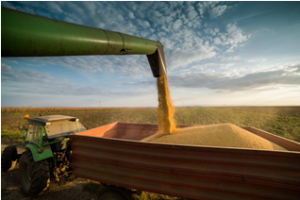
Biotech Crop are considered as the fastest adopted crop technology in the history of modern agriculture, according to ISAAA Pocket K 16: Biotech Crop Highlights in 2018. From the initial planting of 1.7 million hectares in 1996 when the first biotech crop was commercialized, the 191.7 million hectares planted in 2018 indicates a ~113-fold increase.
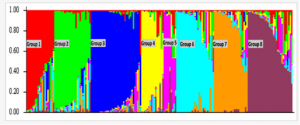
Drought is a major constraint in some rice-growing areas of the United States. Its impact is most severe at the reproductive stage resulting in low grain yield. Therefore, assessment of genetic and phenotypic variation for drought tolerance in US rice germplasm is necessary to accelerate the breeding effort.