


News & Events
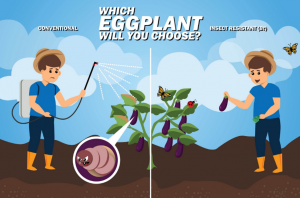
Fruit and shoot borer (FSB) can cause 20 to 92% yield loss in eggplant production pushing Filipino farmers to spray insecticide up to 4 times a week. With the use of Bt technology, researchers from the University of the Philippines Los Baños developed an insect resistant eggplant. This is according to the latest ISAAA infographics titled Which Eggplant Will You Choose?
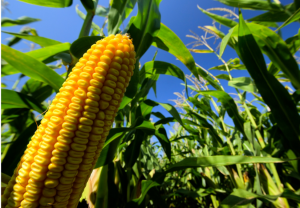
Scientists at the Cold Spring Harbor Laboratory led by Professor David Jackson has found a gene that could help boost the productivity of corn plants by packing more kernels into cobs. The scientists say that one way to boost the productivity of a plant is to redirect some of its resources away from maintaining an overprepared immune system into enhanced seed production.
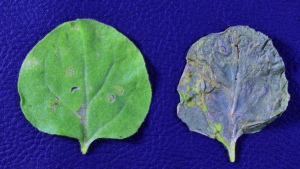
Scientists have tested a new way to protect crops from a widespread and devastating bacterial disease, without using environmentally damaging chemical sprays.An interdisciplinary team at the University of Glasgow have revealed a new method that could protect many important crop species against the common crop bacteria Pseudomonas syringae (Ps). Ps and related bacterial species attack a wide variety of important crops in the UK and worldwide, including tomato, kiwifruit, peppers, olive, soybean and fruit trees, causing huge economic losses
Scientists from China National Rice Research Institute used CRISPR-Cas9 to edit Semi-Dwarf1 (SD1) in elite Chinese rice varieties, which has several desired agronomic traits. The results are published in Scientific Reports. Expanding genetic diversity among rice varieties is vital to prevent genetic erosion or loss of genetic variation in a crop.
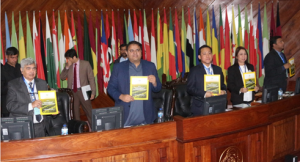
"Pakistan must take advantage of the latest technologies, in particular biotechnology, for the advancement of agriculture," says Mr. Fawad Chaudhry, Federal Minister for Science and Technology, during the National Dialogue on Agricultural Biotechnology for Food Security held on December 11-12, 2019 at COMSTECH Auditorium in Islamabad.
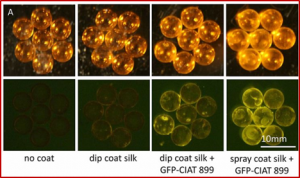
Human population growth, soil degradation, and agrochemical misuse are significant challenges that agriculture must face in the upcoming decades as it pertains to global food production. Seed enhancement technologies will play a pivotal role in supporting food security by enabling germination of seeds in degraded environments, reducing seed germination time, and boosting crop yields.
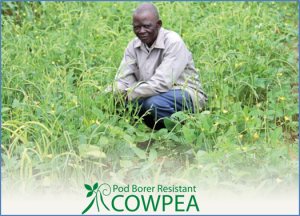
The Federal Government of Nigeria has approved commercialization of a biotech cowpea variety resistant to pod borers. This development places Nigeria as the first country ever to commercialize genetically improved cowpea. The National Committee on Naming, Registration and Release of Crop Varieties approved registration and commercial release of the pod borer resistant (PBR) cowpea at a meeting held on December 12, 2019 in Ibadan.
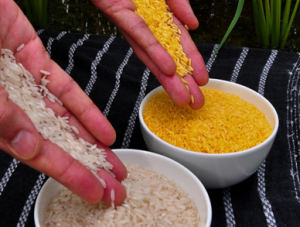
On December 18, 2019, the Philippines' Department of Agriculture-Bureau of Plant Industry (DA-BPI) has issued a biosafety permit to the Philippine Rice Research Institute (PhilRice) and International Rice Research Institute (IRRI) for GR2E Golden Rice for direct use as food and feed, or for processing (FFP). After rigorous biosafety assessment, DA-BPI has found Golden Rice "to be as safe as conventional rice."
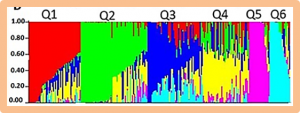
Soybean is a major source of protein for human consumption and animal feed. Releasing new cultivars with high nutritional value is one of the major goals in soybean breeding. To achieve this goal, genome-wide association studies of seed amino acid contents were conducted based on 249 soybean accessions from China, US, Japan, and South Korea.

The President expressed appreciation for the Director-General's support to and participation in the Forum. More broadly, the President acknowledged FAO's support for Egypt's and Africa's agriculture and rural development.For his part, the Director-General thanked the President for his support for FAO's recently launched Hand-in-Hand initiative. He also lauded the President's World Youth Forum initiative and agreed to support next year's Forum.
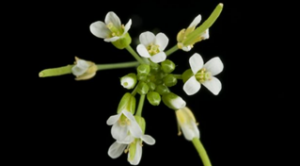
In plant, auxin plays a critical role in many aspects of plant growth and development. Although a number of auxin biosynthetic pathways have been identified. A study by scientists from Thai Nguyen University of Agriculture and Forestry reported that AtYUCCA6 gene belonging to the YUCCA family, encoding putative flavin monooxygenase enzymes plays critical roles in plant growth and development.
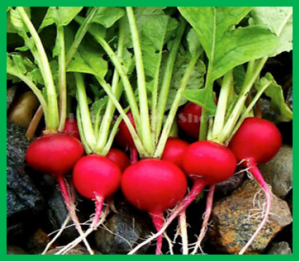
Root cracking is a severe physiological disorder that significantly decreases the yield and commercial value of radish. The genetic and physiological mechanisms underlying this root cracking disorder have not been characterized. In this study, quantitative trait loci (QTLs) putatively associated with radish root cracking were mapped. Ten QTLs were distributed in six linkage groups, among these QTLs, ‘RCr1’ in LG1 was detected over 3 consecutive years and was considered to be a major QTL for root cracking. The QTL ‘RCr1’ was responsible for 4.47–18.11% of variance in the root cracking phenotype