


News & Events
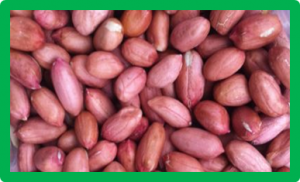
More than 20 years after the last groundnut seed variety was registered in the seed catalog, the groundnut breeding program in West and Central Africa is set to be enhanced through the registration of seven improved groundnut varieties in Burkina Faso. The registration in the West Africa Variety Catalog 2018 was achieved by the Institute of Environment and Agricultural Research (INERA) through its groundnut improvement program in collaboration with ICRISAT.
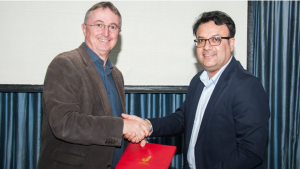
Strengthening its commitment to ensure communities access quality water, AB InBev today announced that they have signed an MOU with the International Crops Research Institute for the Semi-Arid Tropics (ICRISAT) to develop watershed replenishment structures in villages around Charminar and Crown Breweries in Sangareddy district of Telangana, India.
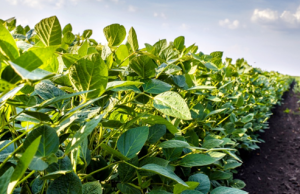
Here, we designed four gRNAs to mutate four LATE ELONGATED HYPOCOTYL (LHY) genes in soybean. In order to test whether the gRNAs could perform properly in transgenic soybean plants, we first tested the CRISPR construct in transgenic soybean hairy roots using Agrobacterium rhizogenes strain K599. Once confirmed, we performed stable soybean transformation and obtained 19 independent transgenic soybean plants.

Whenever seed is transferred between countries, continents or regions there is an inherent risk that new plant pathogens could spread to previously non-infested areas — with potentially devastating consequences. FAO estimates that these pathogens are responsible for the loss of up to 40% of global food crops, and for trade losses in agricultural products exceeding $220 billion each year.
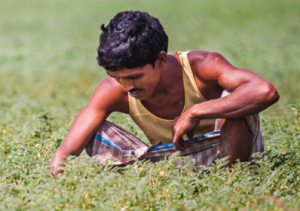
Over the last few decades, deteriorating soil fertility has been linked to decreasing agricultural yields in South Asia, a region marked by inequities in food and nutritional security. As the demand for fertilizers grows, researchers are working with government and businesses to promote balanced nutrient management and the appropriate use of organic amendments among smallholder farmers. The Cereal Systems Initiative for South Asia (CSISA) has published a new policy brief outlining opportunities for innovation in the region.
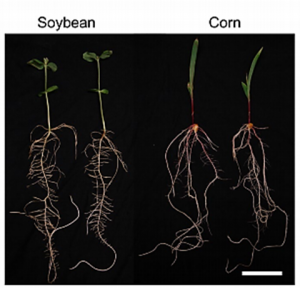
We exploited the broad host range of Fusarium virguliforme to identify differential fungal responses leading to either an endophytic or a pathogenic lifestyle during colonization of corn (Zea mays) and soybean (Glycine max), respectively. To provide a foundation to survey the transcriptomic landscape, we produced an improved de novo genome assembly and annotation of F. virguliforme using PacBio sequencing.

How might we envision regenerative and nourishing food futures for 2050? For food systems to be regenerative, nourishing, and able to provide for 10 billion people, they will need to be very different than they are today. A positive, inspirational Vision, in which we see the possible in our mind’s eye, is the necessary, creative opening to any act of innovation or development we make in the real world.

The International Rice Research Institute (IRRI), together with the International Fertilizer Association (IFA), organized Earth, Air, Fire, & Water: Elements for Sustainability at the United Nations Climate Change Conference, held last December 3, 2019 in Madrid, Spain. The session presented interventions categorized into the 4 “elements” that could contribute to both climate change adaptation and mitigation
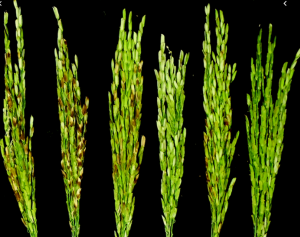
OsCASP1 (Casparian strip domain protein 1) was recently identified to function in Casparian strip (CS) formation at the endodermal cells in rice roots, which was required for selective mineral uptake in rice. Here, we further investigate the functional form of OsCASP1 in vivo. Expression analysis shows that OsCASP1, OsCASP2, OsCASP3, and OsCASP5 were expressed in roots apart from OsCASP4. A yeast two-hybrid (Y2H) assay revealed that OsCASP1 can interact with itself and OsCASP2, but not with OsCASP3 and OsCASP5.
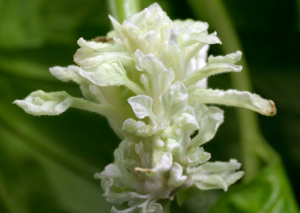
Despite dramatic advances in genome editing with tools such as CRISPR and TALENs, researchers are still using tissue culture in developing and testing new crop varieties. It has been in use for decades and is costly, labor intensive, and requires precise work in a sterile environment. Now, a research team from the University of Minnesota has developed two new methods that will make it significantly faster to produce gene-edited plants.
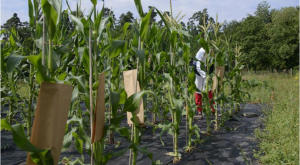
An international team of researchers headed by Professor Marja Timmermans of the Center for Plant Molecular Biology at the University of Tübingen has created a roadmap of genes that drive plant architecture in maize. The team has discovered that the meristem, a small structure at the tip of the plant's shoots, has even greater tasks than scientists had realized. It controls the architecture of the whole plant from the very tip.
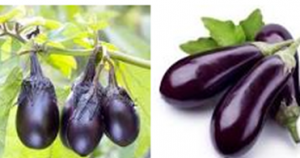
In order to develop a simple, reliable and low cost enzymatic method for the determination of phenolic compounds we studied polyphenol oxidase activity of crude eggplant (S. melongena) extract using 13 phenolic compounds. Catechol, caffeic and chlorogenic acids, and L-DOPA have been rapidly oxidized with the formation of colored products. Monophenolic compounds have been oxidized at a much slower speed.