


News & Events
Capitalizing on genomics, phenomics, and biotechnological disciplines we aim to fast-track breeding progress through big data-driven analytical techniques. We facilitate the adoption of the best technologies related to agronomy and agri-food science components in order to improve rice products and byproducts. We aim to strengthen partnerships, technology transfer, and capacity building for rice-based research-driven innovation.

This research program is focused on advancing the environmental sustainability of the rice-based system through transformative and multidisciplinary research and approaches. Focusing on the five core domains – Air & Climate, Water, Energy, Soil health, and Biodiversity & Pest ecology – this theme works on improving the productivity and income from rice-based systems while minimizing the environmental footprints.
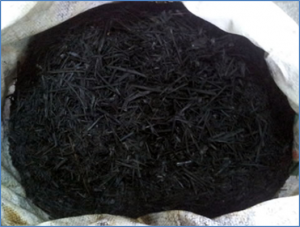
In order to determine whether the current low productivity associated with rainfed cultivation on degraded soils in Ghana can be improved by biochar amendment and irrigation, field experiments with maize were conducted over two seasons in 2017 and 2018. Rice straw biochar at rates of 0 t/ha (B0), 15 t/ha (B15) and 30 t/ha (B30) was combined with irrigation regimes of full irrigation (I100), deficit irrigation (I60) and no irrigation (I0). The I100 treatment was irrigated to field capacity every 3–4 days according to time domain reflectometry measurements while the I60 treatment received 60% of the irrigation amount given to I100 but with the same irrigation frequency.
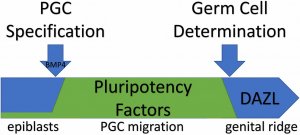
The most critical step of mammalian embryogenesis in securing the future of the species comes just days after fertilization, and immediately after implantation into the uterine wall. At this time, a small subset of epiblast cells receives an inductive signal from neighboring extraembryonic tissue, the germ lineage is specified, and the resulting primordial germ cells (PGCs) are given full potential to eclipse the lifetime of the developing embryo in which they reside (1). After specification, PGCs migrate along the hindgut and through the dorsal mesentery to the genital ridge, the precursor to the gonad.
Eighteen months after articulating our concerns (1) regarding the 2018 “Strengthening Transparency in Regulatory Science” rule proposed by the Environmental Protection Agency (EPA) (2), we have become more concerned in response to recent media coverage and a 13 November hearing on the role of science in decision-making at the EPA. These events suggest that the proposed rule is now moving toward implementation; whether it includes amendments sufficient to address the concerns raised by us and many others remains a question.
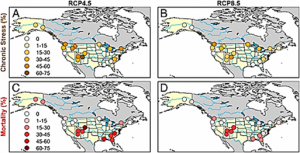
The response of forests to climate change depends in part on whether the photosynthetic benefit from increased atmospheric CO2 (∆Ca = future minus historic CO2) compensates for increased physiological stresses from higher temperature (∆T). We predicted the outcome of these competing responses by using optimization theory and a mechanistic model of tree water transport and photosynthesis.
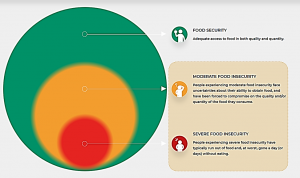
The main indicator for monitoring progress on the eradication of hunger in the world reported here is the prevalence of undernourishment, or PoU (SDG Indicator 2.1.1). Beginning in 2017, the prevalence of severe food insecurity based on the Food Insecurity Experience Scale (FIES) was also included in the report as another, complementary indicator of hunger using a different approach.

Soil is a finite resource, meaning its loss and degradation is not recoverable within a human lifespan. Soils affect the food we eat, the water we drink, the air we breathe, our health and the health of all organisms on the planet. Without healthy soils we wouldn’t be able to grow our food. In fact, it is estimated that 95 percent of our food is directly or indirectly produced on our soils.
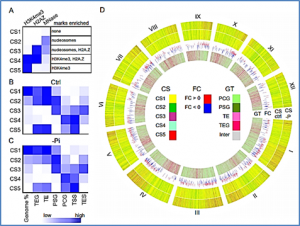
Phosphorus (P) is an essential plant macronutrient vital to fundamental metabolic processes. Plant-available P is low in most soils, making it a frequent limiter of growth. Declining P reserves for fertilizer production exacerbates this agricultural challenge. Plants modulate complex responses to fluctuating P levels via global transcriptional regulatory networks.

CGIAR, a global research partnership for a food-secure future, announced a substantial new investment in a platform designed to put gender equality at the forefront of global agricultural research for development. The CGIAR GENDER (Generating Evidence and New Directions for Equitable Results) Platform will transform the way gender research is done, both within and beyond CGIAR,
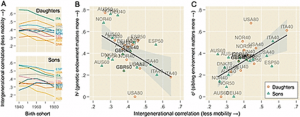
As an indicator of educational opportunity, social scientists have studied intergenerational mobility—the degree to which children’s attainment depends on that of their parents—and how it varies across place or time. We combine this research with behavior genetics to show that societal variation in mobility is rooted in family advantages that siblings share over and above genetic transmission.
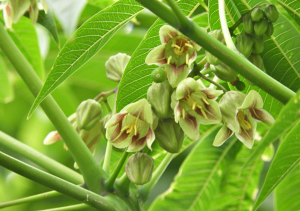
Alternative splicing is an essential post-transcriptional regulatory mechanism that can impact mRNA stability and protein diversity of eukaryotic genomes. Although numerous forms of stress-responsive alternative splicing have been identified in model plants, a large-scale study of alternative splicing dynamics under abiotic stress conditions in cassava has not been conducted. Here, we report the parallel employment of isoform-Seq, ssRNA-Seq, and Degradome-Seq to investigate the diversity