


News & Events
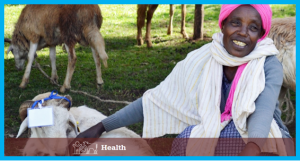
The health of animals and humans are intrinsically linked. Addressing animal diseases can directly improve human health, particularly in low- and middle-income countries. Livestock also indirectly contribute to health goals by supporting better livelihoods and therefore better dietary, educational and health choices.
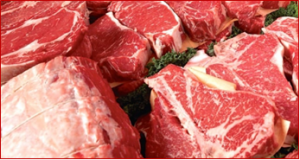
The forecast scenario for the development of the domestic meat market until 2020, on the basis of the author’s approach to the analysis of markets of commodity substitutes, which is related to the study of the behavior of structural changes in the consumption of these commodities, is presented. Reasoned criticism of measures for supporting the Russian meat production complex, which are suggested by the Russian Meat Union, is conducted.
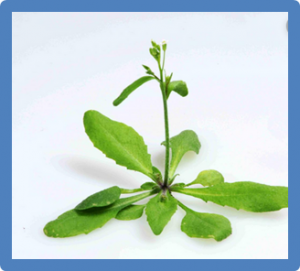
Glycolytic glyceraldehyde-3-phosphate dehydrogenase (GAPDH) is an abundant enzyme whose activity depends on a reactive catalytic cysteine. Here, we determined the effect of 2 cysteine-based redox modifications, namely oxidation and S-glutathionylation, on the functionality and structural stability of GAPDH of Arabidopsis thaliana. Hydrogen peroxide causes the irreversible oxidation of the catalytic cysteine without altering the GAPDH structure.

An IFAD co-sponsored event at COP25 in Madrid brought together experts and celebrity chefs to examine how climate change is affecting food systems. Organised by IFAD’s partner, Kitchen Connection, the event featured Spanish MasterChef winner and ex-Real Madrid footballer Jorge Brazalez, and one of Spain’s top chefs and TV presenters, Pepa Muñoz.
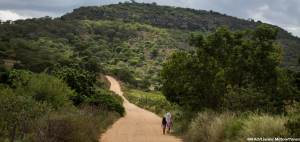
Current food systems are at a crossroads. There is a strong need for transforming food production and consumption patterns in a sustainable way. One where farmers adapt and build resilience to the increasing challenges from climate change and where nutritious food is available for all. Agroecology provides one solution towards this transformation.
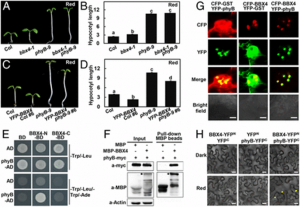
Phytochrome B (phyB) is the predominant red light photoreceptor that transduces red light signals to downstream signaling. On red light exposure, photoactivated phyB interacts with a transcription factor termed PHYTOCHROME INTERACTING FACTOR 3 (PIF3), a repressor of red light signaling, triggering its rapid phosphorylation and subsequent degradation. Thus, phyB-PIF3 defines a critical regulatory hub for red light-mediated seedling development.
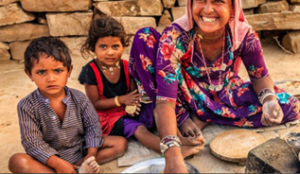
A new approach is needed to help reduce undernutrition and obesity at the same time, as the issues become increasingly connected due to rapid changes in countries’ food systems. This is especially important in low- and middle-income countries, according to a new four-paper report published in The Lancet.
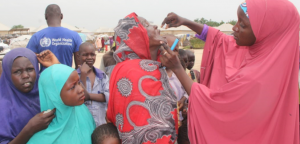
The number of cholera cases decreased globally by 60% in 2018, the World Health Organization (WHO) announced in a report that points to an encouraging trend in cholera prevention and control in the world’s major cholera hotspots, including Haiti, Somalia and the Democratic Republic of the Congo.
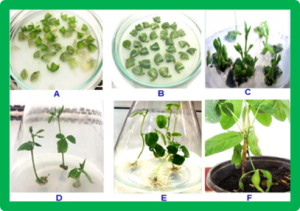
Soybean plants are sensitive to the effects of abiotic stress and belong to the group of crops that are less drought and salt tolerant. The identification of genes involved in mechanisms targeted to cope with water shortage is an essential and indispensable task for improving the drought and salt tolerance of soybean. One of the approaches for obtaining lines with increased tolerance is genetic modification.
The United Nations has declared 2020 as the International Year of Plant Health (IYPH). The year is a once in a lifetime opportunity to raise global awareness on how protecting plant health can help end hunger, reduce poverty, protect the environment, and boost economic development.
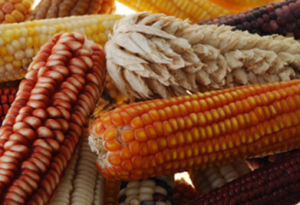
Plant genetic resources for food and agriculture (PGRFA) are essential to sustainable agriculture and food security. They are the raw materials to meet the current and future needs of crop improvement and adaptation programmes. It is therefore very important to conserve and sustainably use them.
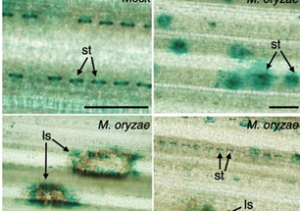
MicroRNAs (miRNAs) are small non-coding RNAs that regulate gene expression at the post-transcriptional level in eukaryotes. In rice, MIR7695 expression is regulated by infection with the rice blast fungus Magnaporthe oryzae with subsequent down-regulation of an alternatively spliced transcript of natural resistance-associated macrophage protein 6 (OsNramp6). NRAMP6 functions as an iron transporter in rice.