


News & Events
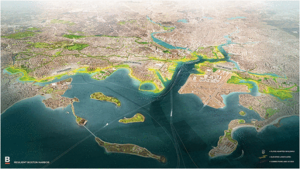
Cities in the Global North are increasingly adopting green interventions meant to enhance their climate resilience capacity. Plans include Philadelphia, PA’s Growing Stronger, Boston, MA’s Resilient Boston Harbor (Fig. 1), Malmö, Sweden’s Green and Blue Infrastructure Plan, and Barcelona, Spain’s Green Infrastructure and Biodiversity Plan. Such plans and interventions mark the emergence of a new type of climate planning: green climate resilience.
Annual review on 2019 agriculture and rural development and 2020 planning by MARD, on-line meeting in December 23, 2019
Dr Nguyen Quang Chon’s preliminary report on “Study on Betonite to enhance soil moisture maintaining to develop major crops’ production in drought-prone farms, Ninh Thuan province; December 27, 2-19
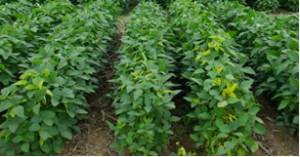
DREB (drought response element binding) like transcription factors can significantly enhance plant tolerance to drought. However, most research on DREB-like proteins to date has been conducted in growth chambers or greenhouses, so there is very little evidence available to support the application of DREB-like proteins in the field.

For the first time, the World Health Organization projects that the number of males using tobacco is on the decline, indicating a powerful shift in the global tobacco epidemic. The findings, published today in a new WHO report, demonstrate how government-led action can protect communities from tobacco, save lives and prevent people suffering tobacco-related harm.
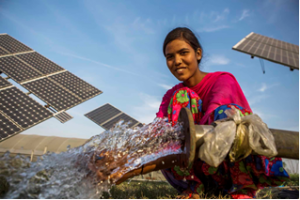
Every week, new reports announce the increasingly dire state of the global climate emergency. UN experts recently warned that global temperatures could rise by almost 4°C by the end of the century. This foreboding outlook was announced on the heels of no less than 11,000 scientists trying, once again, to shock the world into action by warning of the “untold suffering” to come from mounting climate impacts.
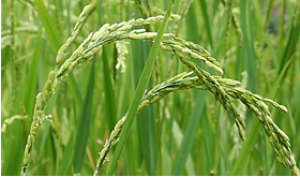
OsHKT1;1 in rice, belongs to the high-affinity K+ Transporter family, has been found to be involved in salt tolerance. OsHKT1;1 in japonica rice (Nipponbare) produces mRNA variants, but their functions remain elusive. In salt tolerant rice, Pokkali, eight OsHKT1;1 variants (V1-V8) were identified in addition to the full-length OsHKT1;1 (FL) cDNA. Absolute quantification by qPCR revealed that accumulation of OsHKT1;1-FL mRNA is minor in contrast to that of OsHKT1;1-V1, -V2, -V4, and -V7 mRNAs, all of which are predominant in shoots, while only V1 and V7 mRNAs are predominant in roots.
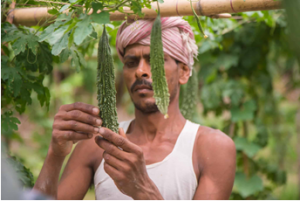
The COP25 talks will have focused mainly on how to mitigate and adapt to an average temperature increase. However, climate change also means that extreme weather events such as floods, droughts, and cyclones are growing in frequency and intensity. We should not ignore the behavioral impacts of these events when modeling or predicting the effects of climate change. Going a step further
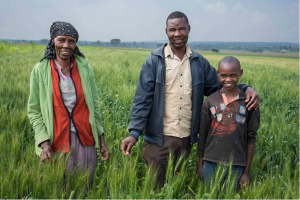
More than 11,000 scientists signed on to a recent report showing that planet Earth is facing a climate emergency and the United Nations warned that the world is on course for a 3.2 degree spike by 2100, even if 2015 Paris Agreement commitments are met. Agriculture, forestry, and land-use change are implicated in roughly a quarter of global greenhouse gas emissions.
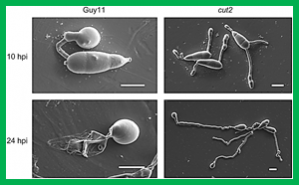
Magnaporthe grisea is the causal agent of rice blast disease, which is the most serious disease of cultivated rice. Aromatic polyketides are its typical metabolites and are involved in the infection process. In the search for novel lead compounds, chemical investigation of the fungus M. grisea M639 has led to the isolation of four new aromatic polyketides
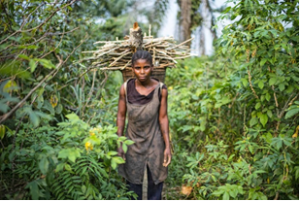
While international and national campaigns to restore degraded landscapes are gaining steam, a serious shortcoming persists at the heart of the restoration agenda: the lack of attention to the socio-political dimensions of ecological interventions, due to interpretations of sustainability that focus only on biophysical aspects
Food systems are a major driver of the unsustainable use of the planet’s increasingly fragile ecosystem. Water, land, forests and the biodiversity they contain are precious, yet finite, natural resources. Agriculture and food systems account for up to 29% of greenhouse gas emissions, and yet will be profoundly affected by the more rapidly changing climate that those emissions cause.
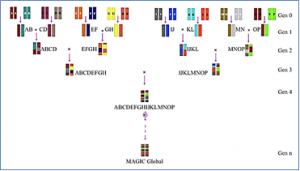
Identification of Quantitative Trait Loci (QTL) has been a challenge for complex traits due to the use of populations with narrow genetic base. Most of QTL mapping studies were carried out from crosses made within the subspecies, either indica × indica or japonica × japonica. In this study we report advantages of using Multi-parent Advanced Generation Inter-Crosses global population, derived from a combination of eight indica and eight japonica elite parents, in QTL discovery for yield and grain quality traits.