


News & Events
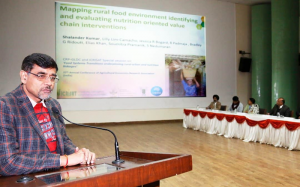
Food systems can be effectively transformed by identifying drivers of food choice and factors influencing personal food environments, thereby enabling effective strategies to link agriculture and nutrition. This was one of the key messages at the recent conference of the Agricultural Economics Research Association (AERA), India, which focused on “Changing Landscape of Rural India” as well as understanding the major trends

Flooding induces anaerobic condition during germination in direct seeded rice systems, severely reducing crop stand establishment in both rainfed and irrigated areas. Rice seeds in flooded soils encounter hypoxia or even anoxia in severe cases, and this hinders germination and seedling growth. This study was conducted to quantify the effects of incorporating two major QTLs, AG1 and AG2, associated with tolerance of flooding during germination and to assess their interactive effects on enhancing crop establishment.

A new paper by scientists at the International Food Policy Research Institute (IFPRI) and Tufts University analyses the costs of adopting the ‘universal reference diet’ recommended for both human and planetary health by the EAT-Lancet Commission (Willett et al., Food in the Anthropocene: The EAT–Lancet Commission on healthy diets from sustainable food systems

IFPRI is pleased to welcome as it’s new Director General Jo Swinnen, an agricultural economist with more than 30 years of experience in policy-relevant research. Johan Swinnen became director general of the International Food Policy Research Institute (IFPRI) in January 2020. Prior to joining IFPRI
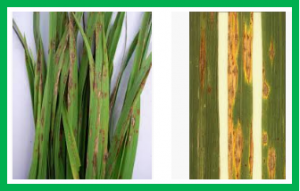
Metabolic switching and rewiring play a dynamic role in programmed cell differentiation. Many pathogenic microbes need to survive in nutrient-deficient conditions and use the glyoxylate cycle, an anaplerotic pathway of the tricarboxylic acid cycle, to produce carbohydrates. The plant pathogenic fungus Magnaporthe oryzae (Pyricularia oryzae) has a unique chitin deacetylase, Cbp1
In a vast world of 7 billion people where all you hear about are our differences, there are some important things that connect us, and one of these is food. Food connects us all. We all need it, depend on it, survive because of it and derive happiness from it. In fact, food is part of who we are. It’s part of our habits and cultures. Hundreds of TV shows, movies and podcasts revolve around the topic of food,
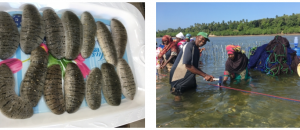
Seaweed is a precious product for the 25 000 Zanzibari farmers that depend on it, 80 percent of whom are women. But climate change is causing a rise in temperatures, taking a toll on our oceans. Warmer waters represent a real threat to seaweed production, inhibiting its growth and making it susceptible to bacteria. The seaweed these female farmers collect mostly for export is no longer flourishing.
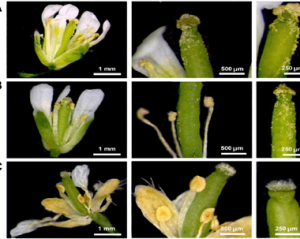
Pathogen secreted cell wall degrading enzymes (CWDEs) induce plant innate immune responses. The expression of rice transcription factor, APETALA2/Ethylene response factor-152 (OsAP2/ERF152) is enhanced in leaves upon treatment with different CWDEs and upon wounding. Ectopic expression of OsAP2/ERF152 in Arabidopsis leads to induction of immune responses like callose deposition and upregulation of both salicylic acid (SA)
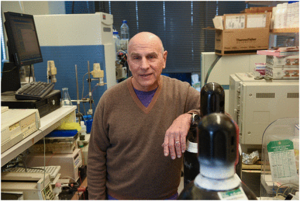
“I was working on the microbiome before it was called the microbiome,” says Harvard microbiologist and immunobiologist Dennis L. Kasper, who for over 4 decades has delineated the central role of the mammalian microbiota in immune system development, maturation, and regulation. His achievements, including identification of immunomodulatory molecules from the microbiome and demonstration of their potential to treat certain immune-mediated diseases

The human brain is the most complex entity we know. Disorders of the human brain are embedded in this complexity. Potential advances in treating these disorders result from the growing understanding of this complex organization. The brains of monkeys have some important similarities to the human brain in structure and organization, and monkeys have therefore been extensively studied to help us to understand human brain disorders
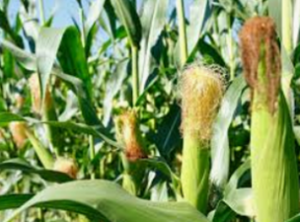
Here we regenerate the subgenome reconstructions for the most recent maize reference genome assembly. Based on both expression and abundance data for homeologous gene pairs across multiple tissues, we observed functional divergence of genes across subgenomes. Although the genes in the larger maize subgenome are often expressing more highly than their homeologs in the smaller subgenome

Gardill et al. (1) describe a crystal structure for a complex of Ca2+-loaded calmodulin (CaM) and the cardiac NaV1.5 Na+ channel intracellular C terminus (C-terminal domain [CTD]) (Protein Data Bank [PDB]: 6MUD). They found, as we reported (2) with ternary complexes (PDB: 4JQ0 and 4JPZ) of NaVCTD, Ca2+-CaM, and the fibroblast growth factor homologous factor (FHF) FGF13B (3, 4),