


News & Events

President Rodrigo Roa Duterte formally presented the rank and title of Order of National Scientist to Dr. Emil Q. Javier, former Minister of Science and Technology and an advocate of agricultural modernization, during a ceremony held at Malacañang Palace on January 7, 2020. In August 2019, the president released Proclamation 781 which recognizes Dr. Javier's outstanding work in the field of agriculture and his contributions to the progress of science and technology in the Philippines and the world.
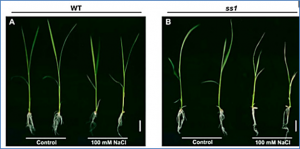
A panel of ethane-methyl-sulfonate-mutagenized japonica rice lines was grown in the presence of salinity in order to identify genes required for the expression of salinity tolerance. A highly nontolerant selection proved to harbor a mutation in FLN2, a gene which encodes fructokinase-like protein2. Exposure of wild-type rice to salinity up-regulated FLN2, while a CRISPR/Cas9-generated FLN2 knockout line was hypersensitive to the stress.
Minister for Prime Industries and Regional Development Tim Whetstone released his statement at the start of 2020, saying that farmers in South Australia (SA) can now opt to grow genetically modified (GM) crops, following the State Parliament's move to lift SA's moratorium that banned GM crops in the region since 2004.
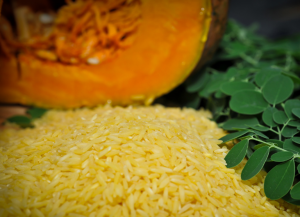
The Golden Rice Humanitarian Board, through their Executive Secretary Dr. Adrian Dubock, has expressed support to regulators in the Philippines and lauded them for their approval of GR2E Golden Rice for direct use as food and feed, or for processing (FFP) on December 18, 2019. Dr. Dubock expressed their support through a statement released to ISAAA after calls to revoke the approval were made on Christmas Day.
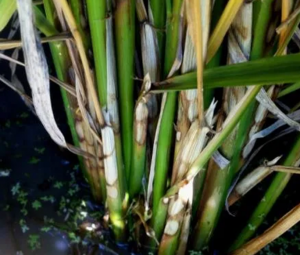
To characterize the genetic basis for ShB resistance in rice, we conducted association studies for traits related to ShB resistance, namely culm length (CL), lesion height (LH), and relative lesion height (RLH). Combined a single locus genome-wide scan and a multi-locus method using 2,977,750 single-nucleotide polymorphisms to analyse 563 rice accessions, we detected 134, 562, and 75 suggestive associations with CL, LH, and RLH, respectively. The adjacent signals associated with RLH were merged into 27 suggestively associated loci (SALs) based on the estimated linkage disequilibrium blocks.
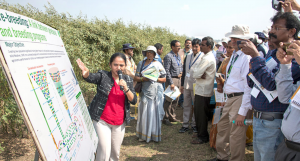
With a view to using new and diverse sources of genetic variations in pigeonpea, the Pre-breeding Theme at ICRISAT is leading the drive to use wild Cajanus species to create new variability for ready use in its pigeonpea breeding program. The narrow genetic base of cultivated pigeonpea is one of the major factors hindering its genetic improvement.
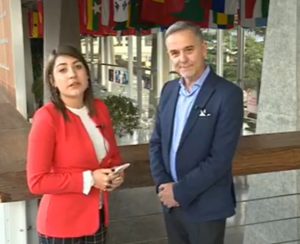
Nurses and midwives play a vital role in providing health services. These are the people who devote their lives to caring for mothers and children; giving lifesaving immunizations and health advice; looking after older people and generally meeting everyday essential health needs. They are often, the first and only point of care in their communities.
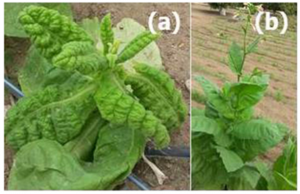
The full-length sequences of 3 begomovirus and 3 betasatellite clones, isolated from 3 plants, were obtained. Analysis of the full-length sequences determined showed the virus to be a variant of Chilli leaf curl virus (ChiLCV) and the betasatellite to be a variant of Tomato leaf curl betasatellite (ToLCB). Both the virus and the betasatellite isolated from tobacco show the greatest levels of sequence identity to isolates of ChiLCV and ToLCB identified in other hosts in Oman. Additionally clones of ChiLCV and ToLCB were shown, by Agrobacterium-mediated inoculation, to be infectious to 3 Nicotiana species, including N. tabacum. In N. benthamiana the betasatellite was shown to change the upward leaf rolling symptoms to a severe downward leaf curl, as is typical for many monopartite begomoviruses with betasatellites.
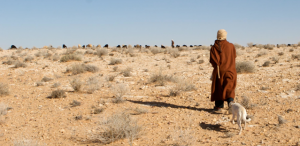
The Government of Sweden has contributed SEK 100 million (approximately US$12 million) to help rural farmers adapt to a changing climate and to help reduce greenhouse gas emissions in developing countries, the International Fund for Agricultural Development (IFAD) announced today. Sweden’s contribution supports IFAD’s commitment to invest at least $890 million in climate-focused actions by 2021.

We asked colleagues for their favourite podcasts on topics related to development, food, agriculture and climate. If you are looking to learn something new in 2020, check out the links below. Have some other suggestions? Let us know in the comments on LinkedIn and Twitter. Through this podcast, IFAD raises awareness on the challenges smallholder farmers in developing countries are facing around food security.
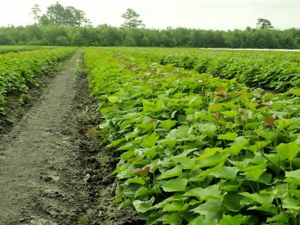
Here, as a first step toward understanding the genetic basis of CSRFAB in sweetpotato, we performed a genome-wide association study (GWAS) using phenotypic data from four distinct developmental stages and 33,068 single nucleotide polymorphism (SNP) and insertion-deletion (indel) markers. Based on Bonferroni threshold (p-value < 5 × 10- 7), we identified 34 unique SNPs that were significantly associated with the complex trait of CSRFAB at 150 days after planting (DAP)

Droughts affect crop production across the world. A central challenge for researchers and policymakers is to devise technologies that lend greater resilience to agricultural production under this particular environmental stress. Interdrought 2020 aims to facilitate the development of concepts, methods and technologies associated with plant production in water-limited environments.