


News & Events
After peaking at 7.1% in 2018, real GDP growth in 2019 expanded 7.02 %, fueled by a robust expansion of the processing and manufacturing sector and service sector, according to the General Statistics Office (GSO). Economic and political reforms under Đổi Mới (renovation), launched in 1986, have spurred rapid economic growth, transforming what was then one of the world’s poorest nations into a lower middle-income country.

Enhancing oil content is an important breeding objective in peanut. High-resolution mapping of quantitative trait loci (QTLs) with linked markers could facilitate marker-assisted selection in breeding for target traits. In the present study, a recombined inbred line population (Xuhua 13 × Zhonghua 6) was used to construct a genetic map based on double-digest restriction-site-associated DNA sequencing (ddRAD-seq).
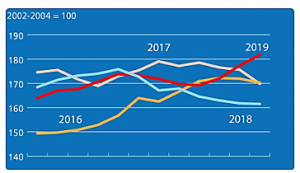
World food prices rose for the third consecutive month in December, as a strong rally in vegetable oil prices drove the FAO Food Price Index to its highest level in five years. The FAO Food Price Index averaged 181.7 points during the month, a 2.5 percent increase from November and the highest level since December 2014.

This In Brief version of one of FAO’s most important publications provides a comprehensive overview of a critical subject: biodiversity. The plants and animals that provide food, feed, fuel and fibre—and the organisms that support food production—are critical for safeguarding global food security, underpinning healthy and nutritious diets, improving rural livelihoods and enhancing the resilience of people and communities.
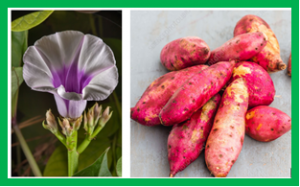
In populations depending on sweetpotato for food security, starch is an important source of calories, while β-carotene is an important source of provitamin A. The negative association between the two traits contributes to the low nutritional quality of sweetpotato consumed, especially in sub-Saharan Africa. Using a biparental mapping population of 315 F1 progeny generated from a cross between an orange-fleshed and a non-orange-fleshed sweetpotato variety
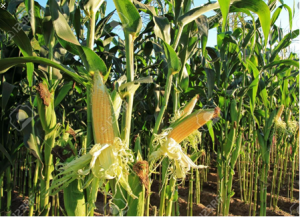
The Chinese Ministry of Agriculture and Rural Affairs announced their plan to release biosafety certificates to domestically grown, genetically modified (GM) soybean and corn, as they move forward to commercializing GM grain production in the global market. The announcement was released after no objections were received by the Ministry during the 15-day period for soliciting public opinion about soybean SHZD32-01 developed by Shanghai Jiaotong University.

A group of scientists were able to successfully developed genetically modified (GM) poplar trees that do not emit the gas isoprene. Two field trials in the US showed that the GM poplars were not affected by their non-production of isoprene and they grew normally just like conventional poplars. Isoprene is a gas produced by poplar plants like palms and eucalyptus in their leaves during growth as a response to climate stress
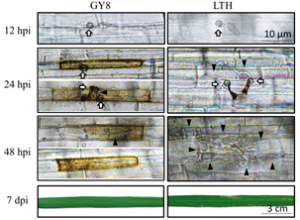
Rice blast disease caused by Magnaporthe oryzae (M. oryzae) is one of the most serious diseases. Although previous research using two-dimensional gel-based proteomics to assess the proteins related to the rice blast resistance had been done, few proteins were identified. Here, we used the iTRAQ method to detect the differentially expressed proteins (DEPs) in the durable resistant rice variety Gangyuan8 (GY8) and the susceptible rice variety Lijiangxintuanheigu (LTH) in response to M.
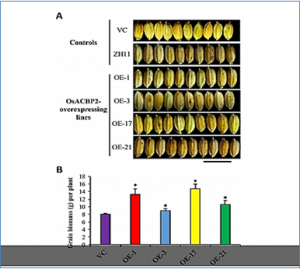
A research project led by scientists and postdoctoral fellows at the School of Biological Sciences of The University of Hong Kong (HKU), in collaboration with researchers from the University of Calgary (Canada) and Rothamsted Research (United Kingdom), has provided a new strategy to enhance grain yield in rice by increasing grain size and weight.
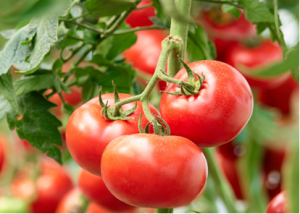
During pathogen attacks, plants activate a molecular signaling cascade to switch on its defense mechanisms, one of which involves sacrificing host cells to the pathogen. This process is called cell death response and ensures that only a few host cells die. Tomatoes use this mechanism when they are attacked by a bacterial pathogen known as Pseudomonas syringae pv. tomato, which causes speck disease.
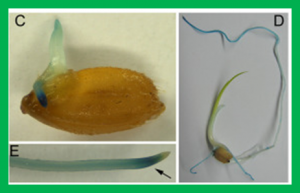
In rice, OsABA8ox encodes abscisic acid (ABA) 8′-hydroxylase, which catalyzes the committed step of ABA catabolism. The contribution of ABA catabolism in root development remains unclear. We investigated the role of OsABA8ox2 in root growth and development and drought response. GUS staining results showed that OsABA8ox2 was expressed mainly in roots at seedling stage and was strongly expressed in the meristematic zone of the radicle.
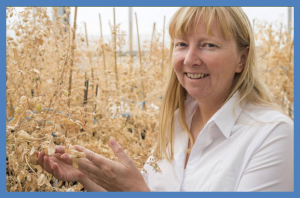
According to Dr. Bramley, the traditional approach involves inserting aluminium access tubes into the soil to measure soil water content using a neutron probe. However, Dr. Bramley says, this method is time-consuming and labor-intensive. When Dr. Bramley saw University of Sydney Professor of Digital Agriculture and Soil Science Alex McBratney's presentation on various technologies for measuring the soil properties,