


News & Events
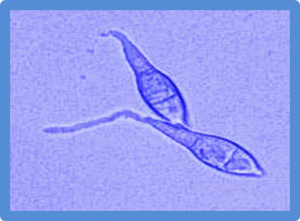
Rice blast caused by Magnaporthe oryzae B. Couch is one of the most devastating diseases on rice. Camptothecin (CPT), which was primarily isolated from Camptotheca acuminata, is well-known for its anti-tumor activities, and is also developed as a potential biological pesticide. We previously investigated the anti-microbial activities of CPT against 11 fungi, 3 oomycetes, and 4 bacteria, and found that CPT was strongly effective against M. oryzae, indicating its potential as a lead for developing fungicide against rice blast. However, the anti-fungal effects of CPT on M. oryzae need further elucidation. In this study, the anti-fungal activities of CPT against M. oryzae were further investigated, which revealed that CPT was effective against M. oryzae both in vitro and in vivo.
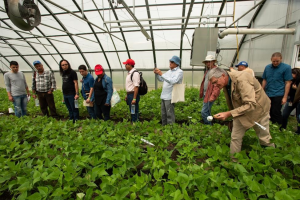
The climate change point-of-no-return may still be 1 degree C away. But that is of little solace to the people whose lives have already been upended by a warmer climate. They include growers and consumers of one of the most important protein sources in low-income countries: the common bean, a staple in diets from the highlands of Central America to the vast expanses of sub-Saharan Africa.
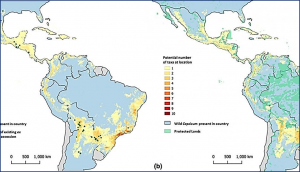
Growing up in the wild makes plants tough. Wild plants evolve to survive the whims of nature and thrive in difficult conditions, including extreme climate conditions, poor soils, and pests and diseases. Their better-known descendants – the domesticated plants that are critical to a healthy diet – are often not nearly as hardy. The genes that make crop wild relatives robust have the potential to make their cultivated cousins – our food plants – better prepared for a harsh climate future. But a series of new research papers show these critical plants are imperiled.
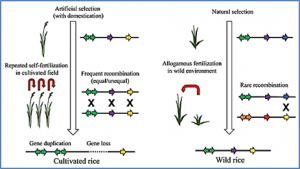
To elucidate R-gene evolution, we compared the genomic compositions and structures of chromosome regions carrying R-gene clusters among cultivated and wild rice species. Map-based sequencing and gene annotation of orthologous genomic regions (1.2 to 1.9 Mb) close to the terminal end of the long arm of rice chromosome 11 revealed R-gene clusters within six cultivated and ancestral wild rice accessions. NBS-LRR R-genes were much more abundant in Asian cultivated rice (O. sativa L.) than in its ancestors, indicating that homologs of functional genes involved in the same pathway likely increase in number because of tandem duplication of chromosomal segments and were selected during cultivation.
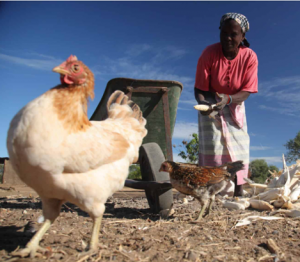
What is a food system? How does a food system differ from a value chain? What is the difference between food security and nutrition security? To help answer these questions and more, the CGIAR Research Program on Agriculture for Nutrition and Health (A4NH) has compiled a glossary of key terms related to food systems to help create a common understanding of these many elements.
Plants are the source of the air we breathe and most of the food we eat, yet we often don’t think about keeping them healthy. This can have devastating results. FAO estimates that up to 40% of food crops are lost due to plant pests and diseases annually. This leaves millions of people without enough food to eat and seriously damages agriculture - the primary source of income for rural poor communities.
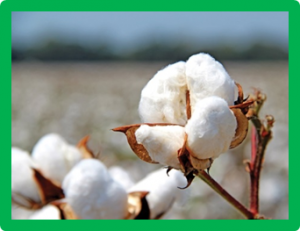
A short fiber mutant Ligon-lintless-y was created through treating the seeds of the cotton line MD15 with ethyl methanesulfonate. Genetic analysis indicated that the short fiber phenotype is controlled by a single recessive locus designated liy. From F2 populations derived from crosses between the mutant and its wild type (WT), we selected 132 short fiber progeny (liy/liy) and made two DNA bulks. We sequenced these DNA bulks along with the two parents of the population. The liy locus was located on chromosome A12
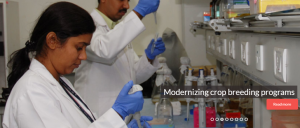
Developing crop varieties that meet the needs of all stakeholders, with farmers, value chain actors and end-use consumers having specific needs for attributes of breeds or varieties, is a challenging task. Defining, communicating and incorporating desirable traits into breeding programs requires focused interaction between different disciplines and stakeholder groups in a process known as product profile development.
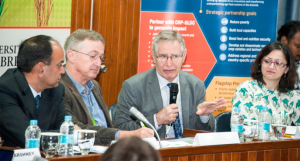
Around a hundred scientists from varied disciplines, who gathered to discuss an India-UK joint research program, called for more interdisciplinary research to make Indian agriculture sustainable in a changing world and to ensure food security. The first General Assembly of TIGR2ESS (Transforming India’s Green Revolution by Research and Empowerment for Sustainable food Supplies), a UK-India research program which began in 2018 and brought over 20 research institutions together
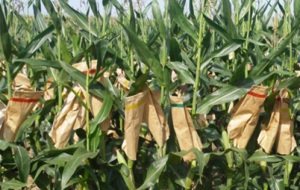
In plant breeding, genetic diversity is important to maintain the pace of genetic gain and the ability to respond to new challenges in a context of climatic and social expectation changes. Many genetic resources are accessible to breeders but cannot all be considered for broadening the genetic diversity of elite germplasm. This study presents the use of genomic predictions trained on a collaborative diversity panel, which assembles genetic resources and elite lines, to identify resources to enrich an elite germplasm
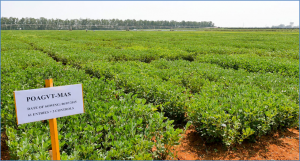
Two new groundnut varieties with more than 78% oleic acid have captured the attention of the Indian groundnut industry which is keen on marketing ‘healthier’ oil to consumers in the next 2-3 years. Information on the new varieties which come with a potential yield of more than 3 tons per hectare (see box) were shared by researchers at a meeting with the groundnut industry.
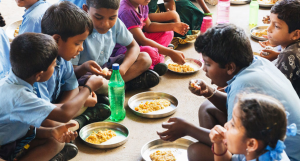
Findings from a recently published three-month feeding study with 1,500 children in Karnataka suggest that millet-based mid-day meals can increase relative growth by 50%. Children rated the meals, which were designed by scientists and chefs and included little millet as a rice substitute, over 4.5 on 5 for taste.