


News & Events
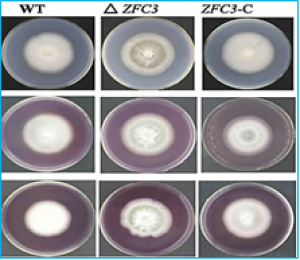
We first confirmed that the ZFC3-RFP fusion protein is localized within the mitochondria. The deleted mutant strains of ZFC3 (∆ZFC3) showed the enhanced expression level of mtATP6, particularly mtATP8, and almost unchanged nATP9. ΔZFC3 produces more conidia and more tolerance to multiple stressors. The knock-out strain shows more melanin accumulation suggests the susceptibility to aging. ΔZFC3 displays faster early-stage hypha infiltration involved in MAP1-mediated pathogenicity in host rice.

Scientists from Cornell University reported in Bacteriology journal that wild tomato varieties are more resistant to bacterial canker than the traditionally cultivated varieties. They aimed at understanding how bacteria spread and colonize in wild tomatoes compared to the cultivated tomatoes. They zeroed in on the plants' vascular systems, particularly in their xylem which transports water and nutrients from the soil to other parts of the plant.
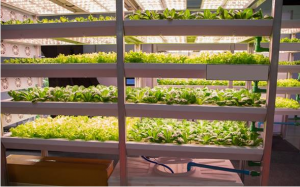
Dr. Huw Jones of Aberystwyth University stressed the importance of genetic engineering in the future of agriculture, saying that while there is already a huge innovation in hydrophonic vertical farming and what is lacking is the plant architecture itself as most farmers are still using the old seeds.
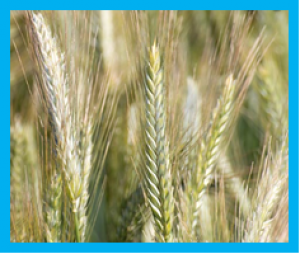
Fusarium head blight (FHB) is a major problem in cereal production particularly because of mycotoxin contaminations. Here we characterized the resistance to FHB in triticale breeding material harboring resistance factors from bread wheat. A highly FHB-resistant experimental line which derives from a triticale × wheat cross was crossed to several modern triticale cultivars.

The genome of white lupin, an annual pulse crop cultivated for its protein-rich seeds, has been sequenced by an international team of researchers from 11 French and foreign laboratories coordinated by Benjamin Péret at the Biochimie et physiologie moléculaire des plantes laboratory (CNRS/Inrae/Université de Montpellier/Montpellier SupAgro).
Plants possess an immune system much like humans and animals. It can recognize pathogenic fungi by the chitin in their cell walls, triggering disease resistance. Some fungi hide from plant immune system by converting chitin into chitosan. Researchers at the University of Münster have found that plants can react to a certain pattern in this chitosan, stimulating their immune system.
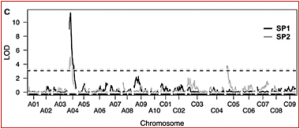
Turnip yellows virus (TuYV) is transmitted by the peach-potato aphid (Myzus persicae) and causes severe yield losses in commercial oilseed rape crops (Brassica napus). There is currently only one genetic resource for resistance to TuYV available in brassica, which was identified in the re-synthesised B. napus line ‘R54’. In our study, 27 mostly homozygous B. napus accessions

Precise genome editing by systems like CRISPR-Cas9 needs high-efficiency homology-directed repair (HDR). Various techniques have been developed to improve HDR but with limited success. Thus, scientists from King Abdullah University of Science and Technology in Saudi Arabia fused Cas9 endonuclease and the Agrobacterium VirD2 relaxase (Cas9-VirD2) to facilitate HDR. The results of their study are published in Nature.

United States Secretary of Agriculture Sonny Perdue urges European policymakers to make science-based decisions if they want to help their farmers tackle concerns over sustainability. Perdue said that decisions on food should be based on science. Secretary Perdue spoke to a group of journalists in Brussels, Belgium, and said that EU policymakers are aware of the challenges in agriculture.
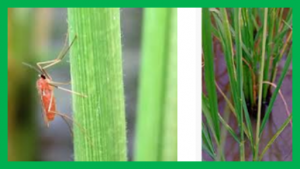
The Asian rice gall midge (GM; Orseolia oryzae; Diptera: Cecidomyiidae) is a major destructive pest affecting rice cultivation regions. The characterization of GM-resistance genes and the breeding of resistant varieties are together considered the most efficient strategy for managing this insect. Here, the Gm6 resistance gene derived from the Kangwenqingzhan (KW) variety was found to be located on the long arm of chromosome 4 using the F2 population of 9311/KW

A team of Japanese researchers, led by Dr. Naoko Kato-Nitta, research scientist at Tokyo's Joint Support-Center for Data Science Research and The Institute of Statistical Mathematics, surveyed perceptions of Japanese experts and the public of the benefits, risks, and value of using gene editing for developing crops compared to other emerging or conventional breeding techniques in Japan
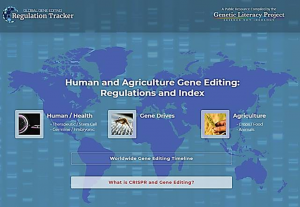
The Genetic Literacy Project has developed two interactive tools that track and index gene editing and gene editing regulations worldwide, helping to illuminate how regulations can encourage or hinder innovation.The Global Gene Editing Regulation Tracker and Index sum up gene editing regulations in the field of agriculture, medicine, and gene drives per country, giving a picture of each country's regulatory timeline, and indicate which products and therapies are in the pipeline.