


News & Events
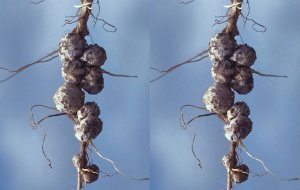
Arbuscular mycorrhizal fungi (AMF) form associations with over 80% of all terrestrial plant species and assist their host plants by increasing their nutrient uptake, drought tolerance, and resilience against pathogens and pests. Genotypic variation of crop plants to AMF colonization has been identified in crops, including soybean; however, the genetics controlling levels of AMF colonization in soybean are unknown. The overall goal of our study was to identify genomic regions associated with mycorrhizal colonization in soybean using genome-wide association analysis.

Cuba's Center of Genetic Engineering and Biotechnology (CIGB) announced it has developed a biotech sweetener that the country can sell as a substitute for sugar. The said sweetener, the fruit-oligosaccharide (FOS), is made from sorbitol and an enzyme developed by CIGB. The technology on how the enzyme was made will be revealed during the BioCubaAgro 2020 Congress.
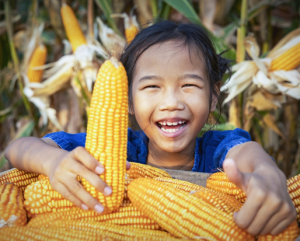
Researchers from the Chinese Academy of Agricultural Sciences improved the tocopherol composition of maize to maximize its use for human and livestock health. The results are published in Transgenic Research. α-tocopherol, a form of vitamin E, is the most effective antioxidant. It is produced from γ-tocopherol by γ-tocopherol methyltransferase (γ-TMT, VTE4) in the last step of the tocopherol biosynthetic pathway.
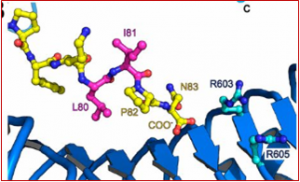
Plants use leucine-rich repeat receptor kinases (LRR-RKs) to sense sequence diverse peptide hormones at the cell surface. A 3.0-Å crystal structure of the LRR-RK GSO1/SGN3 regulating Casparian strip formation in the endodermis reveals a large spiral-shaped ectodomain. The domain provides a binding platform for 21 amino acid CIF peptide ligands, which are tyrosine sulfated by the tyrosylprotein sulfotransferase TPST/SGN2. GSO1/SGN3 harbors a binding pocket for sulfotyrosine and makes extended backbone interactions with CIF2
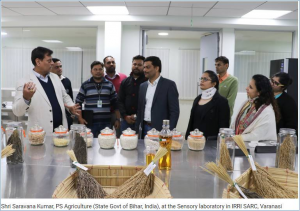
Government of Bihar’s Principal Secretary of the Department of Agriculture Shri N. Saravana Kumar visited the IRRI South Asia Regional Centre (IRRI SARC) to better understand the research and development prowess of the state-of-the-art R&D facility and to observe the ongoing field experiments aimed to produce better rice varieties and improve rice-based agri-food systems.

FAO Director-General QU Dongyu met today with Rabobank delegation led by Suzanne van Tilburg, the Dutch bank’s Global Head Corporate Relations. The visit followed the recent meeting between the Director-General and Wiebe Draijen, CEO Rabobank, and Berry Marttin, Member of the Managing Board of Rabobank, on the sidelines of the World Economic Forum in Davos.
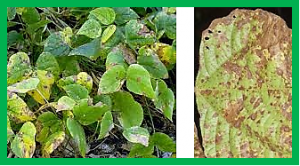
Cercospora leaf spot (CLS) caused by Cercospora canescens is an important disease of cowpea (Vigna unguiculata). A previous study using an F2 population [CSR12906 (susceptible) × IT90K-59-120 (resistant)] identified a major QTL qCLS9.1 for resistance to CLS. In this study, we finely mapped and identified candidate genes of qCLS9.1 using an F3:4 population of 699 individuals derived from two F2:3 individuals segregating at qCLS9.1 from the original population. Fine mapping narrowed down the qCLS9.1 for the resistance to a 60.6-Kb region on cowpea chromosome 10.

The Food and Agriculture Organization of the United Nations and the Arbor Day Foundation today announced the first cities to be recognized under the Tree Cities of the World programme, designed to help create more resilient and sustainable cities. Among the first-movers were capital cities such as Ljubljana, Quito, Paris, Yerevan, major metropolitan areas including New York, San Francisco and Toronto, and a host of smaller centers such as Bradford in the United Kingdom, Thunder Bay in Canada, Tempe, Arizona and Mantova, Italy, where the worldwide initiative was launched in 2018.
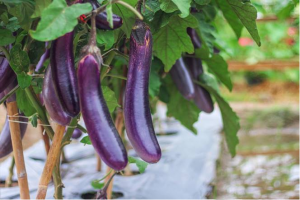
SEARCA Biotechnology Information Center (SEARCA BIC) releases The Bt Eggplant Story, a new video series that documents the development of Bt eggplant in the Philippines and highlights the clamor of farmers for the release of the genetically modified (GM) crop. Eggplant farming is a major source of farmer income but the current situation puts farmers, consumers, and the environment at risk. Eggplants are susceptible to the eggplant fruit and shoot borer (EFSB), causing around 73% yield loss annually.
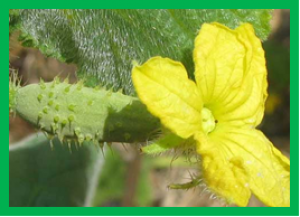
The rind appearance of cucumber is one of the most important commercial quality traits. Usually, an immature cucumber fruit has a uniform rind that varies from green to yellow to white among different cultivated varieties. In the present paper, we isolated a novel fruit appearance cucumber mutant, ist, that has an irregularly striped rind pattern. The mutant displayed green irregular stripes on a yellow-green background at the immature fruit stage.
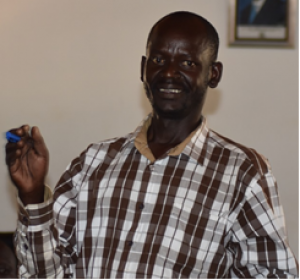
Farmers from five districts in the West Nile region in North Western Uganda are upbeat about the prospect of growing genetically modified disease resistant cassava following a recent training workshop organized by Uganda Biosciences Information Center (UBIC)."We have been misinformed and misled on the subject of GMOs by our political leaders and activists. I cannot overemphasize how much potential this technology has for us as farmers," noted Sarah Alezuyo-a farmer from Maracha district. Mary Abiria, a farmer group from Yumbe district declared, "We need this disease resistant (GM) cassava now!"

The United States Environmental Protection Agency (EPA) has released the results of its regulatory review of glyphosate in January 2020 after receiving and considering public comments. In their interim decision, EPA continues to find that there are no risks of concern to human health when glyphosate is used in accordance with its current label.