


News & Events
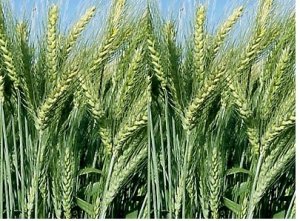
Multiple disease resistance (MDR) aims for cultivars that are resistant to more than one disease which is an important prerequisite for the registration of commercial cultivars. We analyzed a European winter wheat diversity panel of 158 old and new cultivars for four diseases by natural (powdery mildew) and artificial inoculation (yellow rust, stem rust, Fusarium head blight) observed on the same plot in a multilocation trial.

Researchers from Purdue University conducted a survey that showed that some consumers are willing to pay more for labeled foods even if the label's claims are bogus. In their results, they state that the likelihood of overpricing redundant labels is associated with willingness-to-pay premiums for organic food, which may suggest that at least some of the premium for organic is a result of misinformation.
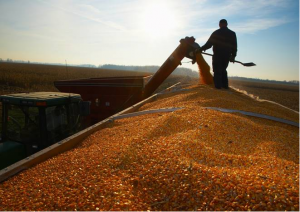
A study conducted by Graham Brookes of PG Economics Ltd. published in the journal GM Crops and Food finds that since 2003, crop biotechnology has helped Colombian farmers grow more food, feed, and fiber, using fewer resources and farm incomes increased by a total of over US$300 million. Crop biotechnology has enabled Colombian farmers to obtain higher yields from better pest and weed control, reducing the environmental footprint associated with the production of cotton and maize.
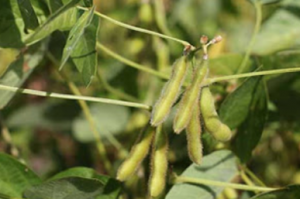
We have identified an abscisic acid (ABA) sensitivity-associated gene from soybean, ABA-Sensitive 1 (GmABAS1), that belongs to the little-known 1R-subtype of MYB transcription factors. Here we describe its role as a transcriptional repressor which regulates ABA sensitivity. The truncated naturally mutated version, GmABAS1∆, was employed as a negative control.
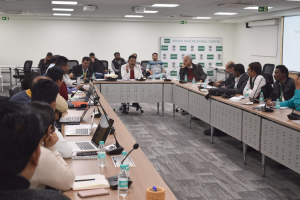
Hon’ble Shri Sunil Baburao Mendhe, Member of Parliament from Bhandara-Gondiya constituency in Maharashtra, led a delegation of state agriculture experts and rice farmers on a three-day visit to the IRRI South Asia Regional Centre (IRRI SARC) in Varanasi. As a state-of-the-art research and development hub for Asia and Africa, IRRI SARC shares best practices and innovations in rice and rice-based agriculture to encourage similar practices and take advantage of IRRI SARC’s modern technologies.

FAO Director-General QU Dongyu today pledged to help Pakistan fight its Desert Locust emergency after seeing first-hand the devastating impact of the upsurge in the country’s Punjab region. On a three-day official visit to Pakistan, Qu saw how the Desert Locust upsurge was destroying crops and harming rural communities when he visited the Okara district in Punjab province on Sunday.
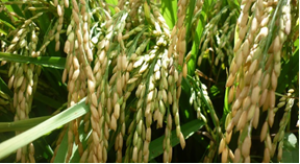
The balance between trace minerals in rice, a staple food for more than half of the world’s population, is crucial for human health. However, the genetic basis underlying the correlation between trace minerals has not been fully elucidated. To address this issue, we first quantified the concentrations of 11 trace minerals in the grains of a diversity panel of 575 rice cultivars. We found that eight elements were accumulated at significantly different levels between the indica and japonica subspecies, and we also observed significant correlation patterns among a number of elements.
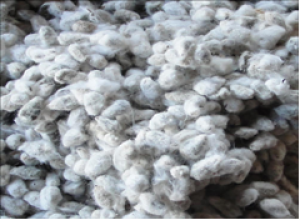
Scientist Keerti Rathore and team from Texas A&M University used selective RNA interference to selectively silence the gene δ-cadinene synthase to reduce gossypol concentration in the seed by 97%, without lowering the gossypol in other parts of the cotton plant where it is needed as defense against insects and diseases. The results are published in Critical Reviews in Plant Sciences. The global output of cottonseed contains ∼10.8 trillion grams of protein that can meet the basic protein requirements of ∼590 million people at a rate of 50 g/day.
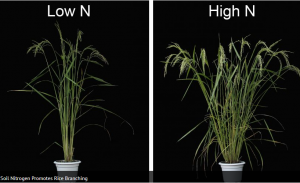
Researchers from Oxford University and the Chinese Academy of Sciences have discovered a new gene that improves the yield and fertilizer use efficiency of rice. During the Green Revolution, high-yielding dwarfed Green Revolution Varieties (GRVs) were developed. These varieties are still widespread today and have increased fertilizer use. The numbers of grain-bearing branches (‘tillers') per plant are increased in GRVs, further enhanced by increased nitrogen fertilizer use to boost grain yield. However, fertilizers are costly to farmers and cause extensive environmental damage.
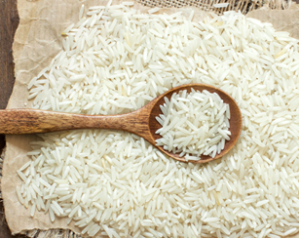
We generate two high-quality, chromosome-level reference genomes that represent the 12 chromosomes of Oryza. The assemblies show a contig N50 of 6.32 Mb and 10.53 Mb for Basmati 334 and Dom Sufid, respectively. Using our highly contiguous assemblies, we characterize structural variations segregating across circum-basmati genomes. We discover repeat expansions not observed in japonica—the rice group most closely related to circum-basmati—as well as the presence and absence variants of over 20 Mb, one of which is a circum-basmati-specific deletion of a gene regulating awn length.

Scientists from the U.S. Department of Energy's (DOE) Argonne National Laboratory and collaborators from Washington University in St. Louis have solved a critical part of the age-old mystery of photosynthesis, homing in on the initial, ultrafast events through which photosynthetic proteins capture light and use it to initiate a series of electron transfer reactions. In photosynthesis, the movement of electrons is crucial as it's how work is accomplished inside a cell, according to Argonne biophysicist Philip Laible. These processes begin when a photon absorbs light pigments localized in proteins.
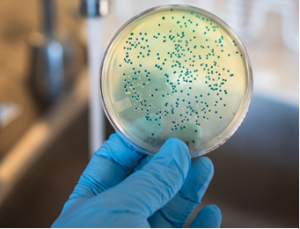
Experts from Broad Institute of Harvard and MIT and partners continue to improve gene editing. With a new super-precise version of CRISPR, the researchers have boosted its accuracy by engineering enzymes that can accurately target DNA without introducing as many unwanted mutations. Their findings are reported in Nature Biotechnology. To detect unwanted DNA edits than may cause harm, researchers conduct full genome sequencing, but it is a long and expensive process.