


News & Events

When nutrients in their environment are exhausted, bacterial cells become arrested for growth. During these periods, a primary challenge is maintaining cellular integrity with a reduced capacity for renewal or repair. Here, we show that the heat-shock protease FtsH is generally required for growth arrest survival of Pseudomonas aeruginosa, and that this requirement is independent of a role in regulating lipopolysaccharide synthesis, as has been suggested for Escherichia coli.

Inherited retinal degenerations are a clinically and genetically heterogeneous group of blinding diseases characterized by progressive degeneration of the neuroretina and/or the retinal pigment epithelium. Currently, over 300 genes have been implicated in retinal degenerations (RetNet: https://sph.uth.edu/RetNet/). While mutations, or causative variants, in each of these genes are relatively rare

FAO Director-General QU Dongyu met with Elizabeth Maruma Mrema, the Acting Executive Secretary of the Convention on Biological Diversity (CBD), following a high-level meeting on biodiversity - the second meeting of the Open-ended Working Group established by CBD - hosted today by FAO.
Most land plants form symbioses with arbuscular mycorrhizal fungi (AMF). Diversity of AMF increases plant community productivity and plant diversity. For decades, it was known that plants trade carbohydrates for phosphate with their fungal symbionts. However, recent studies show that plant-derived lipids probably represent the most essential currency of exchange.
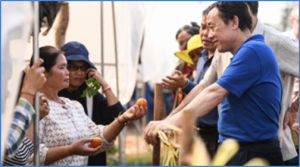
While Lao PDR is a comparatively small country in Asia it has an impressive track record in agricultural research and recent organic innovation. At the Lao PDR Rice Research Center, just under an hour’s drive from the capital, a team of researchers in white coats and hair nets, inspect samples of many different rice varieties. In fact, the RRC has identified more than 14,000 varieties of rice in Lao PDR – the greatest number of varieties of almost any nation on earth – and second only to India.
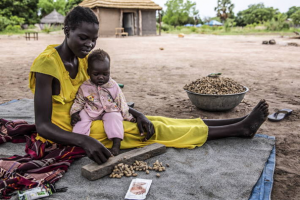
Some 6.5 million people in South Sudan - more than half of the population - could be in acute food insecurity at the height of this hunger season (May-July), three United Nations agencies warned today.The situation is particularly worrying in the areas hardest hit by the 2019 floods, where food security has deteriorated significantly since last June according to the Integrated Food Security Phase Classification (IPC) report released today by the Government of South Sudan,
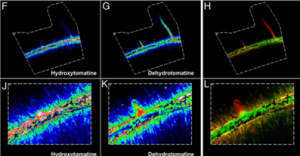
Microbial communities associated with roots confer specific functions to their hosts, thereby modulating plant growth, health, and productivity. Yet, seminal questions remain largely unaddressed including whether and how the rhizosphere microbiome modulates root metabolism and exudation and, consequently, how plants fine tune this complex belowground web of interactions.
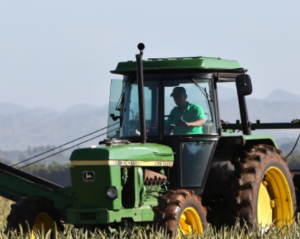
Cibus and Rotam Trait Development Company announced that they have developed two new critical traits for rice which will help provide tolerance to two separate classes of herbicides. According to Cibus, each trait has the promise to increase crop yields and quality for farmers and reduce harmful environmental impacts.
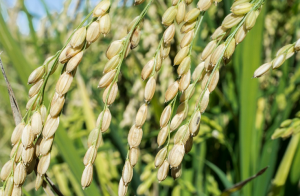
During his field visit in Punjab province, Qu said he was inspired by the resilience and strength of rural communities in Pakistan. “Smallholder farmers are using climate-smart approaches & lessons learnt from FAO farmer field schools to find local innovative solutions which contribute to their household food security,” the Director-General said.
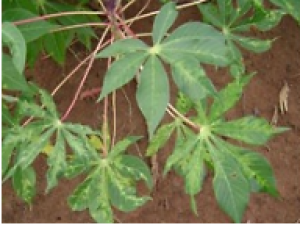
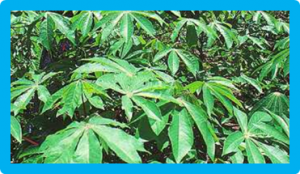
Cassava (Manihot esculenta Crantz) is one of the most important root staple crops in Zambia. An estimated 30% of Zambians, over 4 million people, consume cassava as part of their daily diet. Cassava is mostly grown by subsistence farmers on fields of less than 1 ha. Cultivation of cassava is hampered by several biotic constraints, of which cassava mosaic disease (CMD) is currently the most important factor limiting cassava production in Zambia. CMD occurs in all the cassava-growing provinces and accounts for 50% to 70% of yield losses countrywide.
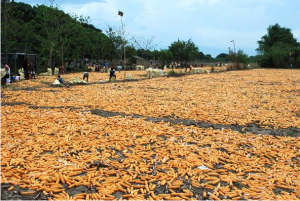
The Philippines continues to be on the productive track towards agricultural biotechnology, according to the United States Department of Agriculture (USDA). After the direct use approval of the Golden Rice in the country in 2019, the Philippines is set to look forward to advancement towards the regulation of innovative biotechnologies such as gene editing and animal biotechnology. According to the USDA Foreign Agricultural Service Global Agricultural Information Network (USDA FAS GAIN) report, the Philippines continues to be a regional biotechnology leader following its milestone as the first Asian country to plant genetically modified (GM) corn in 2003.
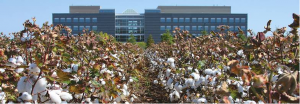
HudsonAlpha Institute for Biotechnology teamed up with several partners in a series of research collaborations, grants, and projects. Their mission: to send cotton to space which they can use for genetic sequencing. Genomics is a tool that can unlock the undiscovered potential of plants. In the case of cotton, gene sequencing can unravel the possibilities of developing varieties with stronger fiber, better drought tolerance or resistance, or even less water consumption. HudsonAlpha Genome Sequencing Center (HGSC) focuses on cotton for genetically-guided improvement.