


News & Events
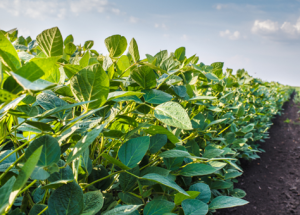
A total 160 regulatory approvals for environmental safety were released in Japan for major biotech crops such as maize, soybeans, canola, and cotton. Information from the confined field trials (CFTs) conducted in Japan, together with the agronomic field study data from other countries, can be used as a rich source of information to establish "familiarity" with the biotech crops. The compilation of CFT agronomic data is summarized in an article published in Transgenic Research.
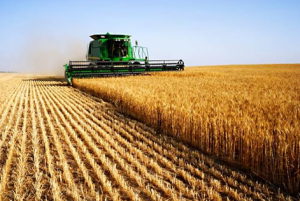
The U.S. Department of Agriculture announced its new targets under the Agriculture Innovation Agenda. These targets include increasing agricultural productivity by 40% and cutting the environmental footprint of agriculture in half by 2050. According to USDA Secretary Sonny Perdue, their new motto is to "Do Right and Feed Everyone."
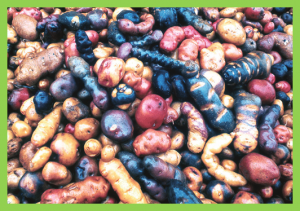
The common potato (Solanum tuberosum L.) is an important staple crop with a highly heterozygous and complex tetraploid genome. The other taxa of cultivated potato contain varying ploidy levels (2X–5X), and structural variations are common in the genomes of these species, likely contributing to the diversification or agronomic traits during domestication. Increased understanding of the genomes and genomic variation will aid in the exploration of novel agronomic traits. Thus, sequencing data from twelve potato landraces, representing the four ploidy levels, were used to identify structural genomic variation compared to the two currently available reference genomes, a double monoploid potato genome and a diploid inbred clone of S. chacoense.
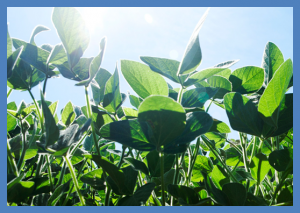
It is a known fact that crops harness light energy to fix carbon dioxide into food via photosynthesis. A team from the University of Illinois has reported a new mathematical model that is used to understand how much yield is lost as soybean crops grapple with minute-by-minute light fluctuations on cloudy and sunny days.
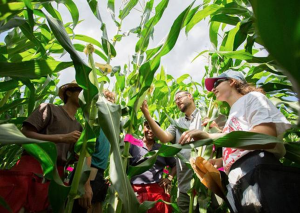
A multi-institutional team led by University of Delaware plant geneticist Randy Wisser decoded the genetic map for how maize from tropical environments can be adapted to the temperate U.S. summer growing season. Wisser sees these exotic varieties, which are rarely used in breeding, as key to creating next-era varieties of corn.
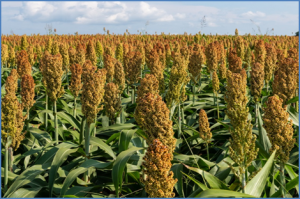
Host–parasite coevolution can maintain high levels of genetic diversity in traits involved in species interactions. In many systems, host traits exploited by parasites are constrained by use in other functions, leading to complex selective pressures across space and time. Here, we study genome-wide variation in the staple crop Sorghum bicolor (L.) Moench and its association with the parasitic weed Striga hermonthica (Delile) Benth
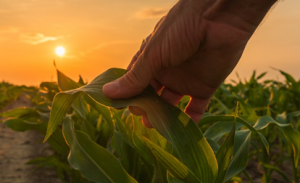
Director-General Qu Dongyu of the UN Food and Agriculture Organization (FAO) stressed on the importance of biodiversity for human beings, stating that it is also fundamental for ecosystems and is the basis of food diversity. He said that agriculture and food systems are the heart of the concept of sustainable development.
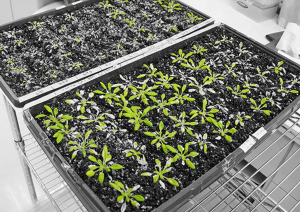
A research team at the University of Toronto in Canada has successfully tested a new strategy to identify genetic resources in the ongoing battle against plant pathogens such as bacteria, fungi, and viruses, which infect and destroy food crops worldwide. The team led by David Guttman and Darrell Desveaux wanted to know how plants defend themselves against rapidly evolving disease-causing pathogens,
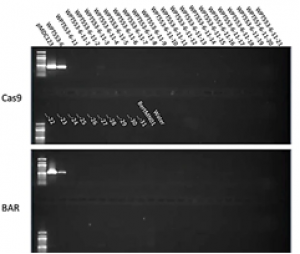
In this study, we investigated inheritance patterns among three different CRISPR/Cas9 transgenes and their respective induced mutations in segregating soybean families. Next-generation resequencing of four T0 plants and four T1 progeny plants, followed by broader assessments of the segregating families, revealed both expected and unexpected patterns of inheritance among the different lineages.

The Svalbard Global Seed Vault in Norway has received seed deposits from 35 genebanks from all continents at a deposit event hosted by Norwegian Prime Minister and co-chair of the UN group of SDG Advocates, Erna Solberg on February 25, 2020. The seeds came from 35 international and regional genebanks, as well as national institutions and civil society organizations.
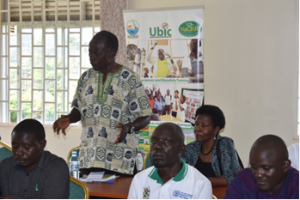
Representatives from the Ministry of Health, Uganda Medical Association, the National Drug Authority, and Uganda Pharmaceutical Society resolved that the government should pass a biosafety law to regulate genetically modified organisms (GMOs). The health officials were impressed by the biotech research and development especially technologies with health benefits such as micronutrient biofortified crops
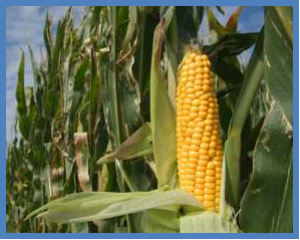
- Dr LE QUY KHA’s preliminary report on “Maize breeding and rice conversed into maize’s cropping practices in Mekong Delta” was accepted in January 23 2020 at the IAS.