


News & Events

Researchers from the Chinese Academy of Sciences reported that loss of rice PARAQUAT TOLERANCE 3 confers improved resistance to abiotic stresses and boosts grain yield. Their findings are published in Cold Spring Harbor Laboratory's bioRXiv. Plants have evolved sophisticated and efficient mechanisms to cope with environmental stress. To balance the response to growth and stress response, plants have an efficient mechanism to turn off the activated stress responses when the stress level is low

Researchers have shed light on the mystery of what makes bread wheat susceptible to the devastating disease stem rust. For decades, researchers knew that something in the wheat's genome was suppressing the plant's resistance to stem rust. Now, researchers at The Sainsbury Laboratory (TSL) have identified the underlying genetic mechanism that is causing this suppression, removing a stubborn barrier to developing crops with stronger immunity using modern genomic tools.
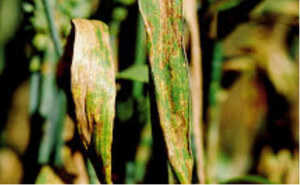
The necrotrophic fungal pathogen Parastagonospora nodorum is the causal agent of Septoria nodorum leaf blotch and glume blotch, which are common wheat (Triticum aestivum L.) diseases in humid and temperate areas. Susceptibility to Septoria nodorum leaf blotch can partly be explained by sensitivity to corresponding P. nodorum necrotrophic effectors (NEs). Susceptibility to glume blotch is also quantitative; however, the underlying genetics have not been studied in detail
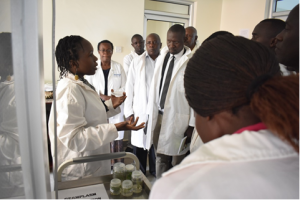
Over 30 local government leaders from nine districts in central Uganda asked to be given genetically modified crops developed by the National Agricultural Research Organization (NARO) while the country waits to pass a biosafety law. The officials—Chief Administrative Officers (CAOs), district chairpersons, agriculture and production officers, and Resident District Commissioners (RDCs)—were on a biotechnology sensitization workshop at the National Crops Resources Research Institute (NaCRRI).
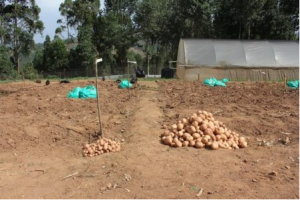
In Uganda, stakeholders working on the new bioengineered late blight resistant potato dubbed as the "3R Victoria" are confident of its wide adoption. The yet to be released potato could help 300,000 smallholder farmers in Uganda achieve higher yields at lower production costs and less exposure to chemicals. The stakeholders estimate 40-50% adoption rate for the new variety after its release.
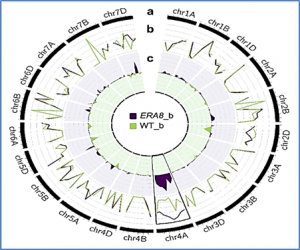
Preharvest sprouting (PHS) is the germination of mature grain on the mother plant when it rains before harvest. The ENHANCED RESPONSE TO ABA8 (ERA8) mutant increases seed dormancy and, consequently, PHS tolerance in soft white wheat ‘Zak.’ ERA8 was mapped to chromosome 4A in a Zak/‘ZakERA8’ backcross population using bulked segregant analysis of exome sequenced DNA (BSA-exome-seq).

FAO Director-General QU Dongyu became today one of the first signatories of a ethical resolution on Artificial Intelligence (AI) endorsed by Pope Francis, stressing the importance of minimizing this new technology's risks while exploiting its potential benefits. "Artificial Intelligence needs to be transparent, inclusive, socially beneficial and accountable," Qu said, adding: "We need to ensure the human-centric approach in designing and implementing artificial intelligence today and in the future."

Over 70 participants from 40 public and private sector institutions recently discussed and selected the highest research priorities to develop hybrid parents and hybrids of sorghum, pearl millet and pigeonpea
The following are the some of the key takeaways and recommendations distilled from their discussions.
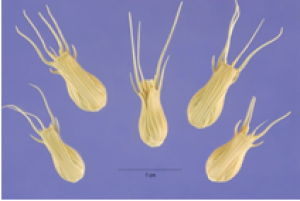
Wheat wild relatives represent an important source of genetic variation, but introgression of agronomically relevant genes, such as for disease resistance, may lead to the simultaneous introduction of genetically linked deleterious traits. Pch1 is a dominant gene, conferring resistance to eyespot and was introgressed to wheat from Aegilops ventricosa as part of a large segment of the 7DV chromosome.
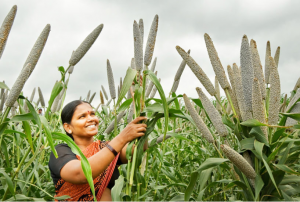
Pearl millet scientists discussed the ‘Future micronutrient breeding strategy in pearl millet’, and agreed that phenotyping for micronutrient trait was the most important component needed to strengthen and mainstream biofortification activity in pearl millet. This was at the HarvestPlus Pearl Millet Biofortification Review (2019) and Planning (2020) Meeting.
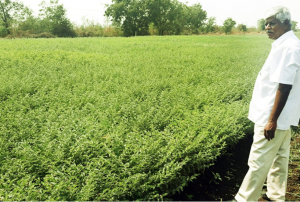
Machine-harvestable chickpea variety ‘Phule Vikram’, which was launched two years ago in India, is helping farmers circumvent labor shortage during harvest in major chickpea producing states like Maharashtra. Besides reducing cost, Vikram is also proving highly remunerative, given its yield potential.
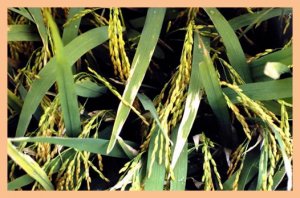
Bacterial blight, caused by Xanthomonas oryzae pv. oryzae, is one of the major constraints of rice productivity in Southeast Asia. In spite of having 44 bacterial blight resistance genes from cultivated rice and wild species, the durability of resistance is always at stake due to the continually evolving nature of the pathogen and lack of suitable chemical control.