


News & Events
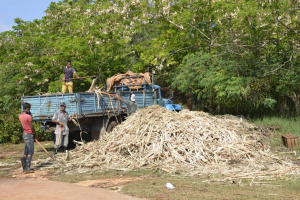
The Board of the Green Climate Fund today approved a $119 million disbursement for a FAO co-designed project to boost the resilience to climate change of vulnerable rural communities in Cuba. The Green Climate Fund will contribute $38.2 million, while the Government of Cuba provides $81.7 million in co-financing for the project, which is expected to help 240 000 people. Announced today by the Fund's board meeting in Geneva, this is the first project in Cuba to be supported by the Green Climate Fund.
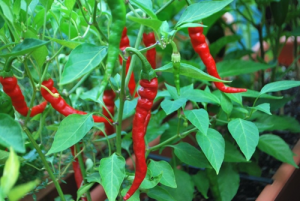
Genic male sterility (msc-2) is used to produce hybrid seeds in Northern China. However, no co-segregated markers have been reported or candidate genes controlling this trait have been cloned. Here, bulked segregant analysis and genotyping of an F2 population and a 18Q5431AB line were employed to fine map msc-2, which was delimited to a 336 kb region.
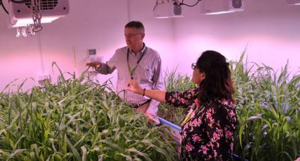
Efforts to modernize crop breeding took a giant leap today with the unveiling of ICRISAT’s new facility, which is projected to significantly lower time and cost of crop varietal development. The state-of-the-art facility is a first for any public sector agricultural research institution.Called RapidGen, a moniker for Rapid Generation Advancement, the facility will accelerate plant lifecycle in light-, temperature- and humidity-controlled conditions

Our food systems face unprecedented challenges, from increasingly unpredictable weather to acute biodiversity loss. To feed a population of over 9.6 billion people in 2050, the agricultural sector must transform and become more inclusive, efficient and sustainable. To do this, it is imperative to address inequalities. The equal participation of women and men is needed to meet the burgeoning demand for more nutritious food, while sustaining our environment and addressing climate change.
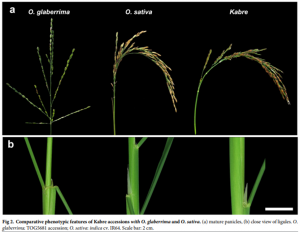
African Oryza glaberrima and Oryza sativa landraces are considered valuable resources for breeding traits due to their adaptation to local environmental and soil conditions. They often possess superior resistance to endemic pests and tolerance to drought and nutrient deficiencies when compared to the “imported” high production Asian rice varieties. In contrast, “domestication traits” such as seed shattering, lodging, and seed yield are not well established in these African landraces

Did you know that forests are home to about 80% of the world’s land animals and plants? From rainforest ants to tiny tree frogs, mountain gorillas to green anacondas, towering coast redwoods to mountain ash trees, our forests are teeming with life. This extraordinary biodiversity helps forests adapt and survive in the face of pressures such as climate change, wildfire and pests and diseases, as well as providing many benefits to people including food, shelter, medicine, energy and income.
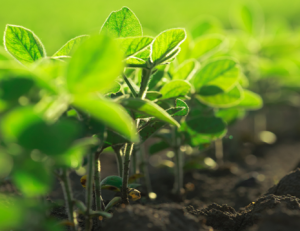
A study published in Transgenic Research reported that transgenic soybean plants expressing chitinase gene CmCH1 from Coniothyrium minitans, showed higher resistance to Sclerotinia stem rot. Sclerotinia sclerotiorum, pathogenic fungus causing Sclerotinia stem rot, is responsible for massive yield losses in soybean. Thus, scientists from Jilin Academy of Agricultural Sciences tested if CmCH1 gene from the mycoparasitic fungus Coniothyrium minitans
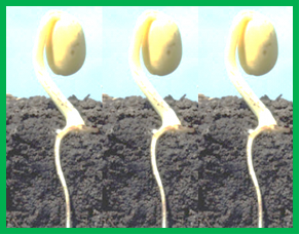
Plasmodium parasite resistance to artemisinin-based combination therapies (ACTs) calls for development of new, affordable, safe, and effective antimalarial drugs. Studies conducted previously on soybean extracts have established that they possess antimicrobial, anti-inflammatory, anticancerous, and antioxidant properties. The activity of such extracts on Plasmodium parasite resistance to artemisinin-based combination therapies (ACTs) calls for development of new, affordable, safe, and effective antimalarial drugs.
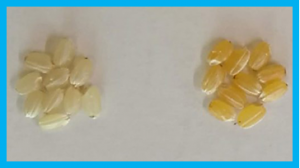
Scientists at the University of California Davis have genetically engineered rice to have high levels of beta-carotene using CRISPR technology. "We used CRISPR to precisely target those genes onto genomic safe harbors, or chromosomal regions that we know won't cause any adverse effects on the host organism," said first author Oliver Dong, a postdoctoral scholar in the UC Davis Department of Plant Pathology and Genome Center.

The Feed Your Mind Initiative was cooperatively launched by the US Food and Drug Administration (FDA), US Environmental Protection Agency (EPA), and US the Department of Agriculture (USDA) to help consumers better understand food derived from genetic engineering, commonly known as genetically modified organisms (GMOs). GMOs have been available since the early 1990s and are now commonly present in our food supply. Through genetic engineering, new plants with desirable traits were developed over the past 20 years.
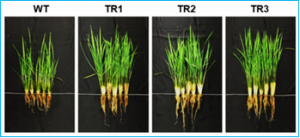
Abscisic acid-, stress-, and ripening-induced (ASR) genes are involved in responding to abiotic stresses, but their precise roles in enhancing grain yield under stress conditions remain to be determined. We cloned a rice (Oryza sativa) ASR gene, OsASR1, and characterized its function in rice plants. OsASR1 expression was induced by abscisic acid (ABA), salt, and drought treatments. Transgenic rice plants overexpressing OsASR1 displayed improved water regulation under salt and drought stresses, which was associated with osmolyte accumulation, improved modulation of stomatal closure, and reduced transpiration rates.

Most people who know CRISPR think of CRISPR-Cas9. However, Yiping Qi and colleagues from the University of Maryland are constantly exploring new CRISPR tools that are more effective, efficient, and sophisticated for different crop applications to help fight diseases, pests, and the effects of a changing climate. Qi and his lab have established a new CRISPR genome engineering system for plant systems for the first time: