


News & Events

An international research team led by scientists at the Technical University of Munich (TUM), has produced the first comprehensive map of the proteome of the model plant Arabidopsis thaliana. The team has mapped around 18,000 of all the proteins found in the plant.
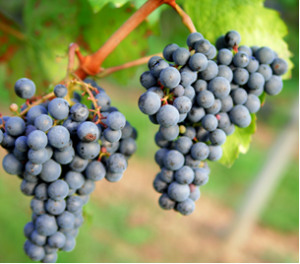
As a consequence of global warming, grapevine berry acidity is expected to dramatically decrease. Adapting grapevine (Vitis vinifera L.) varieties to the climatic conditions of the future requires a better understanding of the genetic architecture of acidity-related traits. For this purpose, we studied during five growing seasons 120 individuals from a grapevine biparental cross. Each offspring was genotyped by simple sequence repeats markers and by hybridization on a 20-K Grapevine Illumina® SNP chip.
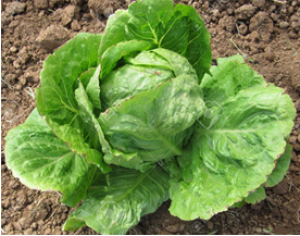
A team of scientists from the University of Pennsylvania's School of Dental Medicine developed lettuce plants that could stimulate the growth of bone-building cells and promote bone regeneration by using an animal protein to synthesize an orally delivered shelf-stable medication grown in the lettuce. This can address the medication needs of bone-fracture and diabetic patients who can have the option of eating their medicine rather than use injectables.
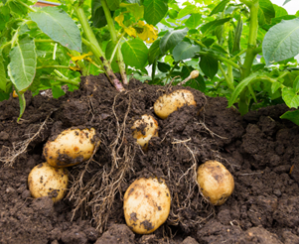
Researchers from the Institute of Biotechnology, Gansu Academy of Agricultural Sciences, China successfully developed a genetically engineered drought tolerant potato using transcription factor GhABF2. The results are reported in the Journal of Agricultural Science and Technology. The transcription factor GhABF2 is similar to the transcription activators found in Arabidopsis which enhances the plant's tolerance to drought stress.
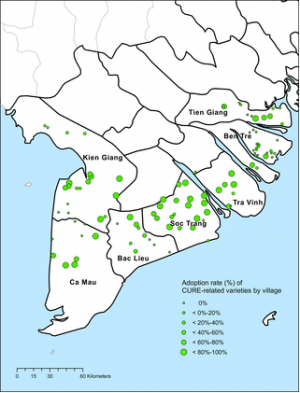
Rice production in the Mekong River Delta of Vietnam (MRD) is endangered by sea-level rise and an associated increase in the incidence of salinity intrusion. This paper examines the diffusion of salt tolerant rice varieties in the MRD that were promoted through Consortium for Unfavorable Rice Environments (CURE) activities. Factors associated with adoption of CURE-related varieties are estimated using a random utilty model and a dataset of 800 farm households with rice fields in salinity prone areas of the MRD. Results suggest that there has been widespread adoption of CURE-related varieties in salinity-prone areas.
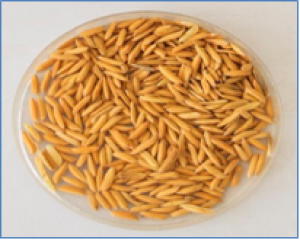
University of California researchers reported the use of CRISPR-Cas9 for marker-free targeted insertion of a carotenoid biosynthesis cassette in two sites in the rice genome. Their findings are available in Nature Communications. Targeted insertion of the transgene at chosen locations in the plant genome is a favorable option in plant improvement, instead of random insertions using conventional methods. Most of the cases of targeted gene insertion in plants relied on the presence of a selectable marker gene in the insertion cassette that occurred at low frequency with relatively small DNA fragments.
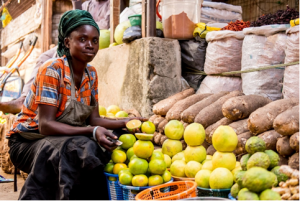
A survey study was conducted in Ghana to understand the public's attitude towards genetically modified (GM) food and labeling among its citizens. Interestingly, results showed a lack of knowledge on GM technology, yet a high demand for food product labeling. The study was co-authored by the CSIR-Science and Technology Policy Research Institute and the Food and Drugs Authority both in Ghana. It involved interviews using a structured survey to 620 adult customers in supermarkets over a four-month period.
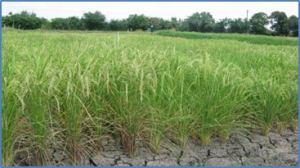
Microbial inoculation in drought challenged rice triggered multipronged steps at enzymatic, non-enzymatic and gene expression level. These multifarious modulations in plants were related to stress tolerance mechanisms. Drought suppressed growth of rice plants but inoculation with Trichoderma, Pseudomonas and their combination minimized the impact of watering regime.

Ugandan President Yoweri Museveni has given the clearest indication yet that he is ready to sign the National Biotechnology and Biosafety Bill into law. The President has directed the ruling National Resistance Movement (NRM) caucus to convene a meeting and resolve the impasse that has stalled the passing of the bill into law.

Canadian biopharmaceutical company Medicago announced that it has successfully produced a Virus-Like Particle (VLP) of the coronavirus 20 days after obtaining the SARS-CoV-2 (the virus causing the COVID-19 disease) genetic sequence. Medicago produced the VLP using proprietary plant-based technology. The production of the VLP is the first step in developing a vaccine for COVID-19 which will now undergo preclinical testing for safety and efficacy.
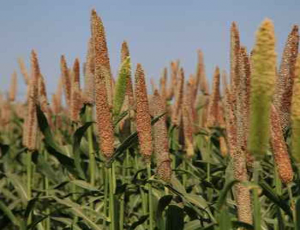
Five hundred and eighty hybrid parents, 320 R- and 260 B-lines, derived from 6 pearl millet breeding programs in India, genotyped following RAD-GBS (about 0.9 million SNPs) clustered into 12 R- and 7 B-line groups. With few exceptions, hybrid parents of all the breeding programs were found distributed across all the marker-based groups suggesting good diversity in these programs. Three hundred and twenty hybrids generated using 37 (22 R and 15 B) representative parents

International Rice Research Institute (IRRI) Director General Dr. Matthew Morell and Prof. Sharada Thapaliya, Vice-Chancellor of the Agriculture and Forestry University (AFU) in Nepal, signed a Memorandum of Understanding (MoU) for furthering research and academic cooperation that is set to play a crucial role in generating relevant and scientific information to solve current challenges in the agriculture and forestry sectors of Nepal and help leverage research conclusions to influence policy direction.