


News & Events

- Italy’s celebrated Paolo Nespoli spent his 63rd birthday sharing with FAO’s global staff his experience of confinement as a career astronaut. Hundreds tuned in from home isolation to watch him expound on the analogy between spacecraft seclusion and coronavirus-induced lockdown.
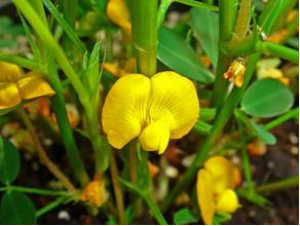
Aflatoxins are secondary metabolites produced by soilborne saprophytic fungus Aspergillus flavus and closely related species that infect several agricultural commodities including groundnut and maize. The consumption of contaminated commodities adversely affects the health of humans and livestock. Aflatoxin contamination also causes significant economic and financial losses to producers. Research efforts and significant progress have been made in the past three decades to understand the genetic behavior, molecular mechanisms, as well as the detailed biology of host-pathogen interactions.
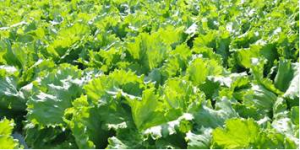
US Department of Agriculture scientists conducted a genome-wide search of a gene family in lettuce that plays a vital role in freezing tolerance. The results are published in Scientific Reports. The research team performed a comprehensive phylogenetic analysis of the C-repeat binding factor (CBF)/dehydration-responsive element binding (DREB1) proteins in 20 plant species from the Asterid or Rosid clade.
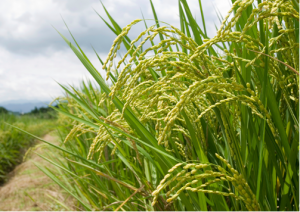
David R. Liu and his colleagues at Harvard University have developed prime editing, a new genome editing approach, which uses engineered Cas9 nickase (H840A)-reverse transcriptase (RT) fusion proteins paired with a prime editing guide RNA (pegRNA). Prof. Gao Caixia and his team at the Institute of Genetics and Developmental Biology of the Chinese Academy of Sciences reported the optimization of a prime editing system (PPE system) for creating desired point mutations, insertions, and deletions in two major cereal crops, rice, and wheat.
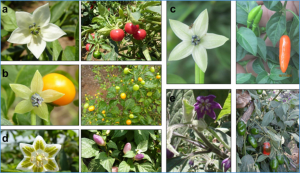
A single dominant locus (CaRf032) for fertility restoration of cytoplasmic male sterility was identified in the strong restorer inbred line IVF2014032 of chili pepper (Capsicum annuum L.). CaRf032 was localized within an 8.81-Mb candidate intervals on chromosome 6 using bulked segregant analysis based on high-throughput sequencing data.

On almost any given day, at four-thirty in the morning, while most people are still sleeping, Europe’s biggest fishing port in Vigo, Spain is in full swing. In normal times of operation, shouts ring out from the multitude of workers offloading containers of fish from ships docked at the landing site. They cart the broad variety of fish to a series of on-site processing rooms, where containers are stacked high.

The Director-General noted that supermarket shelves were currently stocked, despite the lockdowns imposed by many countries to slow the spread of the virus. But he warned that a protracted pandemic could strain food supply chains, thereby impacting farmers, processing plants, shipping services, retailers and others.
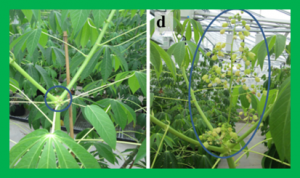
Cassava, which produces edible starchy roots, is an important staple food for hundreds of millions of people in the tropics. Breeding of cassava is hampered by its poor flower production, flower abortion, and lack of reproductive prolificacy. The current work determined that ethylene signalling affects floral development in cassava and that the anti-ethylene plant growth regulator silver thiosulfate (STS) mitigates the effects of ethylene on flower development. STS did not affect the timing of flower initiation, but improved early inflorescence and flower development as well as flower longevity such that flower numbers were increased.

A consortium of researchers from the University of Exeter led by Professor Gero Steinberg has combined their expertise to join the fight against plant pathogenic fungi. The researchers have identified the novel mono-alkyl chain lipophilic cations (MALCs) in protecting crops against Septoria tritici blotch in wheat and rice blast disease.
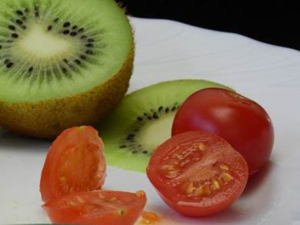
The University of Chile is stepping up its research to develop tomato and kiwi varieties that are more tolerant of saline lands while requiring less water. They are also studying the development of biostimulants to be used on plants, making them more tolerant to drought- and saline-related stress. Dubbed the Planta-Con-Ciencia Project, the initiative is a collaborative research among the National Agency for Research and Development (ANID),
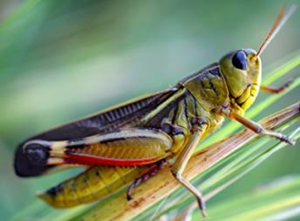
Evidence for global insect declines mounts, increasing our need to understand underlying mechanisms. We test the nutrient dilution (ND) hypothesis—the decreasing concentration of essential dietary minerals with increasing plant productivity—that particularly targets insect herbivores. Nutrient dilution can result from increased plant biomass due to climate or CO2 enrichment. Additionally, when considering long-term trends driven by climate, one must account for large-scale oscillations including El Niño Southern Oscillation (ENSO), North Atlantic Oscillation (NAO), and Pacific Decadal Oscillation (PDO).
A study was published showing the impact of readily available facts on environmental policy attitudes, and how factors such as trust in science and trust in the messages' source curb its effects. Results showed that individuals whose attitudes originally conflicted with scientific messages had a significant shift of policy preferences towards the dominant scientific opinion after exposure to scientific information.