


News & Events

Researchers at Northwestern and Cornell Universities have developed a new platform for the production of new therapies such as anti-viral drugs for COVID-19 more than 10 times faster than current methods. The research team is using an unlikely tool for the platform: bacteria. The researchers took out the molecular machinery out of bacteria, then used that machinery to make therapeutics in a safe, inexpensive, and rapid manner.
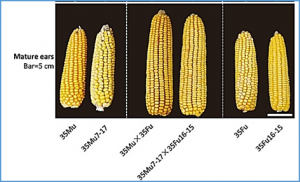
Waxy maize is a specialty maize that produces mainly amylopectin starch with special food or industrial values. The objective of this study was to overcome the limitations of wx mutant allele acquisition and breeding efficiency by conversion of parental lines from normal to waxy maize. The intended mutation activity was achieved by in vivo CRISPR/Cas9 machinery involving desired-target mutation of the Wx locus in the ZC01 background, abbreviated as ZC01-DTMwx. Triple selection was applied to segregants to obtain high genome background recovery with transgene-free wx mutations. The targeted mutation was identified, yielding six types of mutations among progeny crossed with ZC01-DTMwx.

The world accommodates nearly 7.8 billion people in 2020. By 2050, world population is expected to reach 9.8 billion. With the exponentially growing population, decreasing resources, and intensifying climate change, it is compelling to adopt various production systems to attain food security. The US Department of Agriculture has defined coexistence as simultaneous planting of conventional, organic, identity preserved, and genetically engineered (GE) or biotech crops in contiguous locations, in line with consumer preferences and farmer choices.
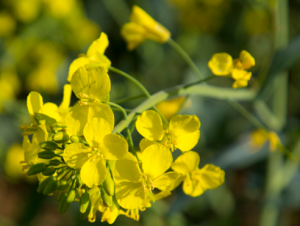
University of Kiel researchers and partners used CRISPR-Cas9 to edit three genes in oilseed rape to reduce phytic acid in seeds. The results are published in Plant Biotechnology journal. Phytic acid is a main source of phosphorus in plants but is considered as anti-nutritive for mono-gastric animals including humans because of its adverse effects on essential mineral absorption. Furthermore, undigested phytic acid causes algal bloom on bodies of water, harming aquatic life.
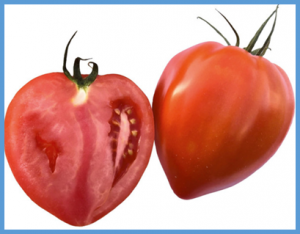
A dramatic evolution of fruit size has accompanied the domestication and improvement of fruit-bearing crop species. In tomato (Solanum lycopersicum), naturally occurring cis-regulatory mutations in the genes of the CLAVATA-WUSCHEL signaling pathway have led to a significant increase in fruit size generating enlarged meristems that lead to flowers with extra organs and bigger fruits

A group of cell biologists at the University of California, Riverside led by Dr. Meng Chen has identified that the protein called phytochrome B which can sense light and temperature, also triggers plant growth and controls flowering time. In a paper published in Nature Communications, the research group reveals that phytochrome B molecule has unexpected dynamics activated by temperature, and behaves differently depending on the temperature and type of light.
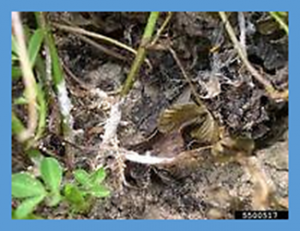
Stem rot in peanut (Arachis hypogaea) is caused by the Sclerotium rolfsii and can result in great economic loss during production. In this study, a recombinant inbred line population from the cross between NC 3033 (stem rot resistant) and Tifrunner (stem rot susceptible) that consists of 156 lines was genotyped by using 58 K peanut single nucleotide polymorphism (SNP) array and phenotyped for stem rot resistance at multiple locations and in multiple years.
Today’s global challenges of poverty, malnutrition, climate change, land degradation, and biodiversity loss call for new research, solutions, innovations, and stronger partnerships that can deliver higher impact. To respond to these challenges, and building on their complementary mandates and long collaboration, Bioversity International and the International Center for Tropical Agriculture (CIAT) have joined forces to create an Alliance.

Even before COVID-19 hit, 113 million people on the planet were already struggling with severe acute food insecurity due to pre-existing shocks or crises. This means they were already on the extreme end of the hunger spectrum-weak, and less well-equipped to fend off the virus. The vast majority live in rural areas, and depend on agricultural production, seasonal jobs in agriculture, fishing, or pastoralism.
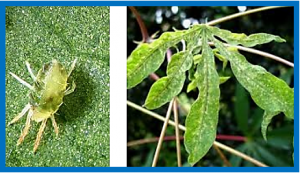
Cassava green mite [CGM, Mononychellus tanajoa (Bondar)] is the most destructive dry-season pest in most cassava production areas. The pest is responsible for cassava fresh root yield losses of over 80%. Deployment of CGM resistant cultivars is the most cost-effective and sustainable approach of alleviating such production losses. The purposes of this study were to validate the stability of CGM resistance genes found in previously published results
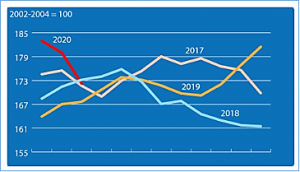
World food prices declined sharply in March, driven mostly by demand-side contractions linked to the effects of the COVID-19 pandemic and the drop in global oil prices due mostly to expectations of economic slowdown as governments roll out restrictions designed to respond to the health crisis.