


News & Events
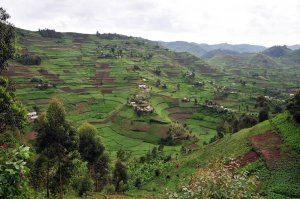
Top-down projects for improving the lives of poor farmers were often unsuccessful because they didn’t systematically consider the diverse rural households survive and thrive. To tap this local knowledge, scientists and development agencies began surveying households to assure that research and development schemes were on target. But the surveys were not designed to be compared with one another, lacking what scientists call “interoperability” – meaning one organization’s household surveys could not be compared with another’s.
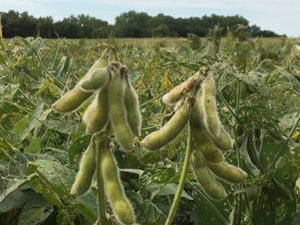
Climate change is a widely discussed topic, and its effect on crop production has drawn attention. The projected reduction in crop yields due to the changing climate in some regions has raised concern. Several studies have estimated the effects of changing climate on crop yields. These models include variables reflecting the effects of weather, technology and land quality. Many models, however, have not included prices, groundwater level, or CO2 concentration. In Table 1, we compared the variables included those previous econometric crop yield modelling research for corn and soybeans with the variables included in our study.
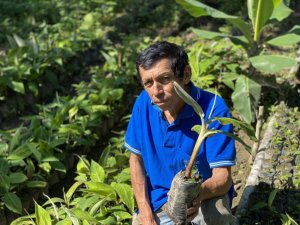
The COVID-19 pandemic has stopped many businesses and closed most production, but this isn’t true for the farmers and food producers who need to keep working so that the world can continue to eat. Their vital contribution to the pandemic response cannot be overlooked. In this crisis, eating healthy with fresh fruits and vegetables is even more important and for this we rely on the farmers worldwide who are continuing to harvest and produce food for us. They are our Food Heroes, working despite the risks of the virus, to bring us the food on which we depend.
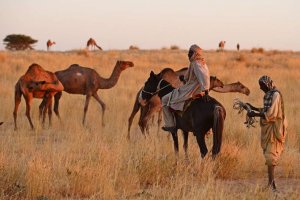
This is a complex region - hit by chronic hunger, insecurity, climate change, the threats of a Desert Locust outbreak, and now the pandemic. Year after year, five out of the ten countries at the bottom of the UN Development Index are in West Africa. Right now, we are particularly concerned about the humanitarian crisis in Central Sahel - comprised of Burkina Faso, Mali and Niger. Some four million people here are already facing extreme hunger and this could rise to 5.5 million people by August.
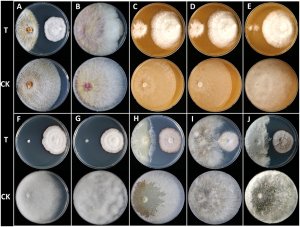
Endophytic fungi are great resources for the identification of useful natural products such as antimicrobial agents. In this study, we performed the antifungal screening of various plant endophytic fungi against the dollar spot pathogen Sclerotinia homoeocarpa and finally selected Humicola sp. JS-0112 as a potential biocontrol agent. The bioactive compound produced by the strain JS-0112 was identified as monorden known as an inhibitor of heat shock protein 90 (Hsp90). Monorden exhibited strong antagonistic activity against most tested plant pathogenic fungi particularly against tree pathogens and oomycetes with the minimum inhibitory concentration values less than 2.5 μg mL-1.
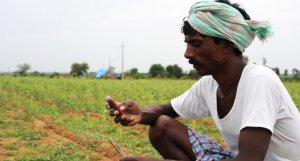
Scientists, meteorologists, start-ups and Microsoft India are coming together to crunch weather data to help farmers beat climate risks and boost yield and profit. Late nights on the family farm are engraved in Anthony Whitbread’s memory. “I grew up near my grandparent’s farm in a low-rainfall region of Southern Australia. I remember going to their house in the evenings, and having to be very quiet, because they were listening to weather information on the radio,” said Whitbread.

Clustered regularly interspaced short palindromic repeats (CRISPR), a class of immune-associated sequences in bacteria, have been developed as a powerful tool for editing eukaryotic genomes in diverse cells and organisms in recent years. The CRISPR-Cas9 system can recognize upstream 20 nucleotides (guide sequence) adjacent to the protospacer-adjacent motif site and trigger double-stranded DNA cleavage as well as DNA repair mechanisms, which eventually result in knockout, knockin, or site-specific mutagenesis. However, off-target effect caused by guide sequence misrecognition is the major drawback and restricts its widespread application.

Los Baños, Philippines, and Cleveland, USA - The International Rice Research Institute (IRRI) and AgriPlex Genomics have entered a partnership to combine AgriPlex’s NGS (Next Generation Sequencing) genotyping technology with IRRI’s advanced breeding of rice and DNA marker development. Over the past few years, the two organizations have successfully created a comprehensive SNP (single nucleotide polymorphisms) panel and a workflow for evaluating diverse indica rice varieties. This collaboration combines IRRI’s expertise in developing high-quality markers for use in rice breeding and quality control with AgriPlex’s innovative PlexSeqTM NGS platform.
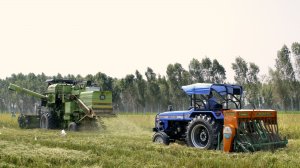
An international team of scientists has provided a sweeping new analysis of the benefits of conservation agriculture for crop performance, water use efficiency, farmers’ incomes and climate action across a variety of cropping systems and environments in South Asia. The analysis, published today in Nature Sustainability, was made possible by the collaboration of experts from the International Maize and Wheat Improvement Center (CIMMYT), Indian Agricultural Research Institute (ICAR), University of California, Davis, International Rice Research Institute (IRRI), and Cornell University.
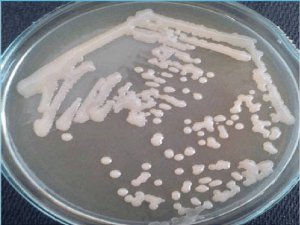
Here, we report the complete genome sequence of Aeribacillus pallidus PI8, a thermophilic bacterium, isolated from soybean stem extract. The sequence was determined using Illumina and Nanopore sequencers. Bioinformatic analyses of the genome sequence revealed the presence of possible bacteriocin gene clusters. Aeribacillus pallidus is a Gram-positive, aerobic, and endospore-forming thermophilic bacterium previously reclassified from the genus Geobacillus (phylum Firmicutes, family Bacillaceae) (1). We were interested in an unknown thermophilic bacterium found in a hot water extract of soybean stems harvested from Nakasatsunai, Hokkaido, Japan, and characterized it as a novel strain of A. pallidus as follows.
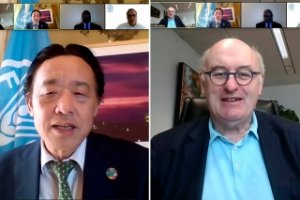
FAO Director-General QU Dongyu held virtual talks today with Phil Hogan, the European Commissioner for Trade. Both parties stressed their full agreement on the importance of keeping food supply chains open in times of the COVID-19 pandemic and discussed ways to strengthen their collaboration on this issue. The EU commissioner and the Director-General concurred on the vision that trade restrictions and stockpiling are counterproductive, may threaten food supply and hamper COVID-19 response.
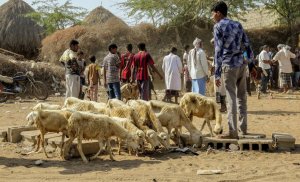
Today an international alliance of UN, governmental, and nongovernmental agencies working to address the root causes of extreme hunger have released a new edition of their annual Global Report on Food Crises. The report by the Global Network Against Food Crises, along with key findings, statements by partners, and multimedia products unpacking its contents are now available at: The Global Network's website: http://www.fightfoodcrises.net/food-crises-and-covid-19/en/;The Food Security Information Network (FSIN)'s platform: www.fsinplatform.org