


News & Events
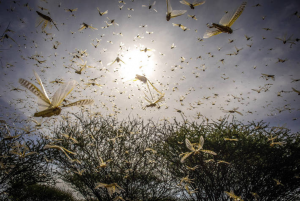
The Director-General of the Food and Agriculture Organization of the United Nations (FAO), QU Dongyu, said today that significant gains had been made in the fight against the desert locust upsurge in East Africa and Yemen. He stressed, however, that more needs to be done to prevent a food security crisis, as the ongoing rainy season not only provides livelihoods for farmers and pastoralists but also favourable conditions for locusts to breed.
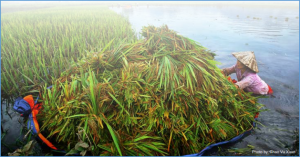
What are the economic consequences of drought and salinization? What can farmers do to effectively respond to salinization and ensure farm production is maximized? Overall, salinization, as exacerbated by several climate change-related hazards, has been significantly affecting rice production in the Mekong River Delta, a major rice production region in Vietnam. But there is a solution—massive promotion of Good Agricultural Practices (GAP) in cultivating rice in coastal saline environment among farmers up to a level that it has achieved significant and wider strategic adoption.
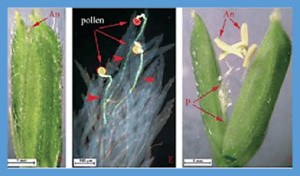
University of Adelaide and Shanghai Jiao Tong University researchers discovered two proteins in rice that are essential in the successful pollination of flowering plants. According to their study published in Nature Plants, pollen apertures are portals on the surface of pollen which mark the site where the pollen tube emerges and allow water uptake, which is critical for pollen germination and agricultural yield.
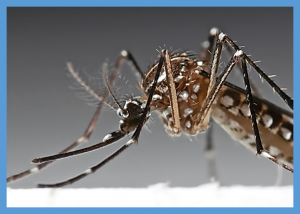
The United States Environmental Protection Agency (U.S. EPA) released its statement granting Oxitec Ltd. the experimental use permit (EUP) to field test the use of genetically engineered (GE) Aedes aegypti mosquitoes. This approval will allow Oxitec to continue its projects using the Friendly™ mosquito technology that was designed to control mosquito populations and decrease the risk of spreading mosquito-borne diseases.
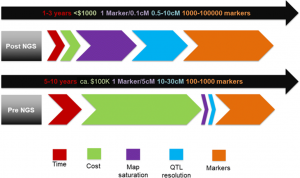
Improvement in traits of agronomic importance is the top breeding priority of crop improvement programs. Majority of these agronomic traits show complex quantitative inheritance. Identification of quantitative trait loci (QTLs) followed by fine mapping QTLs and cloning of candidate genes/QTLs is central to trait analysis. Advances in genomic technologies revolutionized our understanding of genetics of complex traits, and genomic regions associated with traits were employed in marker-assisted breeding or cloning of QTLs/genes.
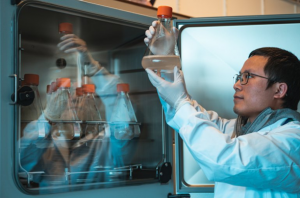
A team of researchers from The Netherlands has identified a fully human monoclonal antibody that prevents the SARS-CoV-2 (COVID-19) virus from infecting cultured cells. Researchers from Utrecht University, Erasmus Medical Center, and Harbour BioMed (HBM) reported the discovery, an initial step towards developing a fully human antibody to treat or prevent the respiratory disease COVID-19 caused by the novel coronavirus SARS-CoV-2.

Science Media Centre Malaysia (SMC), in collaboration with ISAAA, The Petri Dish, and Universiti Putra Malaysia (UPM) hosted a webinar on the Impact of COVID-19 on Food Systems. The webinar had four panelists, ISAAA Global Coordinator Dr. Mahaletchumy Arujanan; Professor Dr. Paul S. Teng, Adjunct Senior Fellow (Food Security) at S. Rajaratnam School of International Studies, Nanyang Technological University (NTU) Singapore; Associate Professor Dr. Shaufique Fahmi Ahmad Sidique
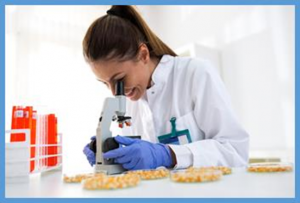
OsRhoGDI2 was isolated as a putative partner of Rho protein family member OsRacD from rice panicles by yeast two-hybrid, but its function remains unknown. In order to identify the function of OsRhoGDI2, OsRhoGDI2 knockout mutants were created by CRISPR/Cas9 technology. The results showed that two different homozygous mutants were obtained in T0 generation, and eight kinds homozygous mutants were identified in T1 generation.
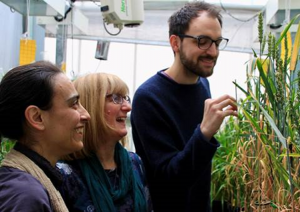
Plants' Rubisco activase (Rca) act like smart thermostats that tell air conditioners to switch on when the sun bears down during summer days. Rca tells the plant's energy-producing enzyme (Rubisco) to kick on when the sun is shining and signals it to stop when the leaf is deprived of light to conserve energy. A team from Lancaster University has discovered that swapping just one molecular building block out of 380 that makes up the Rca in wheat enables it to activate Rubisco faster in hotter temperatures, suggesting an opportunity to help protect crops from rising temperatures.
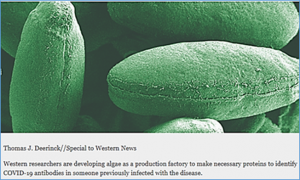
Researchers at Canada's Western University and Suncor have teamed up to produce serological test kits for COVID-19. PhD candidates Daniel Giguere and Sam Slattery are developing algae as a production factory to make the necessary proteins to identify COVID-19 antibodies in people who were previously infected with the disease.
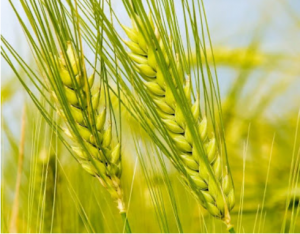
Abiotic stresses are major constraints limiting crop growth and production. Heat shock factors (Hsfs) play significant roles in mediating plant resistance to various environmental stresses, including heat, drought and salinity. In this study, we explored the biological functions and underlying mechanisms of wheat TaHsfA6f in plant tolerance to various abiotic stresses. Gene expression profiles showed that TaHsfA6f has relatively high expression levels in wheat leaves at the reproductive stage.
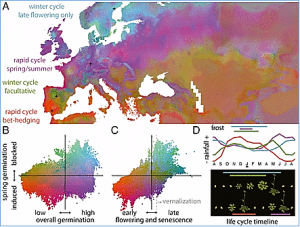
The most fundamental genetic program of an annual plant defines when to grow and reproduce and when to remain dormant in the soil as a seed. With the right timing, plants can even live in hostile regions with only a few months of growth-favorable abundant rains and mild temperatures. To achieve this, plants have evolved molecular pathways that sense environmental variables and trigger their two main lifecycle transitions: germination and flowering.