


News & Events

FAO Director-General QU Dongyu today offered his best wishes to Ambassador Esti Andayani, Permanent Representative of Indonesia to FAO, who took over the chair of the Rome chapter of The Group of 77 and China at the United Nations. “I work to support all Member States in achieving the Sustainable Development Goals” and “we are on the same page and in the same boat,” the Director-General said. “We will never stop all the efforts we are making and will even intensify them during this difficult pandemic time.”
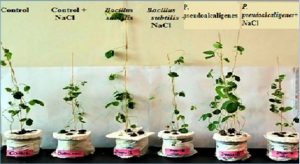
Salt stress is one of the devastating factors that hampers growth and productivity of soybean. Use of Pseudomonas pseudoalcaligenes to improve salt tolerance in soybean has not been thoroughly explored yet. Therefore, we observed the response of hydroponically grown soybean plants, inoculated with halotolerant P. pseudoalcaligenes (SRM-16) and Bacillus subtilis (SRM-3) under salt stress. In vitro testing of 44 bacterial isolates revealed that four isolates showed high salt tolerance. Among them, B. subtilis and P. pseudoalcaligenes showed ACC deaminase activity, siderophore and indole acetic acid (IAA) production and were selected for the current study.

As a consequence of global warming, the incidence of drought in various regions of the world has been increasing. According to the Food and Agriculture Organization of the United Nations (FAO), in developing countries, drought alone causes more yield loss in crop fields than all pathogens combined, putting food security at risk. In a paper published in Science magazine, researchers from the Centre for Research in Agricultural Genomics (CRAG) present different biotechnological strategies to achieve drought resistant crops, which could be used to mitigate the devastating effects of climate change on agricultural production.
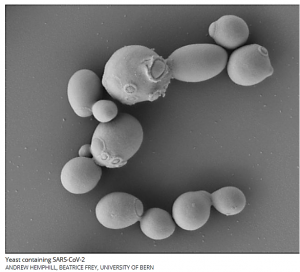
A paper published in Nature reports that researchers have generated a full-length clone of SARS-CoV-2 genome using artificial chromosomes in brewers' yeast. The researchers say that a major benefit of the yeast system is its speed and stability. Reconstructing and modifying the genomes of disease-causing viruses are essential for studying their method of infection, replication, drugs that might work against them, and potential vaccines.
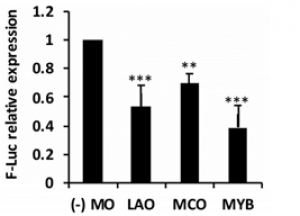
Soil salinization is a serious problem for cultivation of rice, as among cereals rice is the most salt sensitive crop, and more than 40% of the total agricultural land amounting to approximately 80 million ha the world over is salt affected. Salinity affects a plant in a varieties of ways, including ion toxicity, osmotic stress and oxidative damage. Since miRNAs occupy the top place in biochemical events determining a trait, understanding their role in salt tolerance is highly desirable, which may allow introduction of the trait in the rice cultivars of choice through biotechnological interventions.

A poll involving international plant biotechnology experts was conducted to determine what approach different countries should agree on in order to maximize the full potential of current and future new breeding technologies and its products. A key finding states that product-based models or dual-product/process systems are viewed as potential appropriate frameworks to regulate genome editing products.
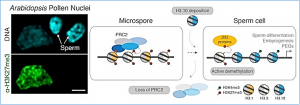
An international research team has uncovered the answer to a decades-old question - how do plants forget? Like humans, plants have memories too, although they do it differently. For example, many plants sense and remember prolonged cold during winter to ensure that they flower in spring. This "epigenetic memory" occurs by modifying specialized proteins called histones, which are important for packaging and indexing DNA in the cell. One such histone modification called H3K27me3 marks genes that are turned off. In the case of flowering, cold conditions cause H3K27me3 to accumulate at genes that control flowering.
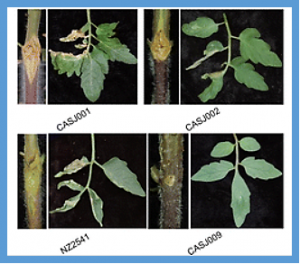
Clavibacter michiganensis is a Gram-positive bacterial pathogen that proliferates in the xylem vessels of tomato, causing bacterial wilt and canker symptoms. Accurate detection is a crucial step in confirming outbreaks of bacterial canker and developing management strategies. A major problem with existing detection methods are false-positive and -negative results. Here, we report the use of comparative genomics of 37 diverse Clavibacter strains,
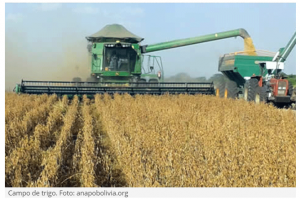
Interim President Jeanine Añez of Bolivia issued a Supreme Decree authorizing the National Biosafety Committee to speed up the evaluation of genetically modified (GM) events of five crops namely corn, sugarcane, cotton, wheat, and soybeans. The decree was made in response to the country's current quarantine status due to the coronavirus pandemic.
In December 2019, Wuhan City in China became the epicenter of a respiratory disease outbreak with mysterious origins, that spread to many countries immediately. To investigate the matter and control the disease roll out, suspected and infected patients were placed in isolation, contact tracings were conducted, and detailed clinical and epidemiologic data were gathered.
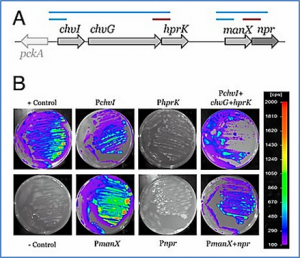
The nitrogen-related phosphotransferase system (PTSNtr) of Rhizobium leguminosarum bv. viciae 3841 transfers phosphate from PEP via PtsP and NPr to two output regulators, ManX and PtsN. ManX controls central carbon metabolism via the tricarboxylic acid (TCA) cycle, while PtsN controls nitrogen uptake, exopolysaccharide production, and potassium homeostasis, each of which is critical for cellular adaptation and survival.

FAO Director-General QU Dongyu met today, via teleconference, with Sir John Beddington and Sandy Thomas, members of the Global Panel on Agriculture and Food Systems for Nutrition - an independent group of influential experts with a commitment to tackling global challenges in food and nutrition security.