


News & Events
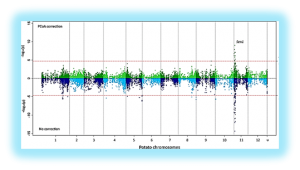
Synchytrium endobioticum is a soilborne obligate biotrophic fungus responsible for wart disease. Growing resistant varieties is the most effective way to manage the disease. This paper addresses the challenge to apply molecular markers in potato breeding. Although markers linked to Sen1 were published before, the identification of haplotype-specific single-nucleotide polymorphisms may result in marker assays with high diagnostic value.
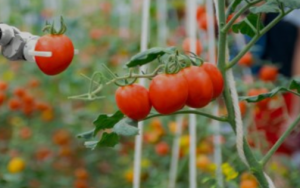
An international team of almost 50 experts identified 75 emerging innovations and 8 action points that can help speed up the transition to a sustainable and healthy food system. Their recommendations are published in Nature Food. At present, 40 percent of global land is used for food production, which contributes to land-use change, biodiversity loss, and greenhouse gas emissions.

A study published in Nature reports two major versions of SARS-CoV-2 coronavirus and confirms that the genetic difference does not contribute to disease severity. Host factors such as age, white blood cell levels, and overactive immune defenses contribute significantly to how people get the virus.
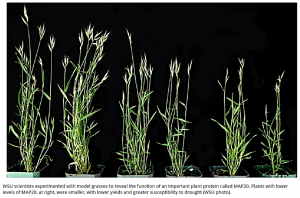
Pits are regions in the cell walls of plant tracheary elements that lack secondary walls. Each pit consists of a space within the secondary wall called a pit chamber, and a modified primary wall called the pit membrane. The pit membrane facilitates transport of solutions between vessel cells and restricts embolisms during drought. Here we analyzed the role of an angiosperm‐specific TPX2‐like microtubule protein MAP20 in pit formation using Brachypodium distachyon as a model system.
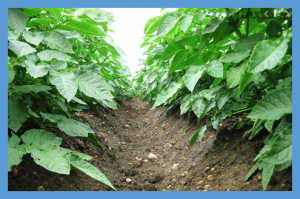
Two genetically modified (GM) potato lines have passed the evaluation of the Food Standards Australia New Zealand (FSANZ). They announced that there are no potential public health and safety concerns with the said potatoes. The two potatoes are derived from Innate potato lines V11 and Z6. The former has reduced acrylamide potential and reduced browning traits (blackspot bruising),
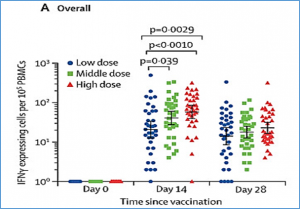
New research published in The Lancet reports that the first COVID-19 vaccine to reach phase 1 clinical trial has been found to be safe, well-tolerated, and able to generate an immune response against SARS-CoV-2 in humans. The open-label trial in 108 healthy adults showed promising results after 28 days, while the final results will be evaluated in six months
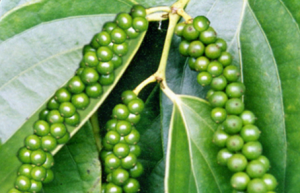
Mr Chu Trung Kien addressed his final report on “How to apply Ag nano products to prevent vegetable from major diseases in Bà Rịa - Vũng Tàu and to enhance biomass productivity” in May 6 2020. Chu Trung Kiên chủ nhiệm.
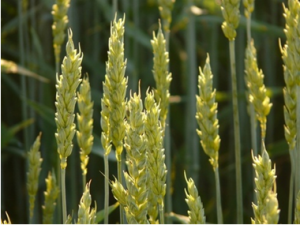
Being a major staple food crop in the world, wheat provides an indispensable source of dietary energy and nutrients to the human population. As worldwide population grows and living standards rise in both developed and developing countries, the demand for wheat with high quality attributes increases globally. However, efficient breeding of high-quality wheat depends on critically the knowledge on gluten proteins, which mainly include several families of prolamin proteins specifically accumulated in the endospermic tissues of grains.
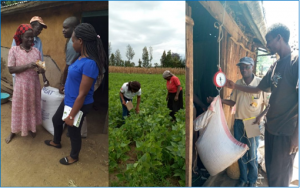
Achieving food and nutritional security and economic prosperity is possible within an equitable system where structural barriers are removed and traditional gender norms and stereotypes are broken. With additional stress on food security caused by social and economic disruptions of the pandemic, it is key to continue working with women farmers to ensure healthy and reliable harvests to support their families during the crisis.
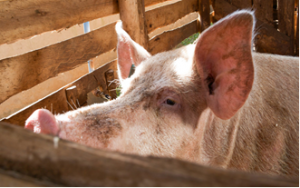
Global heat stress is a growing problem that stands to impact health, livelihoods and the very food we eat. While high temperatures and heat waves can occur under normal weather conditions, with climate change they are becoming more severe, last longer and happen more frequently. In 2019, we saw wildfires blaze across different parts of the world, culminating in the devastating bushfires in Australia that raged for nearly two and half months, fueled by record-breaking temperatures and prolonged drought.
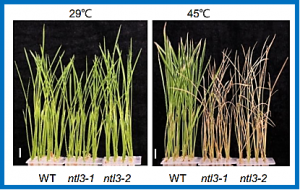
Global climate change, including an increase in average temperatures and atmospheric CO2 concentrations, has great impacts on plant growth and yield production. Heat stress induces misfolded protein accumulation in endoplasmic reticulum (ER), which initiates the unfolded protein response (UPR) in plants. Previous work has demonstrated the important role of a rice ER membrane-associated transcription factor OsbZIP74 (also known as OsbZIP50) in UPR. However, how OsbZIP74 and other membrane-associated transcription factors are involved in heat stress tolerance in rice is not reported. In the current study, we discovered that OsNTL3 is required for heat stress tolerance in rice.
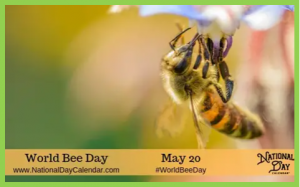
World Bee Day is celebrated on May 20 each year. The purpose of the international day is to acknowledge the role of bees and other pollinators for the ecosystem.Every year on this day, the global public will focus on the importance of preserving honey bees and all other pollinators. People will be reminded of the significance of bees in providing for the needs of humanity.