


News & Events
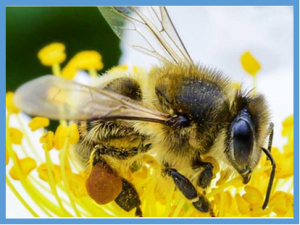
Bees and other pollinators, such as butterflies, bats and hummingbirds, are increasingly under threat from human activities. Pollination is, however, a fundamental process for the survival of our ecosystems. Nearly 90% of the world’s wild flowering plant species depend, entirely, or at least in part, on animal pollination, along with more than 75% of the world’s food crops and 35% of global agricultural land. Not only do pollinators contribute directly to food security, but they are key to conserving biodiversity.
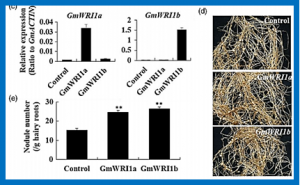
It has been reported that lipid biosynthesis in plant host root cells plays critical roles in legume-fungal or -rhizobial symbioses, but little is known about its regulatory mechanism in legume-rhizobia interaction. Soybean WRINKLED1 (WRI1) a and b, with their alternative splicing (AS) products a' and b', are highly expressed in developing seeds and nodules, but their functions in soybean nodulation are not known.
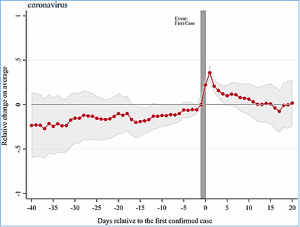
The COVID-19 outbreak is a global pandemic with community circulation in many countries, including the United States, with confirmed cases in all states. The course of this pandemic will be shaped by how governments enact timely policies and disseminate information and by how the public reacts to policies and information. Here, we examine information-seeking responses to the first COVID-19 case public announcement in a state
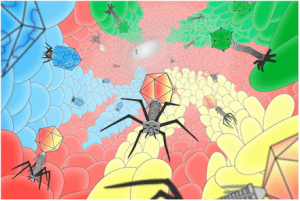
Perhaps now more than ever (1), it is abundantly clear that viruses can rapidly and dramatically alter host populations, both by direct mortality and by changing the way hosts interact with each other. Like macroscopic organisms, bacteria also contend with their own viruses. Called bacteriophages (or simply, phages), these nanometer-scale parasites are the most numerous, yet least well-characterized, forms of “life” on the planet (2, 3).
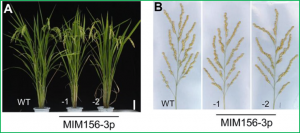
MicroRNAs (miRNAs) play essential roles in the regulation of plant growth and defense responses. More and more, miRNA-3ps are reported to act in plant development and immunity. miR156 is a conserved miRNA, and most previous studies focus on its roles in plant growth, development, and yield determinacy. Here, we show that expressing a target mimic of miR156fhl-3p led to enhanced rice blast disease resistance without a yield penalty.
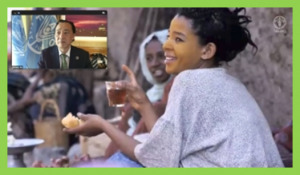
FAO today marked International Tea Day by stressing the crucial need to ensure the sustainability of tea production - a basis for the livelihoods of millions of farmers - especially at a time when the world economy enters a recession and incomes decline as a result of the COVID-19 pandemic. Due to the current pandemic, the first observance of International Tea Day was held virtually.
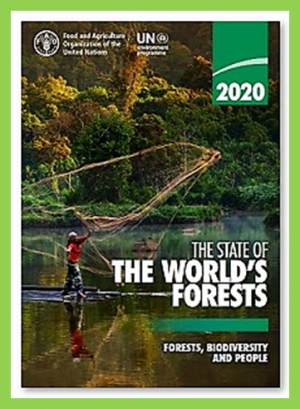
As the United Nations Decade on Biodiversity 2011–2020 comes to a close and countries prepare to adopt a post-2020 global biodiversity framework, this edition of The State of the World’s Forests (SOFO) examines the contributions of forests, and of the people who use and manage them, to the conservation and sustainable use of biodiversity.
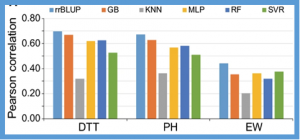
Breeding 4.0 has been considered the next era of plant breeding. It is clear that the Breeding 4.0 era for maize will feature the integration of multi-disciplinary technologies including genomics and phenomics, gene editing and synthetic biology, and Big Data and artificial intelligence. The breeding approach of passively selecting ideal genotypes from designated genetic pools
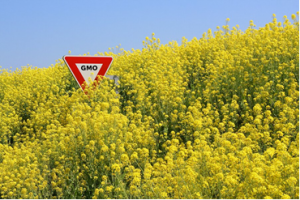
The Parliament of South Australia has moved forward towards commercial planting of GM crops by voting to allow a bipartisan compromise framework to let GM crops be planted on mainland SA, but not in Kangaroo Island. SA implemented a moratorium on planting GM crops in 2004. On January 2, 2020, Minister for Primary Industries and Regional Development Tim Whetstone lifted the moratorium on mainland SA.
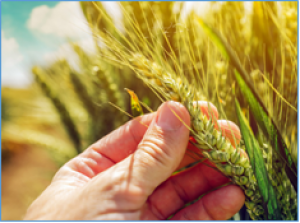
University of California Riverside scientists have solved a 20-year-old genetics puzzle that could help protect wheat, barley, and other crops from the devastating infection of Brome Mosaic virus. This virus primarily affects grasses such as wheat and barley, and occasionally affects soybeans as well.

Plant viruses are natural, self-assembling nanostructures with versatile and genetically programmable shells, making them useful in diverse applications ranging from the development of new materials to diagnostics and therapeutics. Here, we describe the design and synthesis of plant virus nanoparticles displaying peptides associated with two different autoimmune diseases.
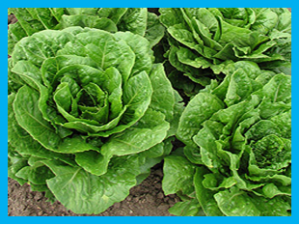
Scientists from the U.S. Department of Agriculture Agricultural Research Service (USDA ARS) have identified five Romaine lettuce varieties that brown less quickly after fresh-cut processing and are slower to deteriorate postharvest. They have also identified the location of genes associated with postharvest deterioration of fresh-cut lettuce, and are in the process of identifying genes associated with browning.