


News & Events
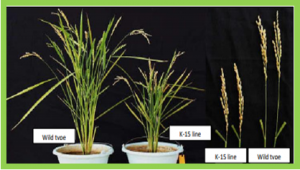
Recently, the engineered CRISPR/Cas9 system has been applied to rapidly and efficiently modify the targeted gene(s) in a wide variety of plants. Recent studies of successful targeted mutagenesis using the CRISPR/Cas9 system with a single gRNA expression in rice plants have been reported. GA20ox-2 is a gene encoding an oxidase enzyme involved in the biosynthesis of gibberellin and linked to sd1 locus. A previous study revealed that mutation of this gene resulted in shorter stature of rice plant due to defects in the gibberellin's signalling pathway. Here, we studied targeted mutation of OsGA20ox-2 gene in rice using the CRISPR/Cas9 system with the expression of two gRNAs.

ISAAA AfriCenter will hold a live webinar on genome editing and its applications in health and agriculture. The webinar is scheduled on Friday, June 5, 2020 (World Environment Day) from 1200 GMT - 1300 GMT. Genome editing presents the scientific community with tools at relatively low cost for innovation in biomedicine, agriculture, industrial biotechnology, and other sectors relating to bio-economy.
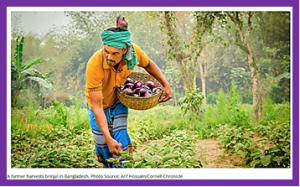
A new study conducted by Cornell University reveals that eggplant farmers in Bangladesh have attained significantly higher yields and revenues by growing the insect resistant, genetically engineered (GE) Bt brinjal (eggplant). According to the study published in Frontiers in Bioengineering and Biotechnology, the four Bt brinjal varieties yielded, on average, 19.6% more eggplant than non-Bt varieties and earned growers 21.7% higher revenue.
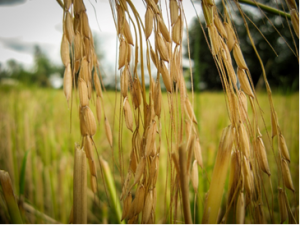
The release of environmental emissions, which partly emanates from the application of chemical inputs, is a major global concern. Planting crops that have been genetically modified (GM) is one possible solution for reducing negative impacts on the environment and human health. The life cycle of genetically modified (GM) and non-GM rice cultivars was assessed. Four GM lines (derived from a backcross of ‘Khazar’ cultivar with ‘Tarom Molaii’, a GM line)

Omega-3 oils from canola plants are ready to become available in the global aquaculture market. The omega-3 oils, developed by Nuseed, are considered as the first land-based sources of omega-3 oil, which is normally derived from fish such as salmon or trout. Salmon get their oil from smaller, fatty fish in the food chain including anchovies and herrings, which, in turn, derive oil from algae.

The first set of results from an immunological study of 149 people who have recovered from COVID-19 show that although the amount of antibodies they generated varies widely, most of them generated at least some that were intrinsically capable of neutralizing the SARS-CoV-2 virus. Three distinct antibodies that were shown to be the most potent in neutralizing SARS-CoV-2 have been found.
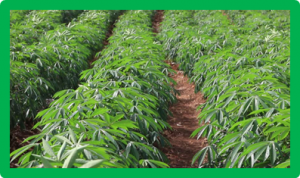
Cassava is highly tolerant to stressful conditions, especially drought stress conditions; however, the mechanisms underlying this tolerance are poorly understood. The GRAS gene family is a large family of transcription factors that are involved in regulating the growth, development, and stress responses of plants. Currently, GRAS transcription factors have not been systematically studied in cassava, which is the sixth most important crop in the world.
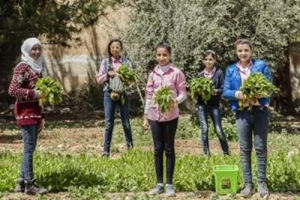
FAO is working to update its vision for and strategy on nutrition and this initial work has been presented and discussed today with representatives of FAO’s Members. When it comes to nutrition, FAO’s aim is to achieve a world where all people are eating healthy diets from sustainable food systems that protect human health and wellbeing and are resilient to shocks.
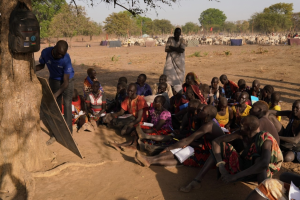
In South Sudan, livestock means life. As South Sudanese herders put it: here, cattle can chase away hunger. Over 65 percent of the population relies on livestock for their survival. Children grow up on milk. Families survive on meat, milk and cattle’s blood. Losing one’s cattle is like losing one’s life savings. So, when the dry season sets in and water and grass get scarce, herders must move. They move with their families and animals – up to three, four times or more per year – in search of pasture and water.
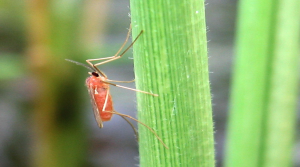
The Asian rice gall midge (GM; Orseolia oryzae; Diptera: Cecidomyiidae) invades rice shoots and forms galls, adversely affecting plant growth and yield production. Thus, the development of resistant varieties through the identification, mapping, and application of GM resistance genes is considered the most efficient strategy for managing this insect.

A survey conducted by the Commonwealth Scientific and Industrial Research Organisation (CSIRO) in March 2020 reveals that 92% of Australians don't know the difference between bacterial and viral infections. The survey was carried out to 2,217 adults as part of Outbreak, a multi-agency project aiming to prevent outbreaks caused by antibiotic resistance and build community knowledge in Australia. The major findings of the study included:
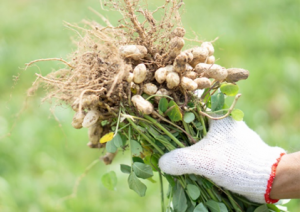
In 2019, researchers from The University of Western Australia, the International Crops Research Institute for the Semi-Arid Tropics (ICRISAT), and Fujian Agriculture and Forestry University sequenced the peanut's complex genome. At the same time, researchers from the International Peanut Genome Initiative also made the breakthrough in sequencing the peanut genome. Soon after the two results were published in the same issue of Nature Genetics, an intense scientific debate arose due to a difference in findings and opinion regarding the timeline of when the peanut first originated.