


News & Events
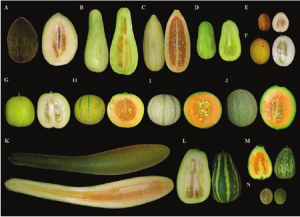
Melon is an important crop that exhibits broad variation for fruit morphology traits that are the substrate for genetic mapping efforts. In the post-genomic era, the link between genetic maps and physical genome assemblies is key for leveraging QTL mapping results for gene cloning and breeding purposes. Here, using a population of 164 melon recombinant inbred lines (RILs) that were subjected to genotyping-by-sequencing,
CGIAR is a different beast to the type of organization MOPAN usually handles. It is a uniquely structured organization, consisting of 15 independent and autonomous Research Centers with around 10,000 staff working in more than 70 countries around the world, supported by a central System Organization headquartered in Montpellier, France. Its mission is to advance agricultural science and innovation as a way to reduce poverty and hunger
The air we breathe, the food we eat and the water we drink rely on biodiversity, the foundation of healthy ecosystems. There is an intimate bond linking biological diversity, food and planetary health. The meal on our plate depends on fresh water availability and healthy soils that supply essential nutrients to plants, which in turn make up 80% of the food we eat and produce 98% of the oxygen we breathe.
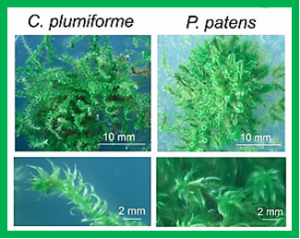
Momilactones are bioactive diterpenoids that contribute to plant defense against pathogens and allelopathic interactions between plants. Both cultivated and wild grass species of Oryza and Echinochloa crus-galli (barnyard grass) produce momilactones using a biosynthetic gene cluster (BGC) in their genomes. The bryophyte Calohypnum plumiforme (formerly Hypnum plumaeforme) also produces momilactones, and the bifunctional diterpene cyclase gene CpDTC1/HpDTC1

Janusz Wojciechowski, the European Union Commissioner for Agriculture and FAO Director-General QU Dongyu renewed their commitment today to work together to make agriculture more innovative and environmentally friendly, with the aim to create long-term positive impact for people and planet. They agreed on the necessity for flexible agricultural policies that can address the specific needs of countries.
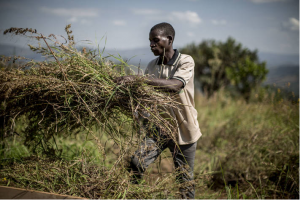
The Food and Agriculture Organization of the United Nations (FAO) today welcomed the decision by the Global Environment Facility (GEF) Council to allocate a substantial $ 176 million to 24 of its projects that tackle the critical intersection between agriculture and environmental concerns. The decision came at the Council's 58th meeting, the first to be conducted virtually. The projects address global environmental crises that impact the productivity and sustainability of agricultural systems on land and water across five continents.
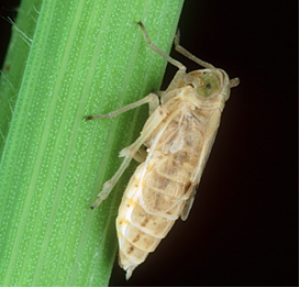
Synthetic chemical elicitors, so called plant strengtheners, can protect plants from pests and pathogens. Most plant strengtheners act by modifying defense signaling pathways, and little is known about other mechanisms by which they may increase plant resistance. Moreover, whether plant strengtheners that enhance insect resistance actually enhance crop yields is often unclear. Here, we uncover how a mechanism by which 4-fluorophenoxyacetic acid (4-FPA) protects cereals from piercing-sucking insects and thereby increases rice yield in the field
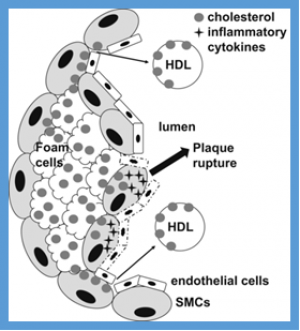
Macrophage foam cells (i.e., cholesteryl ester-laden macrophages) are abundant in atherosclerotic plaques, and increased macrophage foam cell content is associated with plaque instability (1, 2). Macrophages are generally thought to unload surplus cholesterol via efflux mediated by the ATP-binding cassette transporters A1 and G1 (ABCA1 and ABCG1) to apolipoprotein A1 [apoA1 (3, 4)] and high-density lipoproteins [HDLs (5, 6)], respectively. Several studies in large-population cohorts have shown that the cholesterol efflux capacity of HDL
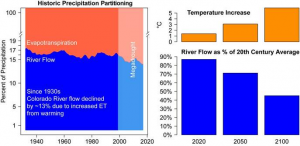
Discussions of droughts and their impacts often center on the lack of precipitation, just as assessments of hydrologic impacts under a changing climate most often focus on how average precipitation in a given locale is likely to change in the future. Within climate science, however, focus has begun to include the growing role warming temperatures are playing as a potent driver of greater aridity: hotter climate extremes
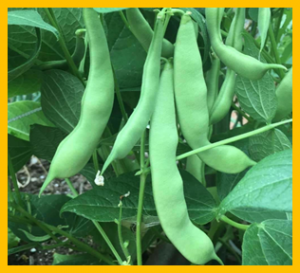
The beige and white background colors of the seed coats of conventional pinto and cranberry beans turn brown through a process known as postharvest darkening (PHD). Seed coat PHD is attributed to proanthocyanidin accumulation and its subsequent oxidation in the seed coat. The J gene is an uncharacterized classical genetic locus known to be responsible for PHD in common bean (P. vulgaris) and individuals that are homozygous for its recessive allele have a non-darkening (ND) seed coat phenotype.
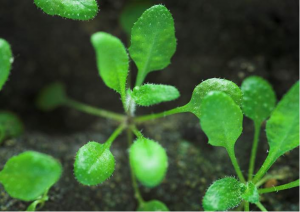
The researchers conducted cellular, biochemical, genetic, and transgenic experiments on Arabidopsis, and results show the very first steps of Arabidopsis' immune response to a bacterial infection. In Arabidopsis' cell walls, specialized proteins watch for evidence of invasion and grab the flagellum, a bacterium's swimming appendage, as soon as they detect it. To send a message to the cell nucleus, the proteins use different approaches.
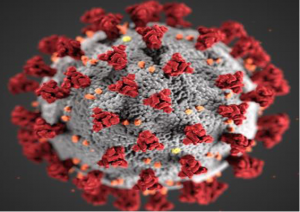
Scientists from the University of Manchester (UoM) have identified parts of the SARS-CoV-2 coronavirus that activate an immune response and which could act as targets for vaccine development. The small scale study published in Annals of Rheumatic Diseases used new technology to analyze the total immune response in patients with dermatomyositis, a musculoskeletal disease and identified a link to lifetime exposure to coronavirus infection.