


News & Events
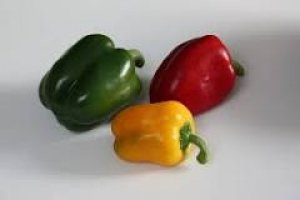
The loci c1, c2, and y have been widely reported as genetic determinants of various ripe fruit colors in pepper. However, c1, which may impact reduced pigmentation in red, orange, and yellow fruits, is not well understood. Two cultivars showing peach or orange fruit in Capsicum chinense ‘Habanero’ were found to have c2 mutation and were hypothesized to segregate c1 locus in the F2 population. Habanero peach (HP) showed a reduced level of chlorophylls, carotenoids and total soluble solids in immature and ripe fruits. A microscopic examination of the fruit pericarps revealed smaller plastids and less stacked thylakoid grana in HP.
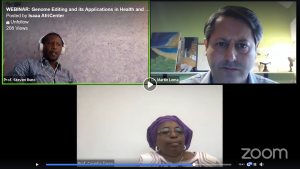
Genetics and health experts have endorsed genome editing as among the most transformative technologies of the 21st century with a huge potential to provide solutions to complex challenges in health and agriculture. In a webinar organized by ISAAA AfriCenter on World Environment Day, June 5, 2020, experts from Kenya, Senegal, and Argentina explained the applications of genome editing in health and agriculture. Genome editing provides advanced biotechnological techniques that enable precise and efficient targeted modification of an organism's genome.

Nanyang Technological University and the Harvard T.H. Chan School of Public Health conducted a study to determine how people's pre-existing attitudes affect the relationships asserted by the influence of presumed media influence (IMPI) model. They focused on how people's attitudes toward genetically modified (GM) food affected their feelings about nano-enabled food. Their findings showed that one-third of the respondents had unfavorable attitudes towards GM food and that they were also unfavorable towards other nano-enabled food.
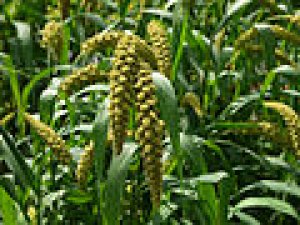
Foxtail millet (Setaria italica), a self-pollinated crop with numerous small florets, is difficult for cross-pollination. The color of pulvinus and leaf sheath with purple being dominant to green is an indicative character and often used for screening authentic hybrids in foxtail millet crossing. Deciphering molecular mechanism controlling this trait would greatly facilitate genetic improvement of cultivars in foxtail millet. Here, using the F2 bulk specific-locus amplified fragment sequencing approach, we mapped the putative causal gene for the purple color of pulvinus and leaf sheath (PPLS) trait to a 100 Kb region on chromosome 7.
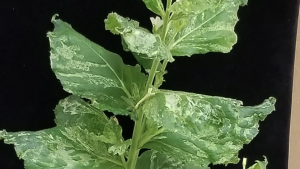
Nature Plants reports a fundamental study that eliminates a transgenic approach in gene editing. Researchers at the University of California Davis and the University of Minnesota collaborated in the study which used viruses as delivery vehicles to induce genetic mutations directly in plants. Most plant biology research on gene editing uses Agrobacterium to mediate gene transfer via the CRISPR-Cas9 system. In such cases, genetic mutation is achieved, but the transgene remains unless it is segregated away.
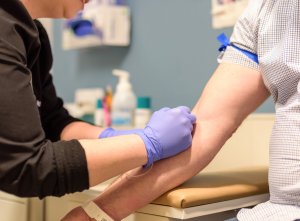
Researchers from the University of Copenhagen and other partner institutions reported that two human gene variants could make people more prone to lung failure due to COVID-19. The preprint article about the study is published in MedRxiv. The genome-wide association analysis included 1,980 patients with COVID-19 respiratory failure at seven centers in the Italian and Spanish epicenters of the SARS-CoV-2 pandemic in Europe (Milan, Monza, Madrid, San Sebastian, and Barcelona).
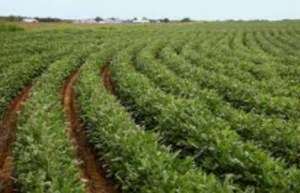
The Northeast China (NEC) soybeans are the major germplasm source of modern soybean production in Americas (> 80% of the world total). NEC is a relatively new soybean area in China, expanded after its nomadic status in the seventeenth century. At nine sites of four ecoregions in NEC, 361 varieties were tested for their days to flowering (DTF), a geography-sensitive trait as an indicator for maturity groups (MGs).
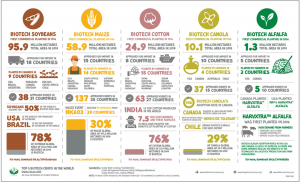
In 2018, a total of 70 countries adopted biotech crops — 26 countries planted and 44 additional countries imported. Of the 31 crops approved for food, feed, and environmental release recorded at the ISAAA GM Approval Database, 13 crops have been planted in 26 countries in 2018. Five biotech crops planted in these countries occupy 99% of the global biotech crop area.
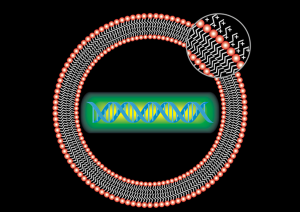
Scientists from Stanford University and the Molecular Foundry at the Department of Energy's Lawrence Berkeley National Laboratory (Berkeley Lab) are working to develop a gene-targeting, antiviral agent against COVID-19. Last year, Stanford University Assistant Professor Stanley Qi began working on a technique called PAC-MAN - or Prophylactic Antiviral CRISPR in human cells - that uses the gene editing tool CRISPR to fight influenza. When news of COVID-19 pandemic emerged, Qi and his team thought to try PAC-MAN technology to fight the disease.
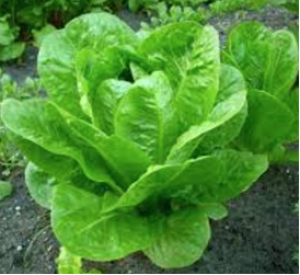
Fresh-cut lettuce in packaged salad can have short shelf life, and visible deterioration may start within a week after processing. Yield and developmental rate are an important aspect of lettuce production. Genetic diversity and genome-wide association studies (GWAS) were performed on 493 accessions with the genotypic data of 4615 high-quality single nucleotide polymorphism markers. Population structure (Q), principal component (PC), and phylogenetic analyses displayed genetic relationships associated with lettuce types and geographic distribution.
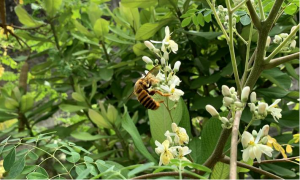
Forests and trees are critical for promoting pollination by bees, butterflies and other animals, and there is an urgent need to stop their habitat degradation and safeguard biodiversity, according to a new report from the Food and Agriculture Organization of the United Nations. The report jointly produced by FAO and Bioversity International, is designed to raise awareness about critical role and the benefits of forest-dependent pollinators and is targeted at forest managers, landscape planners and land use decision makers.
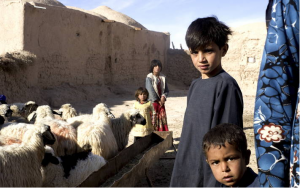
Initial and ongoing assessments by the UN's Food and Agriculture Organization (FAO) provide strong indications that the COVID-19 pandemic and its impacts are driving up hunger in countries that were already experiencing high levels of food insecurity prior to the disease's outbreak. "The COVID-19 pandemic poses a clear and present danger to food security and nutrition, especially to the world's most vulnerable communities" FAO Director-General QU Dongyu said today at the opening of a high-level UN event on humanitarian action.