


News & Events
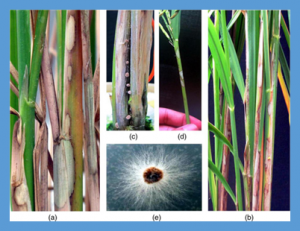
Rice sheath blight disease, caused by the basidiomycetous necrotroph Rhizoctonia solani, became one of the major threats to the rice cultivation worldwide, especially after the adoption of high-yielding varieties. The pathogen is challenging to manage because of its extensively broad host range and high genetic variability and also due to the inability to find any satisfactory level of natural resistance from the available rice germplasm.
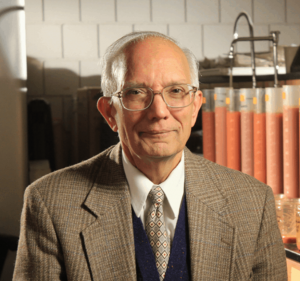
So far, Dr. Lal’s innovative soil-saving techniques have impacted the livelihoods of more than 500 million smallholder farmers, improved the food and nutritional security of more than two billion people, and saved hundreds of millions of hectares of natural tropical ecosystems. Dr. Lal’s history with CGIAR was highlighted by Dr. Gebisa Ejeta, chair of the World Food Prize Laureate Selection Committee and 2009 World Food Prize Laureate, during the announcement of the prize.
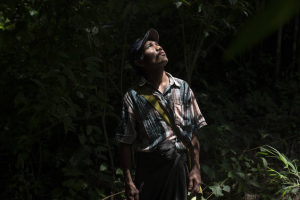
The Governments of Myanmar and Finland today launched a trailblazing project designed to allow for monitoring of forests in a manner that is sensitive to local conflicts and protects human rights. The five-year project will be led by the Food and Agriculture Organization of the United Nations (FAO) thanks to a EUR 8 million endowment from the Government of Finland, a consistent partner in the promotion of environmental sustainability.
Drought cycling and soil re‐watering trends due to intermittent rainfall patterns are key stress factors that influence rice growth and yield under upland cultivation conditions. However, upland rice adaptation responses to fluctuating soil moisture conditions remain poorly understood. This study investigated root and shoot responses of upland New Rice for Africa (NERICA) varieties to episodic drought and re‐watering during growth
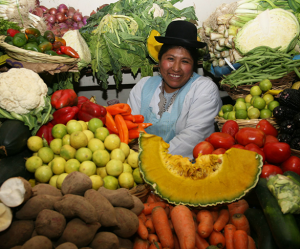
As rural masses migrate to urban areas, populations grow, and people work toward better living standards, global food system sustainability pays a high price, according to a new analysis spanning low- to high-income countries. The study, published April 3 in the scientific journal PLOS ONE, shows that only one major global driver, the increase in international trade, appears to have a net positive effect on global food systems sustainability. All other major drivers (population growth, urbanization, lifestyle change, and changes in land use) seem to have negative effects.
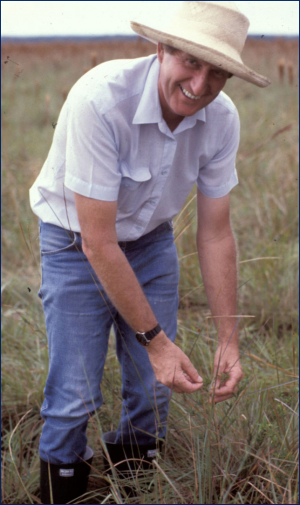
Dr. Myles Fisher, an Emeritus of the Alliance of Bioversity International and CIAT, and a groundbreaking agricultural scientist passed away on the 27th of May. He suffered a stroke, which mercifully was sudden and painless. Myles was my colleague, my mentor, and my friend and it is deeply saddening to hear of his death.
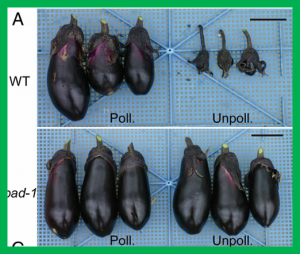
Fruit development normally occurs after pollination and fertilization; however, in parthenocarpic plants, the ovary grows into the fruit without pollination and/or fertilization. Parthenocarpy has been recognized as a highly attractive agronomic trait because it could stabilize fruit yield under unfavorable environmental conditions. Although natural parthenocarpic varieties are useful for breeding Solanaceae plants, their use has been limited,
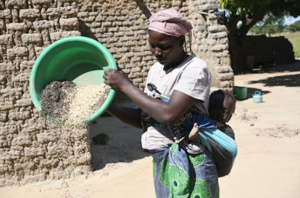
If you thought education is expensive, try ignorance says a popular quote. Farmers in Mali whose parents could not afford to send them to school know this too well and they do not want history to repeat. Farmers like Timothée Goita says that if it was not for interventions that improved his economic status, he would not have been able to enroll his children in school or provide them three square meals a day.
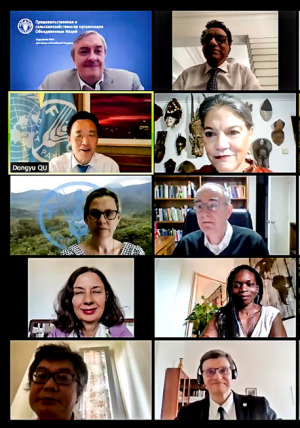
It was a gathering with a difference. Thousands of beaming faces tuning in from places as far-flung as one can imagine. The first ever “town hall” meeting of FAO staff members all over the world was in session, online, on 4 June. There were close to 4,300 participants. QU Dongyu, the Director General, started by inviting colleagues to greet each other in their own languages. The on-screen chat-box was instantly flooded by hundreds of greetings, coming from all over the world, in all kinds of scripts. The excitement and the sense of connection were there for all to see.
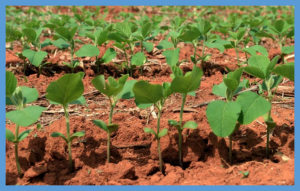
Most of the Brazilian soils, especially in Cerrado biome, have high acidity and toxic aluminium, making the application of limestone an indispensable technique to obtain high yield in soybean crop. The hypothesis of this study was that contrasting base saturation provides changes in water‐use efficiency (WUE) and agronomic traits of soybean populations. Thus, we evaluated the WUE and agronomic performance of F3 soybean populations under different base saturation levels.
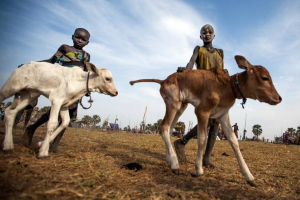
FAO marked World Day Against Child Labour today by stressing the critical need to step up efforts to prevent a spike in child labour in agriculture due to the COVID-19 pandemic's disruptive global impact on livelihoods, education, food and health systems. This year's observance focused on exploring child labour mitigation measures through livelihood and food assistance, social protection, health and education programmes which can help protect children from bearing the brunt of the pandemic impacts
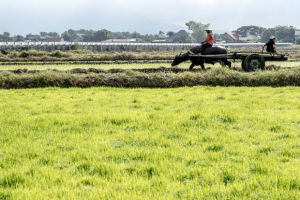
Food markets will face many more months of uncertainty due to COVID-19, but the agri-food sector is likely to show more resilience to the pandemic crisis than other sectors, according to a new report released today by the Food and Agriculture Organization of the United Nations (FAO).The Food Outlook report provides the first forecasts for production and market trends in 2020-2021 for the world's most traded food commodities - cereals, oilcrops, meat, dairy, fish and sugar.