


News & Events
The wealth of data provided by large-scale -omics studies empowers the discovery of gene regulatory networks and molecular mechanisms that underlie specific phenotypes. Most transcriptomic studies provide a snapshot of how organisms interact with their environment, recording change after a given time or in response to a single environmental variable. Organisms have not evolved in binary states of treatment vs. control and instead experience a continuum of environmental states

Scientists from AgResearch in New Zealand have developed transgenic goats that produce monoclonal antibodies or mAbs, a known candidate for anti-cancer therapy. With further research, the transgenic goats may prove to produce large volumes of the protein through their milk without the expensive production costs of the same protein in lab-controlled environments.
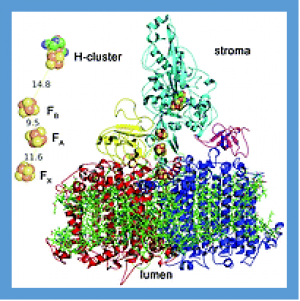
Scientists from the Tel Aviv University used microscopic algae to produce hydrogen from plants which, if further researched, may lead to using plants to produce electricity. The team used an enzyme which they put in algae samples. They made an in vivo fusion of photosystem I (PSI) and algal hydrogenase by inserting the HydA sequence into the PSaC subunit. This created a new photosystem and was observed to produce higher rates of hydrogen
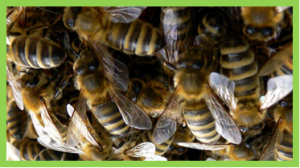
Developmental plasticity generates phenotypic variation, but how it contributes to evolutionary change is unclear. Phenotypes of individuals in caste-based (eusocial) societies are particularly sensitive to developmental processes, and the evolutionary origins of eusociality may be rooted in developmental plasticity of ancestral forms. We used an integrative genomics approach to evaluate the relationships among developmental plasticity
The Office of the Gene Technology Regulator of Australia has issued license DIR 171 to Clinical Network Services (CNS) Pty Ltd, authorizing clinical trial of a live genetically modified (GM) vaccine against influenza virus infection. The Risk Assessment and Risk Management Plan (RARMP) and the license were finalized taking into account the input received during a consultation with the public, State and Territory governments, Australian Government agencies, the Minister for the Environment, the Gene Technology Technical Advisory Committee and local councils.
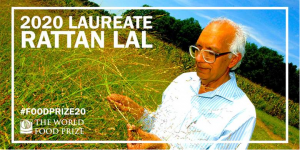
Leading soil scientist Dr. Rattan Lal is the 2020 World Food Prize Laureate for his work in developing and mainstreaming a soil-centric approach to increasing food production that conserves natural resources and mitigates climate change. The 2020 Laureate Announcement Ceremony featured pre-recorded remarks from the U.S. Secretary of State Michael R. Pompeo and U.S. Secretary of Agriculture Sonny Perdue, together with World Food Prize Foundation President Barbara Stinson announcing the name of the Laureate, who also called Dr. Lal "a trailblazer in soil science."
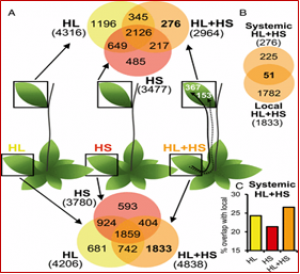
Extreme environmental conditions, such as heat, salinity, and decreased water availability, can have a devastating impact on plant growth and productivity, potentially resulting in the collapse of entire ecosystems. Stress-induced systemic signaling and systemic acquired acclimation play canonical roles in plant survival during episodes of environmental stress. Recent studies revealed that in response to a single abiotic stress, applied to a single leaf, plants mount a comprehensive stress-specific systemic response that includes the accumulation of many different stress-specific transcripts and metabolites, as well as a coordinated stress-specific whole-plant stomatal response.
Researchers from Tokyo Metropolitan University presented a new protocol for CRISPR-Cas9‐based genome editing using rice zygotes. This addresses some technical hurdles faced in the application of gene-editing technology. The description of the technique is published in Current Protocols. Genome-editing technology for targeted mutagenesis of plants using programmable nucleases has been extensively used for next-generation plant breeding.
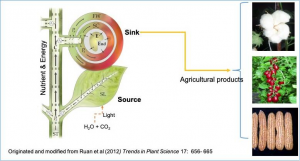
A team of world experts including Professor Yong-Ling Ruan from the University of Newcastle has published findings and insights that identify key biological bottlenecks limiting plant productivity and crop yields. The research, published in Nature Plants, critically analyzed existing information, including the authors' own research, and found what the team believes to be crucial information for the future of agriculture production.
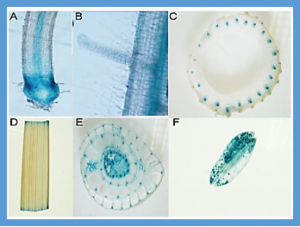
The chaperonin 60 (Cpn60) protein is of great importance to plants due to its involvement in modulating the folding of numerous chloroplast protein polypeptides. In chloroplasts, Cpn60 is differentiated into two subunit types—Cpn60α and Cpn60β and the rice genome encodes three α and three β plastid chaperonin subunits. However, the functions of Cpn60 family members in rice were poorly understood. In order to investigate the molecular mechanism of OsCpn60β1
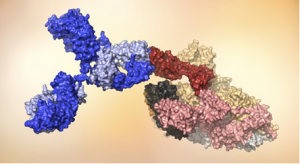
Researchers from Scripps Research, International AIDS Vaccine Initiative (IAVI), and University of California San Diego School of Medicine discovered antibodies in the blood of patients who recovered from COVID-19 that provide powerful protection against SARS-CoV-2, the coronavirus that causes the disease, when tested in animals and human cell cultures. The research sets the stage for clinical trials and additional tests of the antibodies, which are now being produced as potential treatments and preventives for COVID-19.

The webinar will tackle the following topics: introduction to genome editing genome editing regulatory perspectives current healthcare and other industrial applications of genome editing
The following experts will serve as the resource speakers in the webinar:
Dr. Markus Wyss, Strain Director, Global Regulatory Affairs and Quality Management, DSM