


News & Events
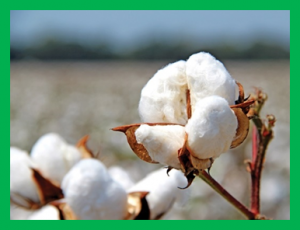
Cotton fiber quality traits are controlled by QTLs and are susceptible to environmental influence. Fiber quality improvement is an essential goal in cotton breeding but is hindered by limited knowledge of the genetic basis of fiber quality traits. In this study, two sets of introgression lines of Gossypium hirsutum × G. barbadense were used to dissect the QTL stability of three fiber quality traits (fiber length, strength and micronaire) across environments using 551 simple sequence repeat markers selected from our high-density genetic map.
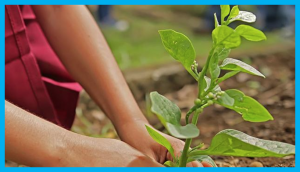
‘Biodiversity’ involves 8 million plant and animal species, the ecosystems that house them, and the genetic diversity among them. 5th June, World Environment Day observed by the UN since 1972, provides a global platform to focus efforts on pressing environmental issues. Bushfires to locust infestations and the global disease pandemic of COVID-19, shows now more than ever, our intricate interdependence on the environment.

Since it was declared a pandemic by WHO on 11 March, COVID-19 has affected nearly 200 countries and territories around the globe. As of 14 June, the total reported cases of COVID-19 globally reached more than 7.6 million with over 420,000 deaths. In Southeast Asia, more than 115,000 people were COVID-19 positive and over 3,000 fatalities were reported. One characteristic of this pandemic is that it has moved from a local health issue to a multisector, economy-wide, global crisis.
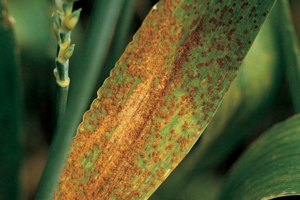
The demand for cereal grains as a main source of energy continues to increase due to the rapid increase in world population. The leaf rust diseases of cereals cause significant yield losses, posing challenges for global food security. The deployment of resistance genes has long been considered as the most effective and sustainable way to control cereal leaf rust diseases.
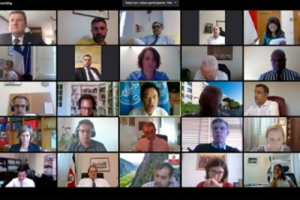
Director-General QU Dongyu briefed today permanent representatives of FAO member countries on the new reporting lines that go with his proposed changes to the organizational structure, aimed at creating an FAO that is fit-for-purpose, flexible, responsive, innovative and results-oriented. “To improve the Organization’s efficiency and effectiveness, while avoiding silos and establishing transparency and accountability at the optimal levels, we propose a number of structural and programmatic adjustments,” Qu said.
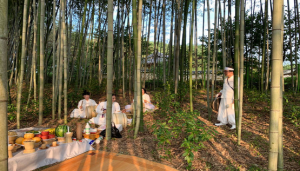
The Republic of Korea's traditional bamboo-based farming system in Damyang has been recognized as a Globally Important Agricultural Heritage System (GIAHS), a designation managed by the UN Food and Agriculture Organization (FAO). It is the fifth time a site from the Republic of Korea has won the GIAHS recognition. Based on traditional agroecological practices, the site is an impressive example of sustainable agriculture approach linking nature and traditional farming practices while respecting the environment.
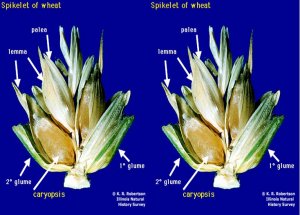
Spikelet number traits and heading date (HD) play key roles in yield improvement of wheat and its wide adaptation to different environments. Here, we used a Recombinant Inbred Lines population derived from a cross between Yi5029 (5029) and Nongda4332 (4332) to construct a high-density genetic linkage map and identify quantitative trait loci (QTL) associated with total spikelet number per spike (TSPN), fertile spikelet number per spike (FSPN), sterile spikelet number per spike (SSPN) and HD. A total of 22 environmentally stable QTL for TSPN, FSPN, SSPN and HD were identified.
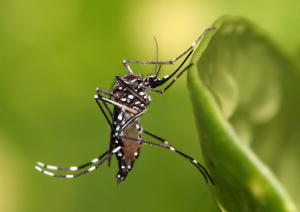
Oxitec, the US-owned company developing safe, sustainable biological control tools, has announced that the U.S. Environmental Protection Agency (EPA) Experimental Use Permit (EUP) to pilot our Friendly™ Aedes aegypti mosquito technology in the U.S. has been published in the Federal Register following approval in May. The technology provides a responsible method of controlling insect pests that damage crops and spread diseases such as dengue, Zika, chikungunya, and yellow fever.
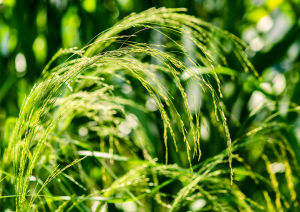
Scientists have mapped the genetic diversity of teff, an ancient grain originally from Ethiopia, and a staple crop for 50 million people in the country. Teff has been increasingly popular worldwide, touted as a superfood for its gluten-free, high fiber and protein, and low-sugar properties. However, future climate scenarios predict a decrease of the crop's cultivation suitability in Ethiopia, with a model predicting teff cultivation to diminish by 2070.
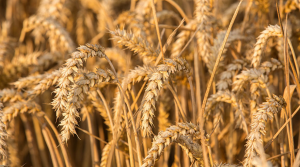
Mining genetic loci for yield is challenging due to the polygenic nature, large influence of environment and complex relationship among yield component traits (YCT). Many genetic loci related to wheat yield have been identified, but its genetic architecture and key genetic loci for selection are largely unknown. Wheat yield potential can be determined by three YCT, thousand kernel weight, kernel number per spike and spike number. Here, we summarized the genetic loci underpinning YCT from QTL mapping, association analysis and homology-based gene cloning. The major loci determining yield-associated agronomic traits, such as flowering time and plant height, were also included in comparative analyses with those for YCT.

The webinar aimed to discuss the science behind genome editing, the various regulatory perspectives on genome editing, and current healthcare and industrial applications of genome editing. Aside from Dr. Wyss, the other resource speakers were Dr. Nina Gloriani, Chair of the Vaccine Expert Panel at the Philippine Department of Science and Technology, and Dr. Martin Lema, Former Chair of the National Biosafety Commission in Argentina.
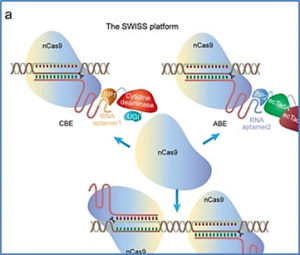
Experts from the University of Chinese Academy of Sciences introduced a new technique called CRISPR simultaneous and wide-editing induced by a single system (SWISS), which allows multi-functional genome editing in plants. The detailed description of SWISS is published in Genome Biology. In this new method, the RNA aptamers engineered in crRNA scaffold recruit their cognate binding proteins fused with cytidine deaminase and adenosine deaminase to Cas9 nickase target sites,