


News & Events
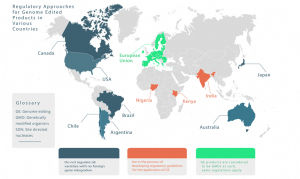
CGIAR-IITA head of plant biotechnology Leena Tripathi has made an impassioned plea for genome editing and its potential. She made the call in a recently published paper titled, CRISPR/Cas9-based genome editing of banana for disease resistance. Tripathi and her Kenya-based team are using gene editing to develop disease-resistant banana varieties.
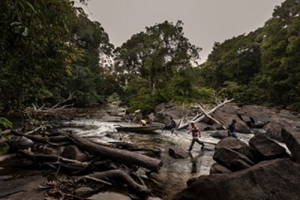
As the world faces the unprecedented pandemic, we must restore the links between people and nature to accelerate the transformation of our food systems to make them more sustainable, resilient and equitable, FAO-Director-General QU Dongyu said on Tuesday. He delivered his remarks at a special virtual side-event on the Post-2020 Global Biodiversity Framework held on the margins of the 2020 High-Level Political Forum on Sustainable Development and convened by the Secretariat of the Convention on Biological Diversity (CBD).
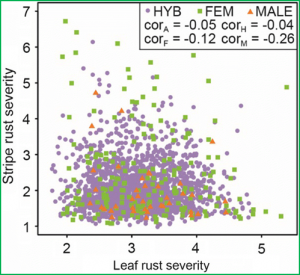
Leaf rust and stripe rust belong to the most important fungal diseases in wheat production. Due to a dynamic development of new virulent races, epidemics appear in high frequency and causes significant losses in grain yield and quality. Therefore, research is needed to develop strategies to breed wheat varieties carrying highly efficient resistances. Stacking of dominant resistance genes through hybrid breeding is such an approach. Within this study, we investigated the genetic architecture of leaf rust and stripe rust resistance of 1750 wheat hybrids and their 230
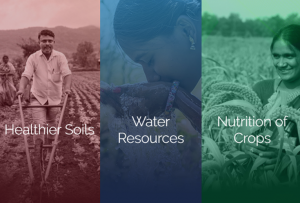
Soil health mapping of 37,500 samples from farmers’ fields across 30 districts of India’s state of Odisha found over 90% soils to be acidic and over 80% deficient in boron.
Redress: Over 4,000 soil test-based nutrient management demonstrations were conducted and crop-specific nutrient doses prescribed to build healthier soils.
Partners: Government of Odisha and non-governmental organizations.
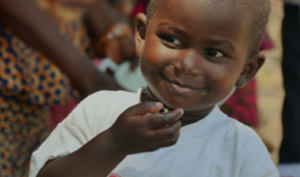
The 4th International Conference on Global Food Security addresses the topic of food security at all spatial levels from local to global, and from an interdisciplinary and systemic food systems perspective. It aims to better understand environmental, nutritional, agricultural, demographic, socio-economic, political, technological and institutional drivers, costs and outcomes of current and future food security. Interactions with contextual factors including climate change, urbanisation, greening the economy and data-driven technologies will be central
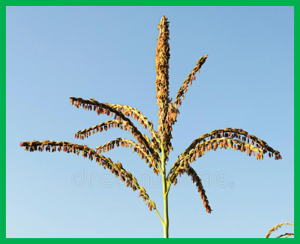
Genome doubling of haploids is one of the major constraints of large-scale doubled haploid (DH) technology. Improving spontaneous haploid genome doubling (SHGD) is an alternative to overcome this limitation. In this study, we aimed to construct a high-density linkage map based on genotyping by sequencing of single nucleotide polymorphism, to detect QTL and QTL by environment (Q by E) interactions affecting SHGD and to identify the best trait for mapping and selection of haploid male fertility (HMF).
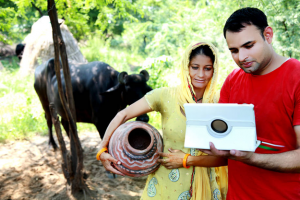
The Food and Agriculture Microdata (FAM) Catalogue provides an inventory of datasets collected through farm and household surveys which contain information related to agriculture, food security, and nutrition. The FAM catalogue is populated by datasets which are collected directly by FAO and datasets whose collection are supported in some way by FAO. Our aim is to be a one-stop-shop containing metadata on all agricultural censuses and surveys which are publically available as well as provide direct access and/or links to the microdata.
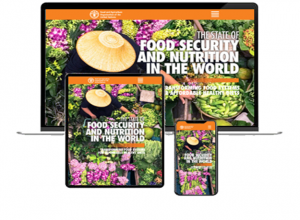
Updates for many countries have made it possible to estimate hunger in the world with greater accuracy this year. In particular, newly accessible data enabled the revision of the entire series of undernourishment estimates for China back to 2000, resulting in a substantial downward shift of the series of the number of undernourished in the world. Nevertheless, the revision confirms the trend reported in past editions: the number of people affected by hunger globally has been slowly on the rise since 2014.
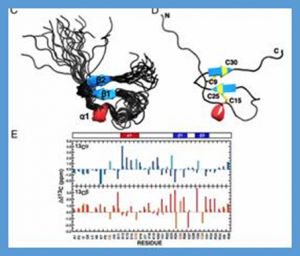
In the indeterminate nodules of a model legume Medicago truncatula, ∼700 nodule-specific cysteine-rich (NCR) peptides with conserved cysteine signature are expressed. NCR peptides are highly diverse in sequence, and some of these cationic peptides exhibit antimicrobial activity in vitro and in vivo. However, there is a lack of knowledge regarding their structural architecture, antifungal activity, and modes of action against plant fungal pathogens.
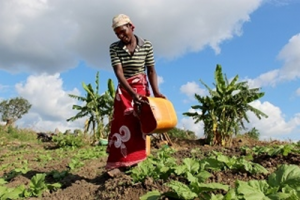
The FAO Director-General, QU Dongyu, underscored the importance of water as a fundamental issue for the transformation of agri-food systems, in his address to a special High Level Political Forum 2020 event on the Sustainable Development Goal (SDG) 6 – ensure availability and sustainable management of water and sanitation for all by 2030.

Researchers at Martin Luther University Halle-Wittenberg (MLU) have identified two genes that are key to how plants know when to flower. The researchers were able to show that the ELF3 and GI genes control the internal clock of plants that monitors the length of daylight and determine when it is the right time to flower.
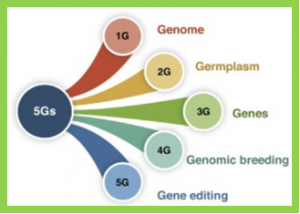
Here we propose a 5G breeding approach for bringing much-needed disruptive changes to crop improvement. These 5Gs are Genome assembly, Germplasm characterization, Gene function identification, Genomic breeding (GB), and Gene editing (GE). In our view, it is important to have genome assemblies available for each crop and a deep collection of germplasm characterized at sequencing and agronomic levels for identification of marker-trait associations and superior haplotypes.