


News & Events
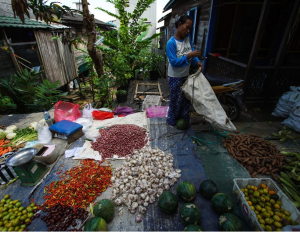
COVID-19 has exposed the vulnerability of our economies to shocks, with governments desperately looking for recovery options that deliver new jobs and growth. The pandemic has also laid bare glaring inequalities in our societies, threatening to derail achievement of the Sustainable Development Goals. The agricultural development sector has stalled as field work has been restricted. In discussions held online from their homes around the world, researchers have observed a new vista emerging of a changed world, one to which they, too, must adapt, finding new ways of working and new systems that are more resilient to the current and future pandemics.
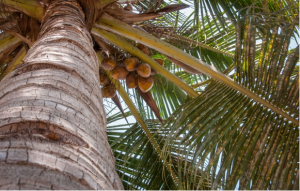
First, the Thai coconut industry got hit by a documentary of the ‘slave labour’ of monkeys, specially trained to harvest coconuts without respect for animal rights. Several global companies responded quickly with news that they would no longer buy from the companies implicated but the Thai authorities tried to deal with the issue by a combination of denial (… it only happens in a few places, as a tourist attraction…), reference to traditions along with economic claims that it isn’t even profitable.
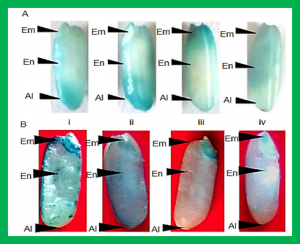
Rice varieties having high Fe concentration in the endospermic region can be used as a good source for Fe deficit population. In this study, 303 Oryza sativa varieties and 1 Oryza rufipogon accession were assessed for spatial Fe accumulation in grains by Prussian blue staining method. Spatial ferritin protein distribution in grains was visualized by immunohistochemistry, and ferritin expression was assessed in selected rice varieties using semi-quantitative reverse transcription PCR.

As the health and economic impacts of COVID-19 continue to evolve, researchers have been using new and creative methods of data collection. Widespread use of approaches such as computer-assisted telephone interviewing (CATI) has generated enthusiasm for phone surveys to eventually replace face-to-face fieldwork in the long run as a cheaper and faster alternative. But how well do phone surveys perform in terms of response rates, response bias, and data quality—particularly for women respondents?

Dr Nicoline de Haan has been appointed as the Director of the CGIAR GENDER Platform, as announced by Iain Wright, Chair of the GENDER Platform Interim Management Committee and Deputy Director General of the International Livestock Research Institute (ILRI). De Haan steps into the role as GENDER Director following three years as Gender Research Leader at ILRI in Nairobi, Kenya. At ILRI, she has advanced understanding of how addressing gender inequalities in livestock systems can improve food and nutrition security as well as boost economic development.
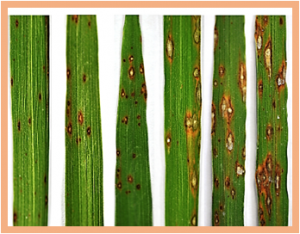
The objectives of this study were to evaluate the genetic diversity and the pathogenicity of some Vietnamese rice blast fungus (Magnaporthe oryzae Barr) populations collected from four specific different areas in Central Vietnam by using molecular analysis. The results showed that the virulence range-isolate of the blast population is highly varied. By using the polymorphic RAPD markers for genetic diversity evaluation of 32 M. oryzae isolates,

The analysis of collaborative science by Herz et al. (1) raises additional points worth consideration. The “deeply rooted biases in perceived self-contribution” that Herz et al. (1) describe are also well known outside of science. Most (all?) of us have lived with roommates, and worked alongside labmates, whom we have had to clean up after. From personal experience, I know I am fully cognizant of this time and effort
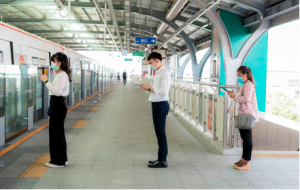
The coronavirus disease 2019 (COVID-19) pandemic, caused by the novel coronavirus severe acute respiratory syndrome coronavirus 2 (SARS-CoV-2), has already claimed more than 470,000 deaths worldwide at the time of this writing (1) and is likely to claim many more. Models can help us determine how to stop the spread of the virus.
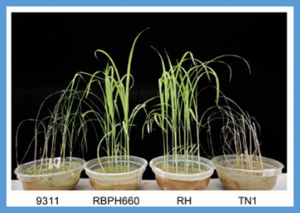
An introgression line RBPH660, derived from wild rice Oryza rufipogon, showed stable resistance to brown planthopper (BPH). Segregation analysis indicated BPH resistance of RBPH660 was controlled by multiple genes/QTLs. By using the bulked segregant analysis (BSA)-seq method, two genomic regions harboring QTLs resistance to BPH were identified from 1.20 to 16.70 Mb on chromosome 4 and from 10.20 to 12.60 Mb on chromosome 9 in RBPH660, respectively.
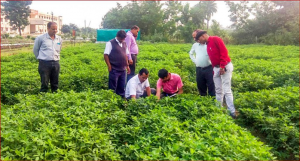
A new groundnut variety, with 28% higher yields of oil and pods compared to zonal checks, has been released in Chhattisgarh state, India. This variety, Chhattisgarh Mungfali-1 (CGM-1), is the first ever groundnut variety released by Indira Gandhi Krishi Vishwavidyalaya (IGKV) in the new state which came into being in the year 2000.

The first-ever virtual meeting of ICRISAT Governing Board was conducted recently where many opportunities were discussed to enhance ICRISAT’s capacity to develop in areas of research. The Board appreciated the mechanisms put forward to co-create initiatives that build impact and to stay agile and ambitious to be well positioned for the future.

Rice is a major staple food that sustains more than three billion people in the world. However, as the world’s population continues to grow, it has become more and more urgent to develop super high yielding varieties as well as hyper-tolerant varieties to pathogens and climate change. Genome editing technology is gradually revolutionizing crop improvement by facilitating a rapid, efficient and simple strategy for modification of target genes. Since many genes and single nucleotide polymorphisms (SNPs) involved in agronomically important traits have already been determined by comparative genomics, GWAS and OMICS-based approaches, genome editing could provide the ultimate tool to accelerate the breeding of new mutations that has until now been conducted by random mutagenesis.