


News & Events
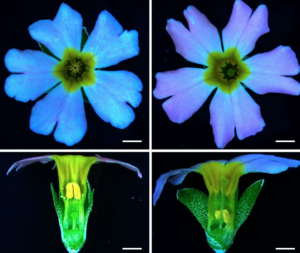
Heterostyly represents a fascinating adaptation to promote outbreeding in plants that evolved multiple times independently. While L-morph individuals form flowers with long styles, short anthers, and small pollen grains, S-morph individuals have flowers with short styles, long anthers, and large pollen grains. The difference between the morphs is controlled by an S-locus “supergene” consisting of several distinct genes that determine different traits of the syndrome and are held together, because recombination between them is suppressed.
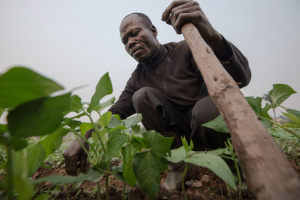
The Global Network Against Food Crises (GNAFC) today held a high-level event to present a review of the most recent global data available on how the knock-on effects of the COVID-19 pandemic are driving up acute hunger in vulnerable countries that were already wracked by food crises even before the novel coronavirus arrived on the scene. The meeting was also important for international resource partners and relevant actors to discuss emerging priorities, financing and programming implications in light of COVID-19.
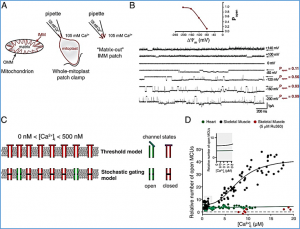
Cytosolic calcium enters the mitochondrial matrix through the mitochondrial calcium uniporter (MCU) where it acts as a signal that regulates ATP production (1), metabolic fuel selection (1⇓–3), and if excessively high, triggers cell death (4). The complete complex of the MCU subunits is now referred to as the mitochondrial calcium uniporter holocomplex (MCUcx) (5). In PNAS, Vais et al. (6) focus on how the levels of Ca2+ inside the mitochondrial matrix ([Ca2+]m) can regulate the MCUcx itself.
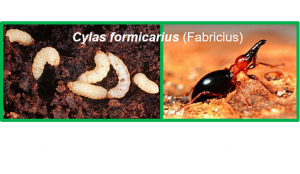
Sweetpotato weevil is among the most harmful pests in some major sweetpotato growing areas with warm climates. To enable the future establishment of safe weevil-resistance strategies, anti-weevil metabolites from sweetpotato should be investigated.
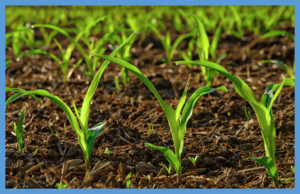
Researchers led by Dr. Guilhem Reyt from the School of Biosciences and Future Food Beacon at the University of Nottingham have discovered how a protein in plant roots controls the uptake of minerals and water, a finding which could improve the tolerance of agricultural crops to climate change and reduce the need for chemical fertilizers.
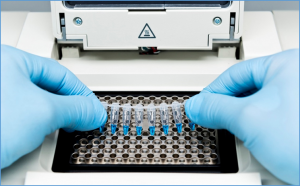
A team of scientists from the United States and New Zealand published a paper to unveil a quantitative polymerase chain reaction (qPCR) method they developed specifically for the first commercialized genome-edited crop: a herbicide tolerant canola. The qPCR method is highly sensitive and compatible with practices done in laboratories that handle genetically modified organisms (GMOs). It was also designed to be integrated into analytical workflows such as the matrix approach
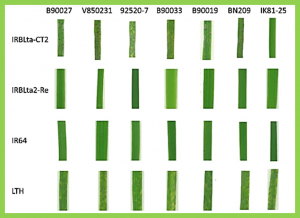
Rice blast is generally considered the most devastating rice disease worldwide. The development of resistant varieties has been proven to be the most economical strategy to control the disease. A cluster of resistant (R) genes on rice chromosome 12 including Pita, Pita2 and Ptr has been studies for decades. However, the relationship between these R genes has not been well established.
Experts from Spain developed a new, more efficient type of transcription activator-like effector nuclease (TALEN) for gene editing. The description of the new bicistronic TALENs is published in Current Protocols in Stem Cell Biology. The researchers generated bicistonic genes wherein the classical TALEN coding sequences are connected by 2A elements to different reporter molecules including fluorochromes (TALEN‐F) or membrane receptors (TALEN‐M).
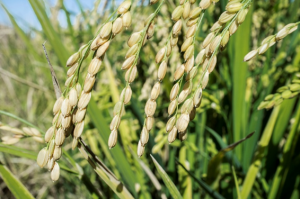
Scientists from China National Rice Research Institute conducted a study to determine the function of chloroplast RNA splicing 2 (CRS2) protein in rice chloroplast development. The results are published in Plant Growth Regulation. Previous studies have shown that CRS2 has a vital role in chloroplast development by splicing the chloroplast gene introns in maize. To know the role of OsCRS2 in rice chloroplast development, CRISPR-Cas9 was used and oscrs2-1 and oscrs2-2 mutants were obtained.
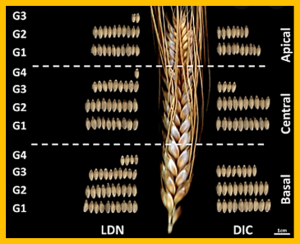
Grain size and weight are crucial components of wheat yield. Previously, we identified a QTL cluster for thousand grain weight (TGW) on chromosome 4B using the Nongda3338 (ND3338)/Jingdong6 (JD6) doubled haploid population. Here, near-isogenic lines (NILs) in the ND3338 background were developed to dissect and validate the QTL cluster. Based on six independent BC3F3:4 heterogeneous inbred families
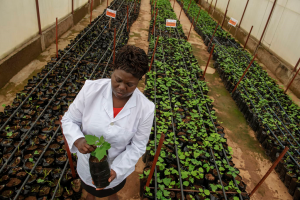
As the 10th Annual Summit of the African Green Revolution Forum (AGRF) takes place this week, Africa is confronting a unique set of intertwined challenges. While African countries have on average seen far fewer COVID-19 cases and deaths per capita than many countries in North America and Europe, the effects of the pandemic are reverberating through the continent’s food systems, impacting vulnerable urban and rural Africans.

As Africa celebrated one of the greatest public health achievements of all time, by declaring the end of wild polio, the question remains how this may catalyze momentum around other health and development issues. The historic milestone comes at a time when many communities are facing the triple emergency of Covid-19, locust invasions and the climate crisis, which is intensifying catastrophic events and food insecurity.