


News & Events
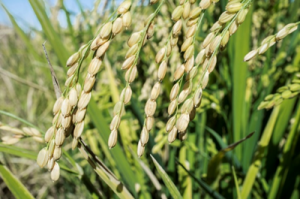
Loss of seed shattering has been regarded as a key step during crop domestication. Mutagenesis contributes to the development of novel crop cultivars with a desired seed-shattering habit in a relatively short period of time, but also to uncovering the genetic architecture of seed shattering. ‘Minamiyutaka’, a non-shattering indica rice cultivar, was developed from the easy-shattering cultivar ‘Moretsu’ by mutation breeding via gamma-ray irradiation.
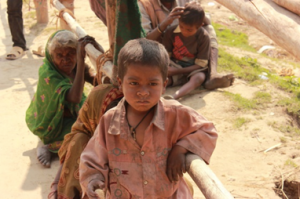
The world is lagging in attaining the Sustainable Development Goals (SDG) by 2030, and the COVID-19 pandemic is making it even harder, according to the report of the Food and Agriculture Organization of the United Nations."We need better data to better understand the path we need to take to get to our destination," said FAO Chief Economist Maximo Torero. "Knowing more about where we are and how slowly or quickly we are moving will help us focus our efforts and actions to target interventions to achieve SDGs.

How did science communication emerge as a field of study and a body of practice? How has development varied from one country to another? What motivated governments, institutions, and people to regard it as answer to social position of science? Australian National University (ANU) released the book, Communicating Science: A Global Perspective, which answers these relevant questions.
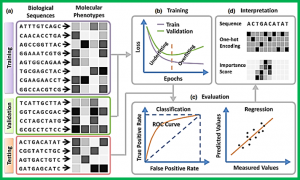
Our era has witnessed tremendous advances in plant genomics, characterized by an explosion of high-throughput techniques to identify multi-dimensional genome-wide molecular phenotypes at low costs. More importantly, genomics is not merely acquiring molecular phenotypes, but also leveraging powerful data mining tools to predict and explain them. In recent years, deep learning has been found extremely effective in these tasks.
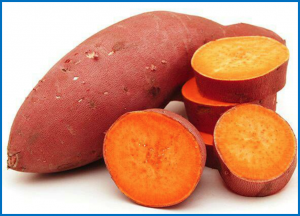
Simple processing is spreading the advantages of orange-fleshed sweetpotato, with benefits for farmers, food producers and family nutrition.The CGIAR Research Program on Roots, Tubers and Bananas (RTB), through an initiative supported by its Scaling Fund, is promoting the use of a purée made from orange-fleshed sweetpotato (OFSP) as an ingredient in baked and fried foods in Kenya, Malawi and Uganda.

The biennial RCVS Knowledge Plowright Prize recognises individuals working in Europe or the Commonwealth who have made significant contributions to the control, management and eradication of infectious diseases. The award, worth £75,000, is made in memory of Dorothy and Walter Plowright. Walter Plowright was an eminent veterinary virologist, renowned for his critical work on the cattle disease rinderpest.
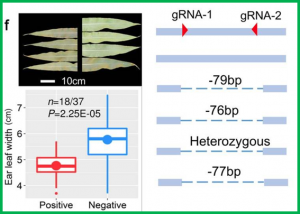
Identifying genotype-phenotype links and causative genes from quantitative trait loci (QTL) is challenging for complex agronomically important traits. To accelerate maize gene discovery and breeding, we present the Complete-diallel design plus Unbalanced Breeding-like Inter-Cross (CUBIC) population, consisting of 1404 individuals created by extensively inter-crossing 24 widely used Chinese maize founders. Results: Hundreds of QTL for 23 agronomic traits are uncovered with 14 million high-quality SNPs and a high-resolution identity-by-descent map, which account for an average of 75% of the heritability for each trait.
Did you know that vehicles with steering wheels on the left are often cheaper to make than right hand-drive cars? They are mass-produced in much larger batches. But many drivers and governments were just unwilling to change to this dominant design. We humans are not so adept at change. Instead of embracing novel ways of thinking, we’d rather stick to the old ones. We cling onto what is safe, what is familiar, or what we are already good at.
‘The Infectious Diseases of East African Livestock (IDEAL) project was a longitudinal cohort study of calf health which was conducted in Western Kenya between 2007–2010. A total of 548 East African shorthorn zebu calves were recruited at birth and followed at least every 5 weeks during the first year of life. Comprehensive clinical and epidemiological data, blood and tissue samples were collected at every visit.
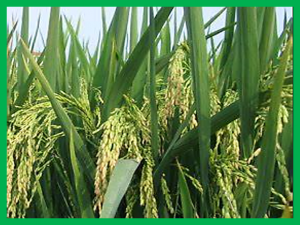
Hybrid breeding is the main strategy for improving productivity in many crops, especially in rice and maize. Genomic hybrid breeding is a technology that uses whole-genome markers to predict future hybrids. Predicted superior hybrids are then field evaluated and released as new hybrid cultivars after their superior performances are confirmed. This will increase the opportunity of selecting true superior hybrids with minimum costs
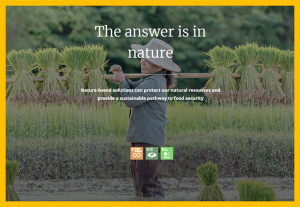
Multiple stresses on our natural resources are making it harder and harder to produce our food. Farmers and food producers are having to contend with a climate that is becoming more unpredictable by the day, along with the consequences it brings such as water scarcity and soil degradation, just to name a few. Agriculture accounts for 70 percent of fresh water withdrawals. With only 2.5 percent of the world’s water being fresh water,

FAO Director-General QU Dongyu welcomed Antonia Marie De Meo the recently appointed Director of the United Nations Interregional Crime and Justice Research Institute (UNICRI), at a virtual meeting today. During the meeting, both parties stressed their full agreement on the importance of strengthening legal, technical and regulatory frameworks to promote and improve food safety standards and discussed ways to support member states in their efforts to enforce these frameworks.