


News & Events
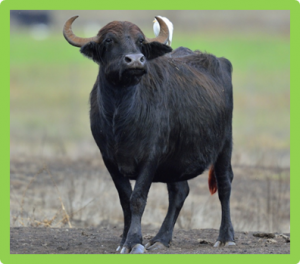
More people globally depend on the water buffalo than any other domesticated species, and as the most closely related domesticated species to cattle they can provide important insights into the shared evolutionary basis of domestication. Here, we sequence the genomes of 79 water buffalo across seven breeds and compare patterns of between breed selective sweeps with those seen for 294 cattle genomes representing 13 global breeds.
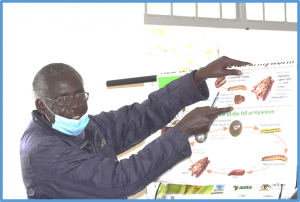
Upon learning that one of the ways they could effectively deal with the challenge of the fall armyworm was using Bt maize, farmers in eastern and Northern Uganda asked the government to allow them to grow this maize. "Why do we have to keep using dangerous pesticides when GM maize can help us fight this fall armyworm?" inquired Eseza Amoit, a farmer from Tororo district in Eastern Uganda.

Mr. Maotang Zu, President of the Farmer Technology Association from the Gaobeidian City of Hebei Province, shared how Bt cotton improved farmers' lives by gaining an average of 10-fold increase in their produce. He said this during the webinar on the Global Impact of GM Crops hosted by ISAAA SEAsiaCenter in collaboration with PG Economics, China Biotechnology Information Center, and CropLife Asia.
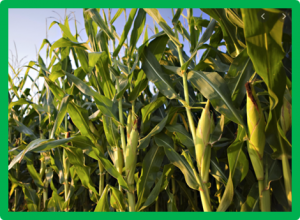
Relatively small genomic introgressions containing quantitative trait loci can have significant impacts on the phenotype of an individual plant. However, the magnitude of phenotypic effects for the same introgression can vary quite substantially in different environments due to introgression-by-environment interactions. To study potential patterns of introgression-by-environment interactions, fifteen near-isogenic lines (NILs) with > 90% B73 genetic background
Agriculture occupies about 40 percent of global land, and food systems are responsible for up to 30 percent of global greenhouse-gas emissions and 70 percent of freshwater use. At the same time, hundreds of millions of people are food insecure, with wide-scale undernutrition still occurring alongside increasing prevalence of overweight, obesity, and non-communicable diseases, leading many to conclude: “Our food system is broken, we need to fix it.”
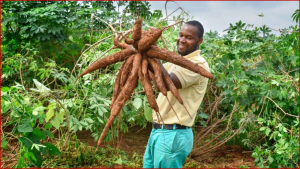
Researchers at IITA, along with partners from the NextGen Cassava Breeding Project, have uncovered new details about the genetic architecture of cassava, which is one of Africa’s most vital crops. The findings will make it easier for breeders to identify traits for crop breeding. The scientists carried out a genome-wide association study (GWAS) and outlined their findings in a research article recently published in Plant Molecular Biology.
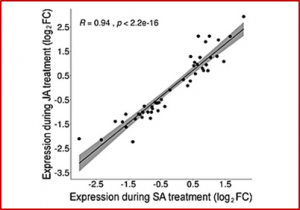
The cassava genome possesses 14 of the 17 plant PR families, with a total of 447 PR genes. A cassava PR gene nomenclature is proposed. Phylogenetic relatedness of cassava PR proteins to each other and to homologs in poplar, rice and Arabidopsis identified cassava-specific PR gene family expansions. The temporal programs of PR gene expression in response to the whitefly (Aleurotrachelus socialis) in four whitefly-susceptible cassava genotypes showed that 167 of the 447 PR genes were regulated after whitefly infestation.

Ministers and other representatives of FAO Members in the Near East and North Africa (NENA) region shared today their concerns and priorities over how to respond to the COVID-19 disruptions and accelerate progress towards sustainable food systems, in a high-level roundtable during the FAO Regional Conference for the Near East.
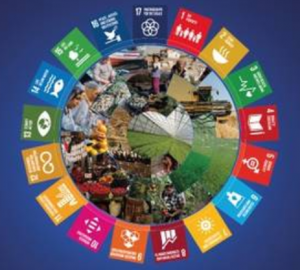
Food systems across the Near East and North Africa (NENA) need to change in order to ensure healthy diets for a growing, increasingly urban population in a context of water scarcity and advancing climate change. Such transformation should address the challenges of ensuring availability, access, stability and use of food in ways that provide smallholder producers and rural communities with opportunities in terms of driving income-growth,
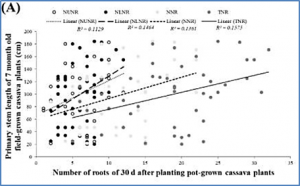
Cassava is the 6th most important source of dietary energy in the world but its root system architecture (RSA) had seldom been quantified. Ability to select superior genotypes at juvenile stages can significantly reduce the cost and time for breeding to bridge the large yield gap. This study adopted a simple approach to phenotyping RSA traits of juvenile and mature cassava plants to identify genotypic differences and the relationships between juvenile traits and harvest index of mature plants.

Research conducted in different universities found RNA from SARS-CoV-2 in stool samples from COVID-19 patients, which led to more questions about the virus including "Can COVID-19 spread through feces?" One of the symptoms of many COVID-19 patients is diarrhea, which indicated that the virus had attacked the intestinal tracts. Further studies are being conducted to investigate if outbreaks in certain areas were caused by wastewater transmission of the virus.
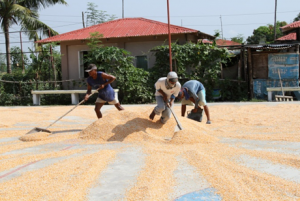
The Philippines Department of Agriculture (DA) through its Regional Office 9 turned over farm inputs to a farmer's association in Zamboanga del Norte in Southern Philippines. The inputs, which included seeds of genetically modified (GM) yellow corn, were given as part of the Plant, Plant, Plant Program of DA Secretary William Dar.