


News & Events
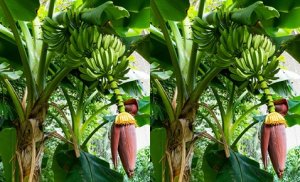
Banana is an important fruit and food crop, but is threatened by Fusarium wilt, one of the most devastating soil-borne fungal diseases. Only host resistance facilitates banana cultivation in infested soils around the world, but the genetic basis of Fusarium wilt of banana (FWB) is unknown. We selfed a heterozygous wild banana accession Musa acuminata ssp. malaccensis (Mam, AA, 2n=22) to generate a mapping population and to investigate the inheritance of resistance to Race 1 and tropical race 4 (TR4) that cause FWB.

CGIAR, the world’s largest global agricultural research organization, has this year embarked on a reformulation of its partnerships, knowledge, assets and global presence as “One CGIAR,” aiming for greater integration and impact in the face of the interdependent challenges facing today’s world.
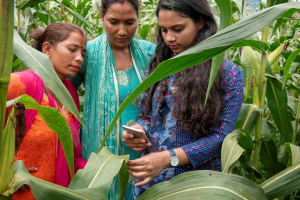
We are increasingly able to detect and attribute changes that we are observing in our environment to climate change. And what we are seeing is concerning. Climate impacts, such as increased frequency and intensity of droughts and heatwaves, longer and more intense wildfire seasons, and increasing storm surges due to sea-level rise—are affecting our wellbeing and may exceed the capacity of our communities, practices, institutions and infrastructure to moderate the adverse effects.
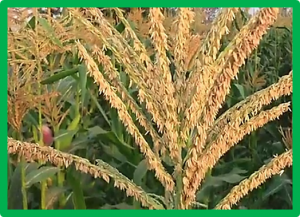
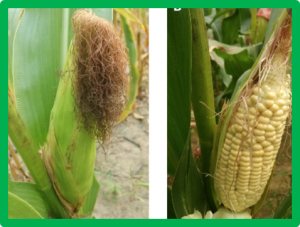
The increasing frequency of extreme high temperature has brought a great threat to the development of maize throughout its life cycle, especially during the flowering phase. However, the genetic basis of thermotolerance at flowering in maize remains poorly understood. Here, we characterized a thermotolerant maize ecotype Abe2 and dissected its genetic basis using a F2:8 recombinant inbred line (RIL) population generated from a cross between Abe2 and B73.
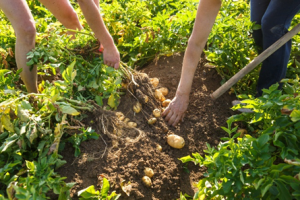
Researchers from NARIC Agricultural Biotechnology Institute in Hungary successfully developed transgene-free potato mutants using CRISPR-Cas9 and Agrobacterium-mediated transformation. The results are published in BMC Biotechnology. Agrobacterium-mediated gene transfer is commonly used in plants. To remove the transgene in the succeeding generations, selfing is applied by breeders. However, this method cannot be applied in several commercial tomato varieties due to self-incompatibility.
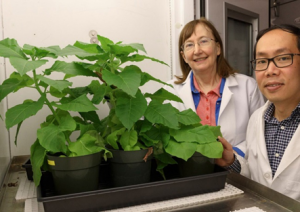
In a paper published in Nature Plants, scientists described how they engineered the key plant enzyme Rubisco and introduced it in Escherichia coli bacteria to create an optimal experimental environment for studying how to speed up photosynthesis, a holy grail for improving crop yields. Researchers focused on Rubisco, a slow enzyme that pulls (or fixes) carbon from carbon dioxide to create sucrose. Along with CO2, Rubisco sometimes catalyzes a reaction with oxygen from the air, and when it does, it creates a toxic byproduct and wastes energy, thereby making photosynthesis inefficient
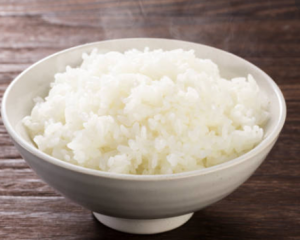
Aroma is an important grain quality trait in rice, controlled by mutations within the BADH2 gene. The trait is simply inherited, and its importance in variety development makes it a practical target for marker-assisted selection in applied breeding programs. The predominant functional mutation within BADH2, an 8-bp indel, can be reliably detected using a PCR-based assay, but the available assays and associated genotyping platforms are insufficient for large-scale applied molecular breeding applications and are not compatible with outsourcing genotyping services.
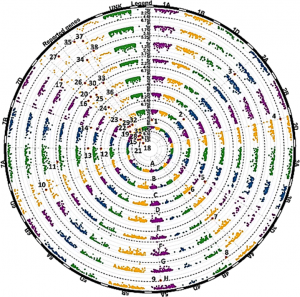
Stripe rust, one of the most destructive diseases of wheat, affects the production of the crop worldwide, especially in the United States. The disease can be controlled by chemicals, but these are deemed harmful to humans, animals, and the environment. Application of such chemicals is also very costly, and farmers prefer to grow wheat varieties that resist stripe rust and the development of such varieties is a top priority for wheat breeding programs.

Cities are transforming into more sustainable and resilient agri-food systems to help reduce the impact of the COVID-19 pandemic. The Food and Agriculture Organization of the United Nations (FAO) launched the Green Cities Initiative and Action Plan to facilitate such transformation of cities into agri-food systems. "For cities to become much greener, more resilient and regenerative, we need to rethink the way urban and peri-urban areas are designed and managed", he said in his opening remarks at the event.
Vegetation indices (VIs) derived from multi-spectral imaging (MSI) platforms can be used to study properties of crop canopy, providing non-destructive phenotypes that could be used to better understand growth curves throughout the growing season. To investigate the amount of variation present in several VIs and their relationship with important end-of-season traits, genetic and residual (co)variances for VIs, grain yield and moisture were estimated using data collected from maize hybrid trials.
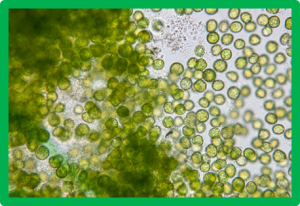
Hiroshima University researchers developed a highly efficient genome editing system for microalga Nannochloropsis oceanica, which is a potential source of biodiesel. Algae gather high concentrations of lipids through photosynthesis and these lipids can be used as feedstocks for sustainable new energies called biodiesels. Nannochloropsis species are microalgae that produce high amounts of lipids
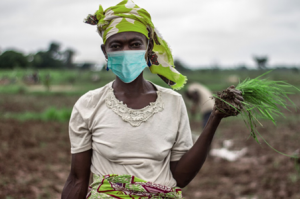
Scientists from the Centre for Agriculture and Bioscience International (CABI) have conducted a new research that highlights the impact of the COVID-19 pandemic on food security in Kenya and Uganda. Two-thirds of those surveyed have experienced economic hardship due to the pandemic. From a random sample of 442 respondents, the researchers led by Dr. Monica Kanslime found that the proportion of food insecure people increased by 38% and 44% in Kenya and Uganda, respectively.