


News & Events
The CGIAR is going through a dynamic reformulation that advances integration of its partnerships, knowledge, assets, and global presence to transform progress in key areas where innovation is needed to deliver on the Sustainable Development Goals by 2030. Moving forward, the One CGIAR will implement a phased approach to research delivery with the imperative of seeking multiple benefits across CGIAR’s impact areas
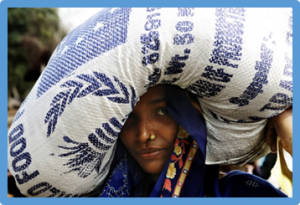
CGIAR has joined the global community in congratulating the United Nations World Food Programme (WFP) on being awarded this year’s Nobel Peace Prize. The Nobel Committee’s recognition of WFP’s role in support of peace through food and nutrition security brings welcome attention to the agency’s outstanding work, as well as the collective and ongoing challenge of ending world hunger.
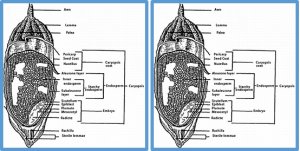
Salinity has drastic effects on plant growth and productivity and is one of the major factors responsible for crop yield losses throughout the agricultural soils of the world. The mechanisms of salinity tolerance in plants are regulated by a set of inherent multigenes and prevalent environmental factors, which bring about a myriad of metabolic changes in each plant part. The stress-induced metabolic changes in the rice plant have been intensively studied
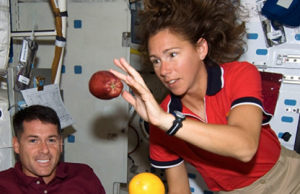
The year was 1969. Final plans for travel to the moon were being fine-tuned. On the checklist had been how to keep food safe for the astronauts during a spaceflight. Foodborne illnesses in the United States, and indeed worldwide, in the 1960s were not a rarity. So in the years leading up to lift-off, NASA worked with the Pillsbury Company and the United States Army Laboratories to ensure that the astronauts, orbiting in space,
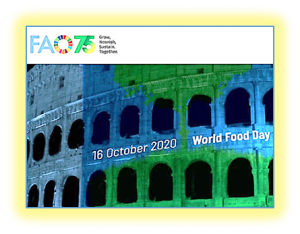
FAO Special Ambassadors, heads of the Rome-Based UN agencies, and other keynote speakers will join FAO Director-General Qu Dongyu to mark FAO’s 75th anniversary during the global World Food Day ceremony on Friday, 16 October. The digital event will also include messages and calls to action from His Holiness Pope Francis, the President of the Republic of Italy, and the UN Secretary-General to ensure that everyone, everywhere
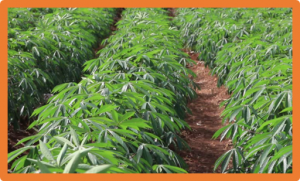
In Sub-Saharan Africa cassava (Manihot esculenta Crantz) is one of the most important food crops where more than 40% of the population relies on it as their staple carbohydrate source. Biotic constraints such as viral diseases, mainly Cassava Mosaic Disease (CMD) and Cassava Brown Streak Disease (CBSD), and arthropod pests, particularly Cassava Green Mite (CGM), are major constraints to the realization of cassava's full production potential in Africa.
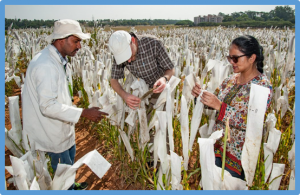
Did you know that vehicles with steering wheels on the left are often cheaper to make than right hand-drive cars? They are mass-produced in much larger batches. But many drivers and governments were just unwilling to change to this dominant design. We humans are not so adept at change. Instead of embracing novel ways of thinking, we’d rather stick to the old ones. We cling onto what is safe, what is familiar or what we are already good at. We see this in the workplace, in our personal lives and in society as a whole. The world still can’t agree on using the metric system!
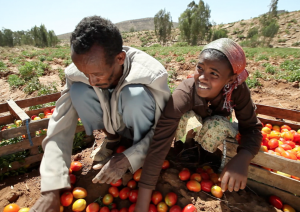
Ethiopia’s rapid economic and agricultural growth over the past two decades is a well-known African success story. In 2000, Ethiopia ranked as the second-poorest country in the world, according to Oxford University’s Global Multidimensional Poverty Index. Then, thanks in large part to sustained investments in the agricultural sector, the economy grew and poverty fell. Ethiopia was the third-fastest growing country in the world from 2000 to 2018 based on GDP per capita, according to World Bank data.
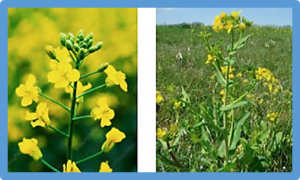
In oilseed rape, the association between the germination potential of premature seeds and the final level of seed lipids, and the underlying mechanism, is elusive. Here, we investigated phenotypic differences in the germination percentage of premature seeds in a collection of oilseed rape cultivars. We compared the dynamic lipid accumulation between the deep-, moderate- and non-dormant genotypes and compared the transcriptomes of the seeds at 40 days after pollination between multiple pairs of deep- and non-dormant genotypes
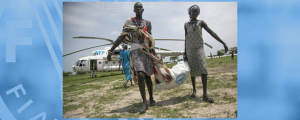
It is with great delight and pride that I offer my congratulations to all my colleagues at the World Food Programme for winning the Nobel Peace Prize.
It is a much deserved recognition of the untiring efforts of generations of humanitarian workers worldwide to defeat hunger.
It also turns the eyes of the international community towards the millions of people who suffer from or face the threat of food insecurity.
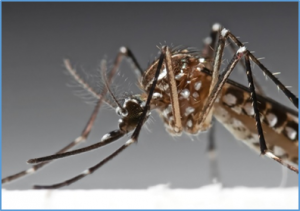
Genetically engineered mosquitoes were successfully developed by scientists from Mexico using microparticle bombardment. The details of their study are released in Insect Molecular Biology. Mosquitoes are known vectors of life-threatening diseases such as Malaria, Yellow Fever, Dengue, Zika, and Chikungunya. Thus, experts are using new strategies to genetically manipulate the mosquito population.
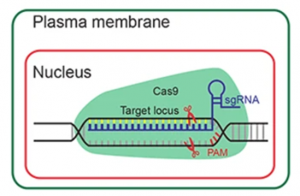
This study demonstrates that soil-grown leaf- or callus-derived pepper protoplasts are a useful system for screening of efficient guide RNAs for CRISPR/Cas9 or CRISPR/Cas12a (Cpf1). CRISPR/Cas9 or Cpf1 were delivered as CRISPR/RNP complexes of purified endonucleases mixed with the designed single guide RNA, which can edit the target gene, CaMLO2 in two pepper cultivars with whole genome sequenced, Capsicum annuum ‘CM334’ and C. annuum ‘Dempsey’.