


News & Events
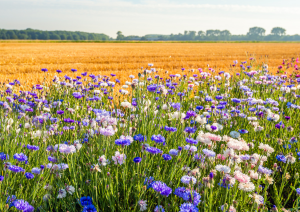
A Rutgers University-led research reveals that most countries are failing to invest in nature-related economic reforms and investments as the COVID-19 pandemic provides an opportunity to reset the global economy and reverse decades of ecosystem and species losses. The research team led by Pamela McElwee, associate professor in the Department of Human Ecology at Rutgers University–New Brunswick was composed of economists, anthropologists, and environmental scientists at many institutions on three continents.

Today, World Food Day marks the 75th anniversary of the Food and Agriculture Organization (FAO) of the United Nations. Born on the wake of catastrophe - World War II, three-quarters of a century later, FAO's mission to end hunger and nourish the world has been made more relevant because of another global scourge - the COVID-19 pandemic, said QU Dongyu, FAO Director-General.
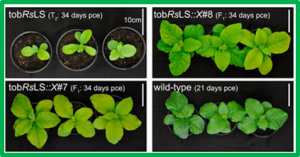
Plant photosynthesis and growth are often limited by the activity of the CO2-fixing enzyme Rubisco. The broad kinetic diversity of Rubisco in nature is accompanied by differences in the composition and compatibility of the ancillary proteins needed for its folding, assembly, and metabolic regulation. Variations in the protein folding needs of catalytically efficient red algae Rubisco prevent their production in plants.

Education is one of the most impacted systems by the COVID-19 pandemic. To slow down the spread of the virus, schools were closed, and educators were pressed with time to ensure continuous instruction. States, districts, and schools are deliberating several questions of whether to reopen school buildings and how to run them safely in case they reopen.
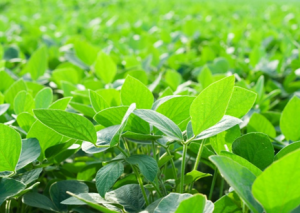
The European Commission has authorized XtendFlex soybeans (MON 87708 x MON 89788 x A5547-127) for food and feed uses in the European Union (EU). This genetically modified (GM) soybean has gone through a comprehensive authorization procedure, including a favorable scientific assessment by the European Food Safety Authority (EFSA). The authorization is valid for 10 years, and any products produced from this GM soybeans will be subject to the EU's strict labeling and traceability rules.
The TaQ alleles as one of the AP2-like transcription factors in common wheat (Triticum aestivum) play an important role in the evolution of the spike characteristics from wild and domesticated emmer to modern wheat cultivars. Its loss-of-function mutant not only changed threshability and spike architecture, but also affected plant height, flowering time, and floret structure. However, the comprehensive functions of TaAQ and TaDq genes in wheat have not been fully elucidated yet.
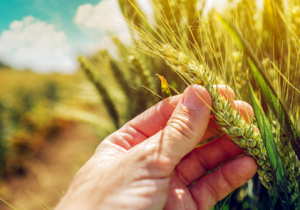
Argentina's Ministry of Agriculture has granted approval of Bioceres Crop Solutions' HB4 wheat event for growth and consumption. The HB4 trait increases wheat yields by up to 20% and is currently the only drought tolerance technology for wheat and soybean crops in the world. Argentina is Latin America's largest wheat producer and the world's first country to adopt HB4 drought tolerance technology for wheat.

On October 7, 2020, The Royal Swedish Academy of Sciences awarded the Nobel Prize in Chemistry jointly to Emmanuelle Charpentier of the Max Planck Unit for the Science of Pathogens and Jennifer A. Doudna of the University of California, Berkeley for the development of a method for genome editing. This method, the CRISPR-Cas9 genetic scissors, is one of gene technology's sharpest tools.
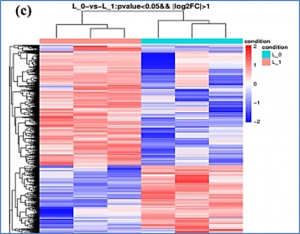
We conducted a hydroponic experiment using a complete nutrient solution (N1) and a nutrient solution without nitrogen (N0). Wheat plants under nitrogen-deficient conditions (NDC) showed decreased crop height, leaf area, root volume, photosynthetic rate, crop weight, and increased root length, root surface area, root/shoot ratio. It indicates that nitrogen deficiency altered the phenotype of wheat plants.
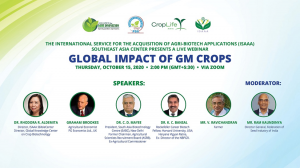
ISAAA invites everyone to the webinar on the Global Impact of GM Crops to be held on October 15, 2020 at 2 PM (GMT+5:30) via Zoom. During this ISAAA webinar, agricultural economist Graham Brookes of PG Economics will share the highlights of his study on the economic and environmental benefits of GM crops from 1996 to 2018, particularly the following:
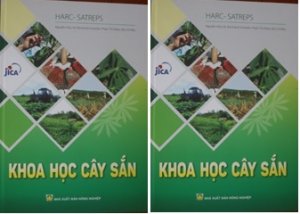
Dr Nguyen Huu Hy and his colleagues has just published a book with the title of Cassava Science with the support by JICA and HARC-SATREPS in October 2020. It includes cassava history in domestication and development; biology; genomics and genetics; cassava breeding; crop management; soil fertility effects; water management; pest and disesea management; Cassava processing and trading; and technology transferring.
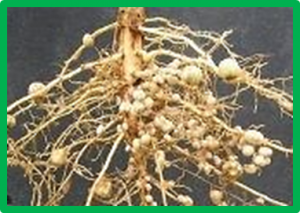
Since 1999, various forward- and reverse-genetic approaches have uncovered nearly 200 genes required for symbiotic nitrogen fixation (SNF) in legumes. These discoveries advanced our understanding of the evolution of SNF in plants and its relationship to other beneficial endosymbioses, signaling between plants and microbes, the control of microbial infection of plant cells, the control of plant cell division leading to nodule development,