


News & Events
The COVID-19 pandemic is more than a health crisis. Over the last six months, we have witnessed its extreme socio-economic consequences, including grave threats to food security and nutrition. As the pandemic continues to take its toll and make an indelible mark on agri-food systems, organizations like the International Rice Research Institute (IRRI), a member of CGIAR, are aligning their efforts to ensure a relevant, timely, and well-coordinated response to safeguard the health and livelihoods of the poorest and most vulnerable.
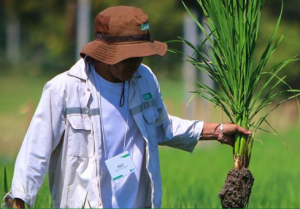
As the COVID-19 pandemic spreads across almost 200 countries and territories around the world, the International Rice Research Institute (IRRI) remains ready to help partners and governments keep rice production and distribution a key priority for people who depend on it for sustenance and livelihood
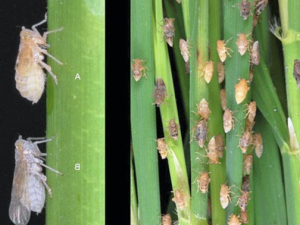
The potential risks of Bt rice on non-target arthropods (NTAs) should be evaluated and defined before commercial production. Recently, effects of Bt rice on NTAs under abiotic and biotic stress conditions attracted much attention. Here we reported the effects of Bt rice T1C-19 (Cry1C rice) on the non-target herbivore, Nilaparvata lugens (rice brown planthopper, BPH) with or without RDV (rice dwarf virus) infection conditions.

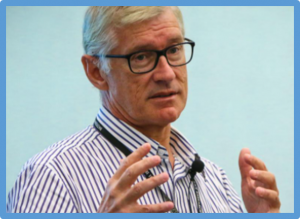
Mobile technologies and digital agriculture hold great promise for the world's farmers, making it all the more important to foster appropriate institutions able to generate innovation whose benefits reach smallholders and disadvantaged groups, Nobel Prize-winning economist Michael Kremer said today in a special lecture hosted by the Food and Agriculture Organization of the United Nations.
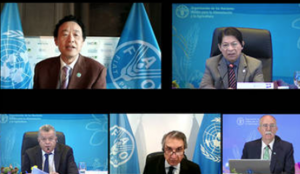
The 36th session of FAO's Regional Conference for Latin America and the Caribbean, hosted virtually by the Government of Nicaragua, started today with Members exchanging their experiences, strategies and ideas on the fight against COVID-19 pandemic, while the FAO Director-General QU Dongyu stressed the importance of strengthened collaboration and innovation, particularly to support the most vulnerable people highly affected by the pandemic.
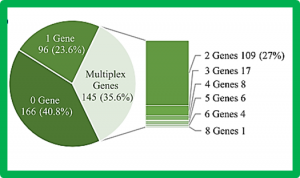
The output of genetic mutant screenings in soya bean [Glycine max (L.) Merr.] has been limited by its paleopolypoid genome. CRISPR-Cas9 can generate multiplex mutants in crops with complex genomes. Nevertheless, the transformation efficiency of soya bean remains low and, hence, remains the major obstacle in the application of CRISPR-Cas9 as a mutant screening tool. Here, we report a pooled CRISPR-Cas9
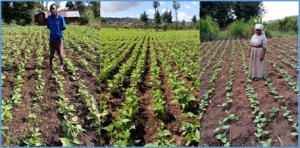
Achieving food and nutritional security and economic prosperity is possible within an equitable system where structural barriers are removed and traditional gender norms and stereotypes are broken. With additional stress on food security caused by social and economic disruptions of the pandemic, it is key to continue working with women farmers to ensure healthy and reliable harvests to support their families during the crisis.
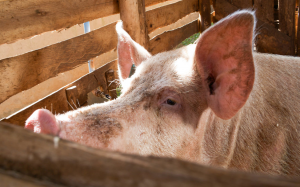
Global heat stress is a growing problem that stands to impact health, livelihoods and the very food we eat. While high temperatures and heat waves can occur under normal weather conditions, with climate change they are becoming more severe, last longer and happen more frequently. In 2019, we saw wildfires blaze across different parts of the world, culminating in the devastating bushfires in Australia that raged for nearly two and half months, fueled by record-breaking temperatures and prolonged drought.
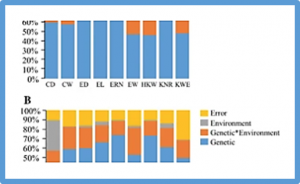
Understanding the genetic basis of yield-related traits contributes to the improvement of grain yield in maize. This study used an inter-mated B73 × Mo17 (IBM) Syn10 doubled-haploid (DH) population and an association panel to identify the genetic loci responsible for nine yield-related traits in maize. Using quantitative trait loci (QTL) mapping, 100 QTL influencing these traits were detected across different environments in the IBM Syn10 DH population,
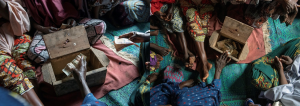
Investments in CGIAR research generate returns of 10 times the amount invested, a new report has found. The report, commissioned by the Supporters of Agricultural Research (SoAR) Foundation, found a 10 to 1 benefit-cost ratio on CGIAR investments of $60 billion in present value terms over almost five decades.
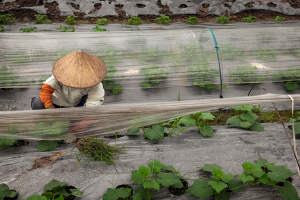
Our food systems are not broken; they are out of sync with what we need from them now. What is needed is a radical realignment of our efforts to make certain that we are progressing not only towards ending hunger, but providing better nutrition, mitigating climate change, promoting inclusion, safeguarding biodiversity, and reducing poverty. With these goals in mind, agriculture can once more rise to the occasion.
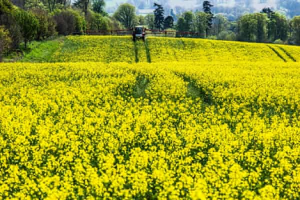
Sulfonylurea herbicides, which inhibit acetohydroxyacid synthase (AHAS), have become the most widely used herbicides worldwide. However, weed control in rapeseed crop production remains challenging in China due to the shortage of available herbicide-resistant cultivars. In this study, we developed a rapeseed line (PN19) with sulfonylurea herbicide resistance through seed mutagenesis.