


News & Events
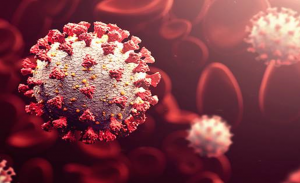
Scientists from the University of Sheffield working with almost 200 researchers from across the globe have identified common vulnerabilities in COVID-19 and other lethal coronaviruses. The international team of experts from 14 leading institutions has studied SARS-CoV-2, SARS-CoV-1, and MERS-CoV to identify commonly hijacked cellular pathways and detect promising targets for broad coronavirus inhibitors with high barriers to resistance. The result of this important research is an important breakthrough in the identification of successful COVID-19 treatment.

ISAAA invites you to the webinar, "Global Impact of GM Crops" to be held on October 26, 2020 at 3 PM (GMT+7) via Zoom. During this ISAAA webinar, agricultural economist Graham Brookes of PG Economics will share the highlights of his study on the economic and environmental benefits of GM crops from 1996 to 2018, particularly the following:
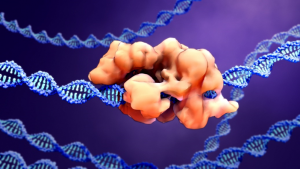
CRISPR–Cas technologies have enabled programmable gene editing in eukaryotes and prokaryotes. However, the leading Cas9 and Cas12a enzymes are limited in their ability to make large deletions. Here, we used the processive nuclease Cas3, together with a minimal Type I-C Cascade-based system for targeted genome engineering in bacteria. DNA cleavage guided by a single CRISPR RNA generated large deletions (7–424 kilobases)
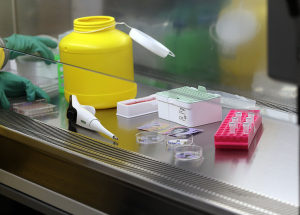
Commonwealth Scientific and Industrial Research Organization researchers studied the survival rates of infectious SARS-CoV-2 and found that the virus can survive 28 days on surfaces. The results are published in Virology Journal. The team monitored the survival rates of infectious SARS-CoV-2, dried in an artificial mucous solution, on six common surfaces (stainless steel, glass, vinyl, paper and polymer banknotes, and cotton cloth) and at three different temperatures
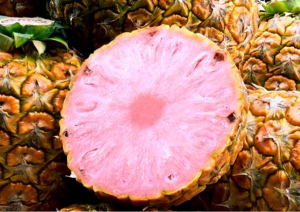
After more than 15 years, Pinkglow™ Pineapple, the pink pineapple from Fresh Del Monte is now commercially available. A product of bioengineering, Pinkglow™ Pineapples contain lycopene, a natural pigment that gives some produce its red color (e.g. tomatoes, watermelon), which makes this pineapple pink. Pinkglow™ Pineapples are grown on a select farm in the South-Central region of Costa Rica, which has the ideal soil and climate for growing pineapples.
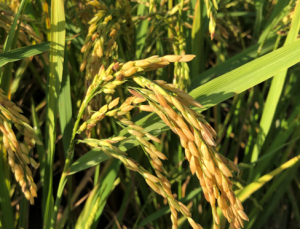
Lectin proteins play an important role in biotic and abiotic stress responses in plants. Although the rice lectin protein, Osr40c1, has been reported to be regulated by drought stress, the mechanism of its drought tolerance activity has not been studied so far. In this study, it has been depicted that expression of Osr40c1 gene correlates with the drought tolerance potential of various rice cultivars. Transgenic rice plants overexpressing Osr40c1 were significantly more tolerant to drought stress over the wild-type plants.

Join world’s largest online biodiversity conference GLF Biodiversity Digital Conference: One World - One Health will host 6 plenaries, 23 sessions, 200+ speakers. All timezones. Human transformation of Earth’s landscapes is driving biodiversity loss, climate change and the emergence of pandemics such as COVID-19, which is a stark reminder of the links between human, animal and environmental health.
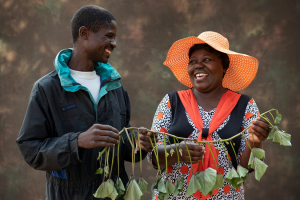
This year should have been a milestone for global climate action, setting out the road towards fulfilling the Paris Agreement, including more sustainable food production. Yet, not only has the COVID-19 pandemic postponed crucial climate talks, it has also proved a major setback in tackling global hunger and malnutrition, putting food security in a precarious position. The challenge of global hunger is inextricable from the survival of the planet: one cannot be compromised over the other.
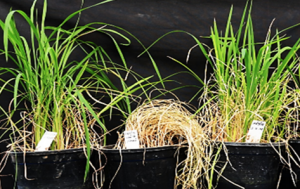
Increases in rice productivity are significantly hampered because of the increase in the occurrence of abiotic stresses, including drought, salinity, and submergence. Developing a rice variety with inherent tolerance against these major abiotic stresses will help achieve a sustained increase in rice production under unfavorable conditions. The present study was conducted to develop abiotic stress-tolerant rice genotypes in the genetic background of the popular rice variety Improved White Ponni
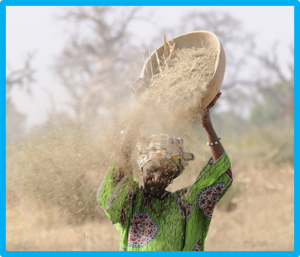
For Idris Elba, returning to Sierra Leone late last year was about two things: reconnecting with his roots and learning about the challenges facing the country where his father was born, so that he could become a better advocate for its people. The actor, producer, and humanitarian took part in a project field visit with his wife Sabrina Dhowre Elba, the model and activist, organized by the United Nations’ International Fund for Agriculture (IFAD) and Global Citizen last December.

As governments around the world are realizing the multiple connections between the COVID-19 health crisis and the global and local food systems, they are contemplating an array of policy decisions or already implementing preventive measures to protect food supply. In most cases, these measures are taken in autonomy and with little consideration for the global food systems and their interdependence.
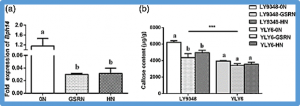
Brown rice planthopper (BPH) is a devastating rice pest in Asia. Bph14 is the first cloned BPH-resistance gene in rice, inducing callose deposition while impeding BPH feeding. Nitrogen application affects plant growth and resistance. However, there is little evidence on the influence of nitrogen on the callose content or regulation of rice BPH resistance