


News & Events
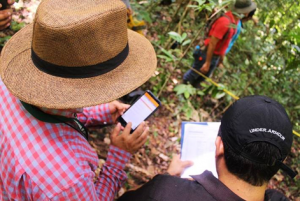
The Board of the Green Climate Fund (GCF) approved three new FAO-designed projects in Argentina, Guatemala and Sudan for a total amount of $158.6 million aimed at mitigating greenhouse gas emissions, strengthening resilience to climate change, and combating deforestation. FAO Director-General QU Dongyu stressed FAO's willingness to continue working closely with GCF in support of food system transformation on the ground for the benefit of society, environment, farmers and consumers at large.
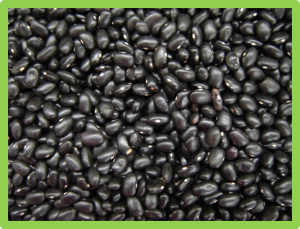
When black beans are hydrothermally processed prior to consumption, water-soluble anthocyanins are released from the seed coat, resulting in an undesirable faded brown color in the cooked product. The aim of this research was to develop mapping populations with different genetic sources of color retention in order to identify regions of the bean genome associated with canning quality traits. Two half-sibling black bean recombinant inbred line (RIL) populations segregating for post-processing color retention were developed.
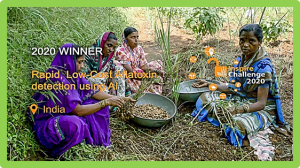
A little box that can predict the amount of harmful aflatoxin contained in a handful of sample groundnuts… sounds like a far-fetched notion? Not anymore. A collaboration between Pure Scan AI and ICRISAT to create a portable aflatoxin detector has won the Inspire Challenge by the CGIAR Big Data Platform at the recent Big Data Convention, earning a US$ 100,000 grant to build and scale up the device.

It had been a lucrative year for Francis Mukono. He and a group of local farmers have been practicing organic farming, and they’ve even found a bulk buyer who exports their produce to Europe at favourable prices. But when we recently visited his farm in central Kenya’s Kirinyaga county, it looked abandoned. It was overgrown with weeds, and part of the cabbage crop had been uprooted and fed to the animals.
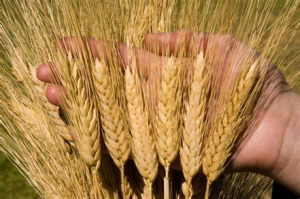
Some wheat adult plant resistance (APR) genes provide partial resistance in the later stages of plant development to rust diseases and are an important component in protecting wheat crops from these fungal pathogens. These genes provide protection in both bread wheat and durum wheat. Here, we have mapped APR to wheat stripe rust, caused by the fungal pathogen Puccinia striiformis f. sp. tritici, in a cross between durum cultivars Stewart and Bansi. Two resistance QTLs derived from the Stewart parent were identified in multi-generational field trials.
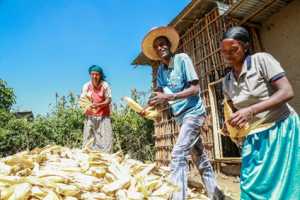
An independent study published last month has documented the extensive reach of CGIAR-related agricultural innovations in Ethiopia over the past 20 years. The study represents the culmination of years of work by the independent CGIAR Standing Panel on Impact Assessment (SPIA)[1], together with the Ethiopian Central Statistics Agency (CSA) and the World Bank Living Standards Measurement Study (LSMS) team, to develop and test a country-level approach to assessing adoption and diffusion of agricultural innovations using national surveys.
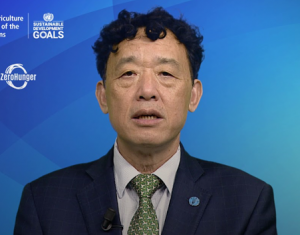
The FAO Director-General, QU Dongyu, today addressed the Joint Meeting of the 129th Session of the Programme Committee and the 183rd Session of the Finance Committee, two of FAO’s governing bodies that report to the FAO Council, which will meet from 30 November to 4 December. The Programme and Finance Committees will discuss the outline of FAO’s new Strategic Framework 2022 – 2031, which has been developed through a consultative and interactive process.
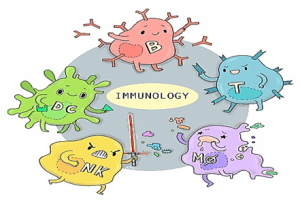
Plant diseases caused by pathogens and pests are a constant threat to global food security. Direct crop losses and the measures used to control disease (e.g. application of pesticides) have significant agricultural, economic, and societal impacts. Therefore, it is essential that we understand the molecular mechanisms of the plant immune system, a system that allows plants to resist attack from a wide variety of organisms ranging from viruses to insects
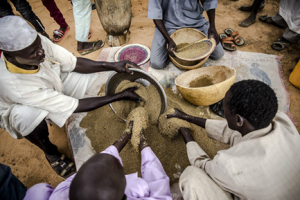
The world has been put on a heightened famine alert with a new report by two United Nations agencies that contains a stark warning; four countries contain areas that could soon slip into famine if conditions there undergo "any further deterioration over the coming months". These are Burkina Faso in West Africa's Sahel region, northeastern Nigeria, South Sudan and Yemen.
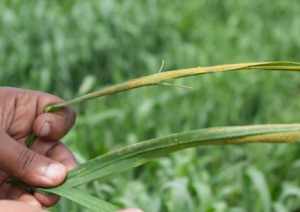
Researchers from John Innes Centre (JIC) have mapped out the plant immune system. The research provides a roadmap to plant immunity, with a focus on cell-surface and intracellular immune receptors. In a paper published in the Journal of Biological Chemistry, Professor Mark Banfield, leader of the BBSRC-funded Plant Health Institute Strategic Programme (ISP) at the John Innes Centre
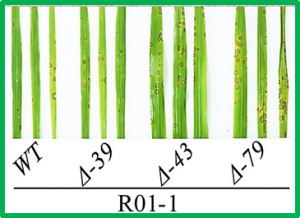
Because of the frequent breakdown of major resistance (R) genes, identification of new partial R genes against rice blast disease is an important goal of rice breeding. In this study, we used a core collection of the Rice Diversity Panel II (C-RDP-II), which contains 584 rice accessions and are genotyped with 700 000 single-nucleotide polymorphism (SNP) markers. The C-RDP-II accessions were inoculated with three blast strains collected from different rice-growing regions in China.

In a Joint Press Statement of the 42nd Meeting of the Association of Southeast Asian Nations (ASEAN) Ministers on Agriculture and Forestry (AMAF), the ministers stressed the importance of the sustained significant investment in rice research-for-development by One CGIAR and its partner donors in view of the significant challenges in nutrition, sustainability, livelihoods, and climate change resilience in the region.